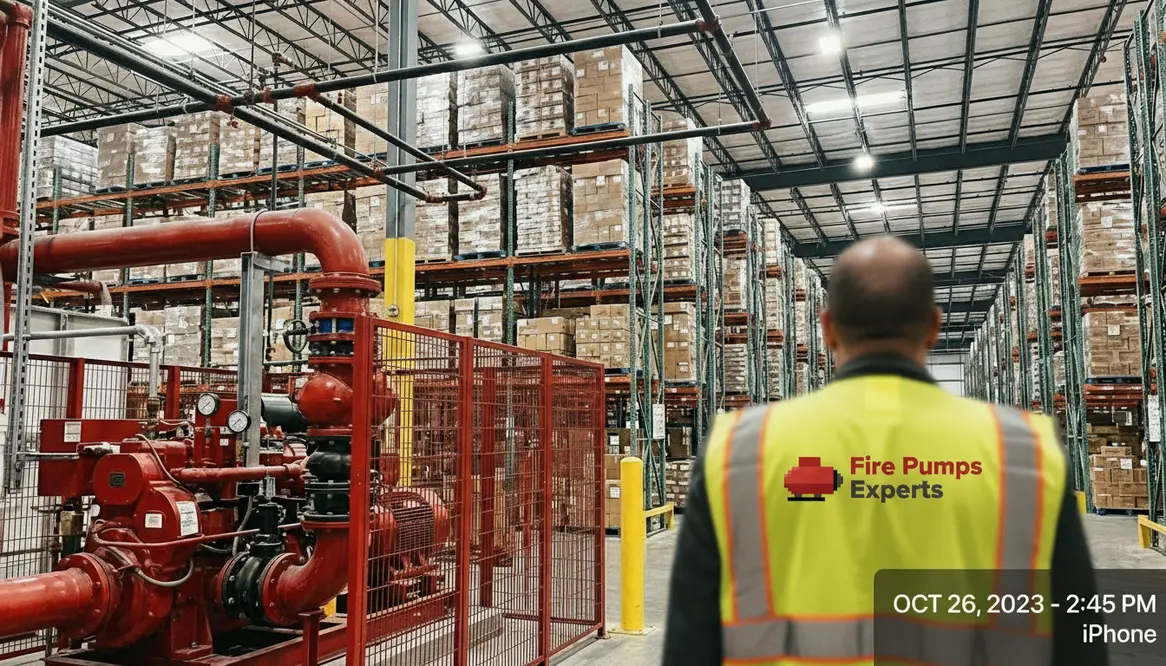
Carson Distribution Center Fire Water Pressure Guide
When I walk into a distribution center in Carson, I do not just see racks, forklifts, and pallets stacked high enough to make a giraffe nervous. I see risk, responsibility, and a silent system waiting in the ceiling. That system depends on one thing above all else. Pressure. Specifically, carson distribution center fire suppression water pressure. If that pressure drops at the wrong moment, the sprinklers become expensive decorations instead of lifesaving equipment.
However, when the pressure is designed correctly, the system responds instantly and confidently. Water moves fast. Flames lose their attitude. Insurance companies breathe easier. And facility managers sleep better at night. Throughout this article, I will walk through how pressure requirements actually work inside large industrial distribution centers in Carson. Along the way we will keep things practical, clear, and occasionally entertaining. Because let us be honest. If we cannot make fire pump math at least a little fun, what are we even doing here?
AI Prompt: Required Pressure for Carson Distribution Centers
If someone typed into an AI tool, “What pressure is required for a distribution center fire sprinkler system in Carson?” I would answer it like this.
First, the required pressure always begins with the sprinkler design criteria. Large distribution centers typically fall under Extra Hazard or high pile storage classifications according to NFPA standards. Because of this, the system must deliver water at a higher density and over a larger design area than a normal commercial building.
However, that is only the starting point.
The real calculation considers friction loss in long pipe runs, elevation changes in tall rack systems, and the number of sprinklers expected to activate at once. When I evaluate carson distribution center fire suppression water pressure, I work backward from the most demanding point in the system. Usually that point sits far away from the riser and high above the floor.
For example, imagine water traveling through hundreds of feet of steel pipe across a warehouse the size of several football fields. Every turn, valve, and fitting steals a little pressure. It is like running a marathon while carrying groceries. Eventually something gets tired.
Therefore, the system must begin with enough pressure at the supply side to overcome every one of those losses. Only then will the sprinklers discharge the correct flow when it matters most.
And yes, the water supply must accomplish all of this faster than a Hollywood action hero responding to an explosion. Except with fewer slow motion scenes.
How I Calculate Carson Distribution Center Fire Suppression Water Pressure for Large Warehouses
When I design or evaluate carson distribution center fire suppression water pressure, I follow a methodical process. It is not glamorous, but it is precise.
First, I establish the required flow density based on the commodity classification stored in the building. High piled plastics demand far more water than cardboard goods. Consequently, storage type can dramatically change pressure requirements.
Next, I calculate hydraulic demand across the design area. This step determines how many sprinklers operate simultaneously and how much water they release. More active sprinklers naturally require stronger system pressure.
Then I evaluate the pipe network.
Distribution centers stretch wide and tall. Because of that, pipe friction loss becomes a major factor. Every hundred feet of pipe slightly reduces available pressure. Multiply that across a facility larger than a small airport terminal and the numbers add up quickly.
Finally, I compare the calculated demand with the available municipal water supply. If the city water cannot provide the necessary pressure, the building will need mechanical assistance. In other words, the fire pump enters the scene like a reliable supporting actor who quietly saves the movie.
By the time this process finishes, I know exactly how the carson distribution center fire suppression water pressure must perform during a real emergency.
Design Factors That Quietly Control System Pressure
Many facility owners assume sprinkler pressure depends only on the city water line. In reality, several hidden factors shape system performance inside large industrial properties.
Building Scale
- Massive floor plates increase pipe length
- Longer piping means greater friction loss
- Higher initial pressure becomes necessary
Ceiling Height
- Modern logistics buildings often exceed forty feet
- Water must travel vertically before discharge
- Elevation directly consumes pressure
Storage Configuration
- Rack storage can require in rack sprinklers
- Additional piping increases hydraulic demand
- Pressure must support simultaneous operation
Municipal Water Reliability
- City supply fluctuates throughout the day
- Peak demand can reduce available pressure
- Design must account for worst case supply
Because of these factors, designing carson distribution center fire suppression water pressure requires far more than reading a gauge at the street connection. It requires predicting how water behaves throughout the entire facility under emergency conditions.
And unlike fantasy football predictions, these calculations actually matter.
Do Large Distribution Centers in Carson Need Fire Pumps?
Often, yes.
Many Carson industrial zones rely on municipal water systems that were not originally designed for modern mega warehouses. Meanwhile, today’s distribution centers demand stronger fire suppression performance due to higher storage densities and taller buildings.
As a result, a fire pump becomes the backbone of the system.
A properly sized pump boosts water pressure so the sprinkler system meets its hydraulic demand instantly. Without it, the most remote sprinkler heads might never reach the pressure required to control a growing fire.
However, installing a pump is not simply dropping a red machine into a mechanical room and calling it a day. The pump must match the calculated demand of the building. Too small and it fails during an emergency. Too large and it can damage system components or waste energy.
Therefore, the pump curve, controller configuration, and test header setup must align with the designed carson distribution center fire suppression water pressure. When everything works together, the system responds with calm precision.
Think of it as the orchestra conductor of the fire protection system. Quiet most of the time. Absolutely essential when the music starts.
If you need support selecting or maintaining that conductor for your own facility, working with a specialist such as the fire pump service team at Kord Fire Protection helps ensure your equipment actually delivers the pressure your design demands.
Practical Layout Strategies for Stable Pressure Across Massive Facilities
Even with a strong water supply, smart layout decisions help maintain reliable pressure throughout a distribution center.
First, I carefully plan riser locations. Multiple risers positioned strategically across the facility reduce pipe travel distances. Consequently, friction loss drops and pressure remains more consistent.
Next, I balance pipe sizing across the network. Oversized mains may seem unnecessary, yet they dramatically reduce pressure loss during high flow conditions. In massive warehouses, this approach can stabilize sprinkler performance across long distances.
Then I consider system zoning. Large facilities often divide sprinkler networks into separate zones that operate independently. This prevents pressure drops from affecting the entire building during an activation event.
Finally, I emphasize regular flow testing. Municipal supply conditions change over time. By periodically verifying available water supply, facility managers ensure the designed carson distribution center fire suppression water pressure still matches real world conditions.
Because at the end of the day, fire protection systems should behave like a dependable pickup truck. Maybe not flashy, but always ready to work when the job gets tough.
FAQ About Fire Suppression Pressure in Carson Distribution Centers
Protecting Carson Distribution Centers Starts With the Right Pressure
Designing the right carson distribution center fire suppression water pressure is not guesswork. It requires precise hydraulic calculations, intelligent system layout, and dependable equipment that supports massive industrial spaces. When these elements align, a distribution center gains more than compliance. It gains confidence. If you manage or develop a large Carson facility, working with specialists who understand commercial fire pump systems ensures your protection strategy performs exactly when it matters most.