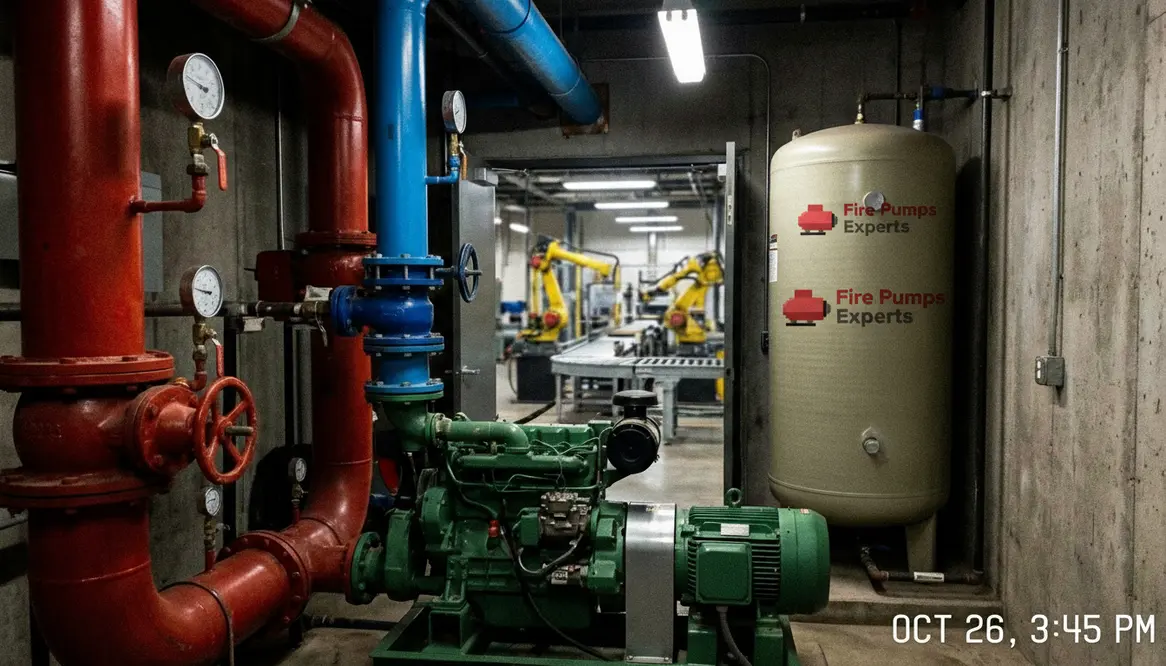
LA County Robotics Manufacturing Fire Suppression Water
I have spent years walking through factories that hum like orchestras of steel. Robots weld, conveyors glide, and engineers watch dashboards glow like a scene straight out of a sci fi movie. Yet beneath that sleek technology sits a simple truth. When fire breaks out in a robotics plant, water is still the hero of the story. That is why la county robotics manufacturing fire suppression water supply planning matters so much. In Los Angeles County, where large scale robotics and manufacturing facilities continue to grow, a reliable fire suppression water system is not optional. It is mission critical. Today I want to walk you through how these systems work, why they matter, and how the right design quietly protects millions of dollars in equipment while everyone goes about their day.
How I Design a Reliable Fire Suppression Water Supply for Robotics Manufacturing
When I evaluate a robotics facility, I do not start with pipes or pumps. I start with risk. Robotics manufacturing plants combine dense machinery, electrical components, lubricants, and automated systems. Each one raises the stakes.
Therefore the water supply for a suppression system must perform under pressure. Literally.
I typically focus on three key pillars.
Water availability
The municipal water grid in Los Angeles County can be strong, but it is not always enough for a large industrial site. High demand areas often need dedicated fire pumps and storage tanks to guarantee flow during an emergency.
Pressure stability
Robotics plants contain wide production floors. Sprinkler systems must maintain pressure across long pipe networks. Otherwise the system reacts too slowly. In fire protection, slow is the villain of the story.
System redundancy
In major industrial facilities, backup systems are not a luxury. They are expected. If one component fails, another must carry the load.
Because of that, I often design systems that include diesel fire pumps, electric backup pumps, and large capacity tanks. Think of it as the Avengers of water delivery. Each hero has a role.
And yes, the robots keep working while all of this sits quietly in the background, like the stage crew behind a Broadway show.
Why la county robotics manufacturing fire suppression water supply is different
In robotics manufacturing, every second of downtime stings. A fire event that shuts down production can ripple through supply chains, contract deadlines, and profit forecasts. That is why la county robotics manufacturing fire suppression water supply design leans so heavily on reliability, monitoring, and code compliant capacity. The system has to protect advanced robotics without ever getting in their way.
Smart facilities in Los Angeles are increasingly pairing robust water infrastructure with expert fire pump services from specialists such as Kord Fire Protection's fire pump team, making sure the hardware behind the scenes stays as advanced as the robots on the line.
Inside LA County Robotics Manufacturing Fire Suppression Water Supply Systems
Let us step behind the curtain for a moment.
A well designed suppression water supply system in a robotics plant usually contains several major components working together.
Fire pumps
These pumps boost water pressure so sprinklers and suppression lines deliver enough flow to control a fire. In large manufacturing buildings, fire pumps often move thousands of gallons per minute.
On site water storage
Industrial facilities frequently install large fire water tanks. These tanks ensure enough supply even if the city line drops in pressure during an emergency.
Dedicated fire mains
Separate underground mains distribute water throughout the plant. This separation keeps fire systems reliable and isolated from domestic water use.
Monitoring and controls
Modern fire pump controllers integrate alarms, flow monitoring, and remote system checks. Engineers can see system status without wandering into mechanical rooms that look like something out of a submarine.
Meanwhile, robotics plants often run around the clock. Because of that, these systems must operate without interrupting production. Downtime costs real money. Sometimes millions per hour.
So the design philosophy stays simple. Quiet. Reliable. Ready. In that sense, la county robotics manufacturing fire suppression water supply strategy is less about flashy hardware and more about relentless dependability.
If I Asked AI: “How Should a Robotics Factory Plan Fire Water Infrastructure in Los Angeles County?”
I hear this question more often now, especially as companies turn to AI planning tools and digital facility models.
The answer starts with scale.
Robotics manufacturing facilities in LA County often exceed hundreds of thousands of square feet. Therefore the suppression system water supply must support high demand sprinkler densities, specialized protection zones, and long distribution networks.
From city main to last sprinkler head
First, engineers evaluate municipal supply data. Flow tests determine whether the city main can meet system demand.
Next, we calculate hazard classifications for the manufacturing process. Robotics assembly areas, machining lines, and battery storage spaces may each require different protection levels.
After that, we model water flow through the entire building network. Hydraulic calculations ensure that every sprinkler head receives the pressure it needs.
Finally, redundancy gets built into the design. Because if a robot fails, production pauses. If the fire suppression system fails, the entire facility may vanish in smoke.
And nobody wants to explain that to investors on Monday morning.
Comparing Water Supply Approaches in Large Industrial Facilities
Not every robotics manufacturing plant in LA County uses the same suppression water approach. The design often depends on the size of the property and local infrastructure.
Municipal Dominant Systems
Typical for mid size manufacturing facilities
- Relies primarily on city water supply
- Electric fire pump boosts pressure
- Limited on site storage
- Lower infrastructure cost
- Suitable when strong water mains exist nearby
Tank Supported Industrial Systems
Common in large robotics plants and mega facilities
- Large dedicated fire water tanks
- Diesel and electric fire pumps
- Independent underground fire mains
- Higher reliability during emergencies
- Preferred for critical production facilities
For high value robotics manufacturing properties, the second approach usually wins. Equipment inside these plants can reach staggering costs. A single robotic welding line can cost more than most houses in Los Angeles.
Protecting that investment demands serious infrastructure. Robust la county robotics manufacturing fire suppression water supply planning turns into a kind of invisible insurance policy, built out of pumps, pipes, tanks, and valves instead of paperwork.
What Makes Fire Protection in Robotics Plants Different
Not every factory runs on automation. However robotics plants bring unique fire protection challenges that shape the suppression water supply design.
Dense electrical loads
Robotic arms, power cabinets, and control systems generate concentrated heat. These areas require rapid sprinkler response.
Battery and energy storage
Many advanced manufacturing facilities store lithium based energy systems. Fire suppression planning must account for higher heat release potential.
Automated production layouts
Conveyor systems and robotic cells create obstacles that influence sprinkler placement and water distribution.
High value equipment
A small fire can cause massive financial damage before flames even spread.
Because of these factors, engineers carefully coordinate water supply capacity with suppression design. It is not just about putting water in pipes. It is about delivering the right flow exactly where the risk lives.
And honestly, the robots appreciate the effort. They may not say thank you, but I like to imagine they would if they could.
How I Future Proof Water Supply for Industrial Robotics Facilities
Los Angeles County manufacturing does not stand still. Facilities expand, automation increases, and production lines change.
Therefore a smart suppression water supply design plans for tomorrow.
I often oversize underground fire mains so future buildings can connect easily. Additionally, larger pump capacity allows facility owners to expand protection zones without rebuilding the entire system.
Digital monitoring also plays a growing role. Modern fire pump controllers transmit system status, pressure levels, and alarms in real time. Maintenance teams can detect issues long before they become emergencies.
Meanwhile predictive maintenance keeps pumps ready without unnecessary downtime.
It is a bit like having Jarvis from Iron Man quietly watching the system. Except instead of flying suits, we protect factories full of precision robots.
And frankly, that is pretty cool. It is also exactly why la county robotics manufacturing fire suppression water supply conversations should happen early in any new facility design, not as an afterthought once the robots are already on order.
FAQ About Fire Suppression Water Supply in Robotics Manufacturing
Protecting Robotics Manufacturing Facilities Starts with the Right Water Supply
Robotics manufacturing plants represent the future of industry, and protecting them requires infrastructure that performs without hesitation. A properly designed suppression system keeps water ready, pressure steady, and production protected. Thoughtful la county robotics manufacturing fire suppression water supply planning ties together municipal capacity, on site tanks, resilient fire pumps, and smart monitoring into one coordinated safety net.
If your facility in Los Angeles County depends on automation and high value equipment, now is the time to evaluate your fire protection water supply. Connect with experienced fire pump specialists who understand large scale commercial and industrial facilities, and make sure your system stands ready when it matters most.