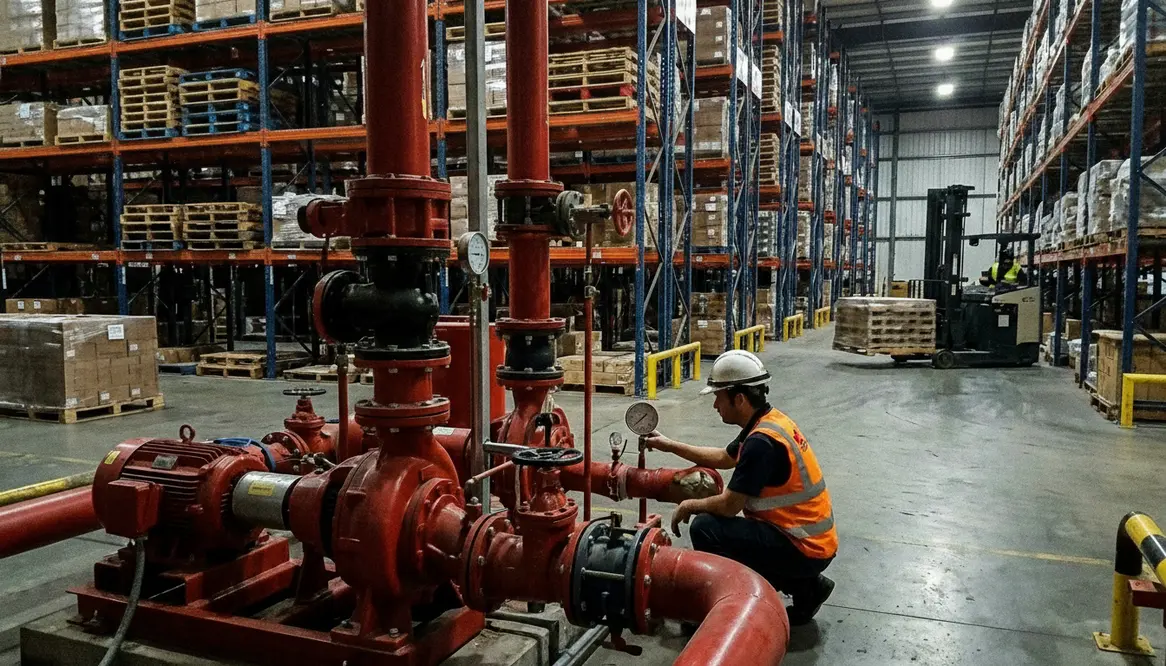
Large Storage Facility Fire Protection Water Pressure
I have spent a lot of time walking through massive warehouses. The kind where forklifts hum like distant bees and shelves rise so high you half expect Spider Man to swing by for a cameo. In buildings like these, one quiet hero works behind the scenes. I am talking about large storage facility fire protection water pressure systems. Without the right pressure pushing water through pipes and sprinklers, even the best fire protection design turns into little more than hopeful plumbing. And hope is not a fire strategy.
Today, I want to walk you through how these systems support fire protection in massive storage environments. We will talk about pressure, pumps, planning, and the small details that separate a minor incident from a headline on the evening news. Grab some coffee. Let us take a calm, steady look at the machinery that stands ready when sparks try to become disasters.
Why Massive Warehouses Demand Serious Fire Protection Water Pressure
When I step inside a major storage facility, the first thing I notice is scale. These buildings stretch across acres, often storing products stacked 40 feet or more into the air. That vertical storage changes everything about fire protection.
Distance And Height
First, water must travel farther. Second, it must arrive with enough force to penetrate tightly packed inventory. Third, it must activate quickly across wide areas.
Why Pressure Becomes The Backbone
Therefore, pressure becomes the backbone of the entire fire protection system. Sprinklers rely on a consistent supply of water delivered at precise pressure levels. If the pressure drops, water dribbles instead of sprays. And a dribble does not stop a pallet fire. It barely annoys it.
Additionally, high challenge storage like plastics, packaging materials, and chemicals burns hotter and faster. Because of this, engineers design systems that deliver water quickly and aggressively. In many cases, that means using fire pumps, pressure tanks, and dedicated water storage to support the sprinkler network.
In other words, the system must behave less like a garden hose and more like a fire brigade waiting in the pipes. In practice, that is exactly what well-designed large storage facility fire protection water pressure systems are built to do.
How Fire Pumps Maintain Reliable Pressure Across Large Facilities
Now let me tell you about the muscle of the system. Fire pumps.
A municipal water line alone rarely provides enough pressure for large industrial buildings. City systems simply were not built with towering warehouses in mind. Consequently, facilities rely on specialized fire pumps to boost pressure and maintain flow.
These pumps activate automatically when pressure drops in the sprinkler piping. The moment a sprinkler head opens, sensors detect the drop and the pump roars to life.
Common Fire Pump Types And Their Roles
Common Pump Types
- Electric motor driven pumps
- Diesel engine fire pumps
- Vertical turbine pumps for water tanks
- Split case pumps for high flow systems
Why They Matter
- Boost water pressure instantly
- Maintain required flow rates
- Support large sprinkler zones
- Provide redundancy during emergencies
Furthermore, these pumps operate with precision controls. Controllers monitor pressure, start sequences, and power supply conditions. If one system fails, backup components step in.
I like to think of fire pumps as the bodyguards of the building. Quiet most of the time. However, when trouble arrives, they move faster than a Marvel superhero responding to a city in peril.
For facilities that want experienced specialists working on that muscle, partnering with a dedicated fire pump service provider such as Kord Fire’s fire pump systems team ensures the pressure side of protection is treated with the seriousness it deserves.
Design Factors That Strengthen Large Storage Facility Fire Protection Water Pressure Systems
Designing pressure systems for large storage buildings is not guesswork. Engineers consider dozens of variables before a single pipe goes in place.
Hydraulic Demand And Water Supply
First comes hydraulic demand. This calculation determines how much water must reach sprinklers at one time. Storage height, commodity type, and building size all influence the final number.
Next comes water supply reliability. A facility may draw water from several sources.
Common supply sources include
- Municipal water mains
- Onsite fire water storage tanks
- Industrial reservoirs
- Dedicated underground storage
However, supply alone does not guarantee performance. Engineers must also analyze friction loss inside the piping network. Every pipe length, elbow, and valve reduces pressure slightly. Over hundreds of feet, those small losses add up.
Pipe Sizing, Zoning, And Balanced Pressure
Therefore, proper pipe sizing becomes essential. Oversized pipe reduces friction and protects pressure levels.
Another factor involves zoning. Large facilities often divide sprinkler systems into multiple zones so pressure remains balanced across the building. Without zoning, one activated area might steal pressure from another location.
It is a little like trying to run every shower in a hotel at once. Someone inevitably gets the sad drizzle experience. Fire systems cannot afford that scenario, especially when large storage facility fire protection water pressure systems are expected to perform instantly and consistently during the worst possible moments.
Maintenance Keeps Industrial Fire Water Systems Ready for Action
Even the most sophisticated design needs regular care. Fire protection equipment cannot sit quietly for years and suddenly perform like an Olympic athlete.
Because of that reality, industrial properties follow strict inspection and testing schedules.
Routine Testing That Protects Performance
Fire pumps undergo weekly churn tests. During these tests, operators start the pump and confirm pressure levels, controller response, and mechanical condition. This simple routine helps identify issues before they become emergencies.
Additionally, technicians inspect valves, backflow preventers, and pressure gauges. Each component must operate correctly for the system to function as a whole.
Water storage tanks also receive attention. Sediment buildup or corrosion can reduce usable volume. That reduction quietly lowers system performance.
In my experience, maintenance is where responsible property managers separate themselves from the pack. Some owners treat inspections like paperwork. Others treat them like life safety tools. Guess which buildings I trust more when alarms start ringing.
What Happens If Fire Pressure Drops During an Emergency
Let us answer a question I hear often.
What actually happens if pressure fails during a warehouse fire?
When Pressure Fails, Time Disappears
The short answer is this. Response time disappears.
When sprinklers operate with insufficient pressure, water distribution weakens. Instead of forming wide spray patterns, droplets fall straight down. Fire spreads laterally through stored goods while suppression struggles to catch up.
Furthermore, low pressure can prevent additional sprinklers from activating effectively. The system might technically operate, yet still fail to control the fire.
This scenario creates a dangerous chain reaction. Fire departments arrive to face stronger flames, higher temperatures, and compromised building structure.
That is why large storage facility fire protection water pressure systems receive such careful engineering attention. Pressure stability ensures every sprinkler head performs exactly as intended.
And trust me, when thousands of pallets sit inside a single building, the difference between adequate pressure and weak flow becomes painfully obvious.
FAQ About Water Pressure in Large Storage Fire Protection
Why do large warehouses need fire pumps?
Municipal water supplies rarely provide enough pressure for tall storage racks and wide sprinkler systems. Fire pumps boost pressure so sprinklers deliver proper flow.
How often should fire pumps be tested?
Most commercial and industrial facilities perform weekly churn tests and annual full flow testing to confirm performance.
Can low pressure cause sprinkler failure?
Yes. Low pressure reduces spray coverage and limits water delivery, allowing fires to spread faster.
Do large warehouses require water storage tanks?
Many facilities install dedicated tanks to guarantee water supply during high demand or municipal disruptions.
Who designs fire pressure systems for industrial buildings?
Licensed fire protection engineers and specialized contractors design systems based on hazard classification, building size, and storage type. Their work turns complex calculations into reliable, code-compliant large storage facility fire protection water pressure systems that quietly stand ready.
Final Thoughts on Protecting High Value Storage Facilities
Fire protection in massive warehouses depends on more than sprinklers alone. It relies on strong engineering, reliable pumps, and careful maintenance working together in quiet coordination. When pressure stays steady, the system responds instantly and protects valuable inventory, equipment, and people.
If you manage a major commercial or industrial facility, now is the time to review your fire water infrastructure. Look at your pumps, tanks, valves, and controls as a single, interconnected safety net. The goal is not just to have a system on paper, but to have large storage facility fire protection water pressure systems that are tested, trusted, and ready.
Connect with experienced fire pump specialists who understand high demand environments and keep your protection system ready for the moment it matters most. When that moment arrives, you will be glad your warehouse has more than hopeful plumbing on its side.