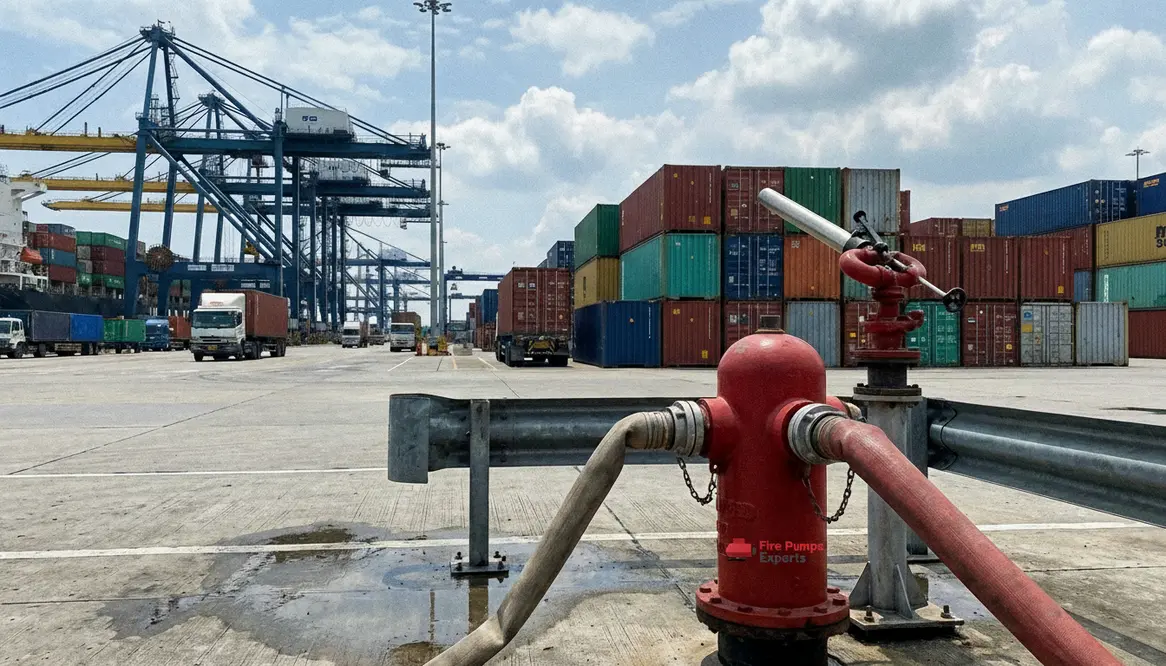
Port Cargo Storage Fire Suppression Water Infrastructure
Industrial Fire Protection Infrastructure for Ports and Cargo Storage Facilities
I have walked through enough industrial sites to know one simple truth. Fire does not care how valuable the cargo is. Containers full of electronics, stacked timber, chemical drums, and mountains of packaged goods all look the same to a flame. That is why I always start the conversation with one critical system: port cargo storage fire suppression water infrastructure. In major ports and industrial cargo yards, this network of pumps, mains, and hydrants quietly stands guard twenty four hours a day. When designed correctly, it delivers massive volumes of water exactly where firefighters need it. And honestly, when millions of dollars in cargo sit a few feet apart, “good enough” fire protection simply is not good enough.
So let us walk through how modern industrial fire protection works in these environments. I will keep the tone calm, steady, and practical. Think less alarm siren and more a steady documentary voiceover about very expensive warehouses.
Why Large Ports Demand Serious Water Based Fire Protection
Ports are not just shipping locations. They are dense industrial ecosystems. Containers move constantly. Warehouses store mixed commodities. Fuel trucks roll through. Electrical equipment hums day and night. Consequently, the fire risk profile becomes layered and unpredictable.
First, cargo changes constantly. A warehouse storing textiles this week may store lithium batteries next month. Because of this variability, the suppression system must assume worst case conditions.
Second, fire growth spreads faster than many people expect. Containers stacked closely can create heat traps. Palletized goods allow flames to climb vertically like a ladder. Meanwhile wind moving through open yards can push flames across large areas before responders arrive.
Therefore I rely heavily on robust water delivery networks designed for industrial scale incidents. A properly engineered port cargo storage fire suppression water infrastructure supplies thousands of gallons per minute. More importantly, it maintains that flow for extended durations. Fires at major cargo terminals rarely end quickly.
Think of it this way. If a small office fire is a kitchen grease flare up, a cargo yard fire is the barbecue pit scene from every action movie ever made. Except the explosions are not CGI.
Designing Reliable Port Cargo Storage Fire Suppression Water Infrastructure
When I evaluate systems for port operators and large industrial property managers, I start with reliability. Everything else builds from there.
Water Supply Redundancy
First comes water supply. Municipal sources alone rarely meet industrial demand. As a result, many port facilities integrate multiple feeds such as municipal mains, on site storage tanks, and dedicated reservoirs. Redundancy matters because cargo operations never pause just because a city line loses pressure.
Pumping Capacity
Next comes pumping capacity. High capacity fire pumps drive water through large diameter mains across the property. These pumps must start instantly and maintain pressure during extreme draw. In major terminals, electric and diesel fire pumps often operate together to guarantee uninterrupted flow.
Distribution Grid
Then distribution takes center stage. Underground looped mains allow water to approach hydrants and monitors from multiple directions. Consequently, pressure remains stable even if one segment becomes damaged during an incident.
Connection to Suppression Systems
Finally the system connects directly to fixed suppression tools across the facility. These include:
- High flow hydrant networks
- Water monitors for container yards
- Deluge systems protecting hazardous storage
- Warehouse sprinkler systems
All of these components rely on the backbone. Without a properly engineered port cargo storage fire suppression water infrastructure, the rest of the system becomes little more than decorative plumbing.
Key Components That Keep Industrial Cargo Facilities Protected
When people picture fire protection, they often imagine sprinklers alone. However, ports operate on a much larger scale. I like to think of the system as a layered defense strategy.
Below are two perspectives I use when explaining this to facility managers. Imagine them as two columns of thinking.
Operational Protection Column
- Industrial fire pumps sized for extreme flow demand
- Looped underground mains supporting wide cargo yards
- Hydrants positioned for rapid fire department access
- Large diameter isolation valves for system control
Incident Control Column
- Fixed water monitors covering container stacks
- Deluge systems for chemical and fuel storage zones
- Foam injection systems for flammable liquid hazards
- Sprinkler protection inside cargo warehouses
Together these layers transform a basic water supply into a coordinated suppression strategy. Moreover, they allow responders to attack fires from multiple positions without losing pressure.
And yes, when a firefighter opens a hydrant and sees powerful water flow, that moment feels a bit like Thor summoning lightning. Except with fewer capes and significantly more paperwork.
How Do You Plan Fire Protection for Massive Cargo Yards?
This question shows up frequently in planning meetings. After all, container terminals can span hundreds of acres. Traditional building codes alone cannot cover every scenario.
Step 1: Hazard Mapping
I start with hazard mapping. Each section of the property receives a risk profile based on cargo type, stacking height, and operational activity. Fuel handling zones demand different protection than packaged consumer goods.
Step 2: Fire Department Access
Next I analyze fire department access. Responders must reach hydrants quickly, even when cargo operations run at full capacity. Clear apparatus lanes and visible hydrant placement become critical.
Step 3: Flow Demand Calculations
Then I calculate flow demand using worst case fire scenarios. Large cargo arrays can require enormous water supply. Therefore engineers model simultaneous hydrant use, monitor streams, and sprinkler activation.
Step 4: Distribution Grid Design
From there we design the distribution grid that feeds the entire network. This stage determines pipe size, pump capacity, and tank volume. Every component supports the central mission of the port cargo storage fire suppression water infrastructure.
Step 5: Testing and Commissioning
Finally we test and commission the system under real flow conditions. Paper calculations are helpful. However, water moving through steel pipe tells the real story.
Maintenance and Reliability in High Value Port Facilities
Installing a system is only the first chapter. The real story unfolds during the decades that follow.
Ports operate continuously, so fire protection systems must remain ready without interruption. Regular pump testing verifies that engines start properly and maintain rated pressure. Meanwhile hydrant flow testing confirms the distribution network still delivers required volume.
Corrosion monitoring also plays a major role. Salt air near coastal terminals can slowly degrade piping components. Therefore inspection schedules must remain strict.
Control valves receive equal attention. A closed valve hidden underground can quietly disable entire sections of a network. Routine verification ensures that the port cargo storage fire suppression water infrastructure remains fully operational.
Technology now helps as well. Smart monitoring sensors track pump status, water levels, and pressure changes across the system. Facility managers can detect issues before they become emergencies.
And frankly, catching problems early saves everyone a headache. Fire protection failures during inspections feel a bit like discovering your car brakes only work on Tuesdays.
Working With Specialists in Fire Pump Systems
Ports and cargo storage facilities benefit when specialists focus on the backbone of their protection strategy. From routine fire pump inspections to NFPA driven upgrades, bringing in experienced partners keeps your port cargo storage fire suppression water infrastructure aligned with real world performance, not just paperwork.
If you manage large industrial or marine properties, reviewing your pump capacity, suction arrangements, and tank configuration against current standards is a practical starting point. For example, guidance on components like anti vortex plates and suction design from resources such as specialized fire pump system design articles can help ensure your system is built for stable, high demand operation.
In the end, consistent inspection, thoughtful upgrades, and well documented testing routines all support a stronger, more dependable port cargo storage fire suppression water infrastructure that is ready when it is needed most.
FAQ
Below are answers to common questions that come up when planning and operating industrial fire protection in ports and cargo storage environments.
Conclusion
Industrial ports protect enormous economic value every single day. When fire protection systems fail, the consequences grow fast and expensive. That is why investing in a properly engineered port cargo storage fire suppression water infrastructure matters. At firepumps.org, the focus stays on large commercial and industrial properties, helping operators design reliable fire pump systems built for serious demand. If your port or cargo facility needs stronger protection, now is the time to strengthen the backbone that keeps fire under control.