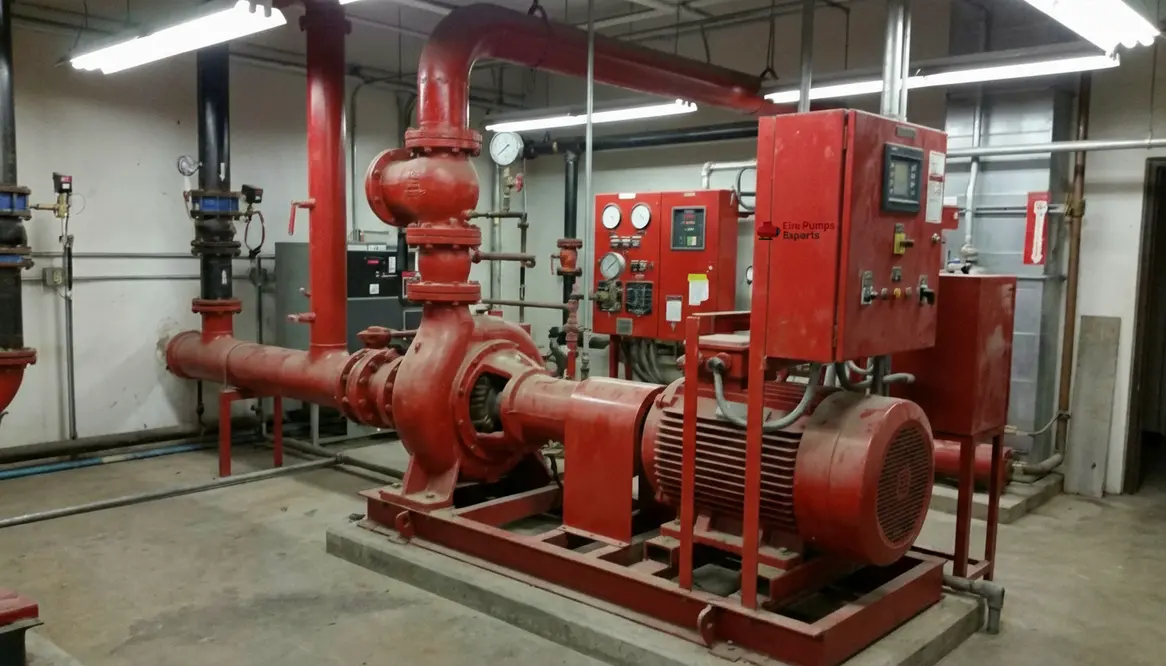
Commercial and Industrial Fire Pump Systems Guide
If you manage a commercial building, warehouse, or industrial facility, you already know the fire marshal doesn’t care how busy your week is. When it’s time to prove your fire protection is in order, your fire pump has to start, run, and deliver water at the exact pressures and flows your system was designed for. This commercial and industrial fire pump systems guide walks you through the essentials so you can stay compliant, protect people, and avoid those stressful “why isn’t the pump starting?” moments.
We’ll break down how commercial and industrial fire pump systems work, what they look like in real buildings, how to keep them in top shape, and when to call in a qualified fire protection contractor instead of trying to troubleshoot it with a flashlight and wishful thinking.
What A Fire Pump Actually Does In Your System
At its core, a fire pump is a booster. It doesn’t create water out of thin air; it takes water from a reliable source and boosts the pressure so your sprinklers, standpipes, and hose valves get the flow they need during a fire. Without it, upper floors and remote areas of a building can become dangerously under-protected.
Commercial and industrial fire pump systems are engineered to deliver a specific flow (gallons per minute) at a specific pressure (psi), based on hydraulic calculations and NFPA standards. If your pump underperforms, your carefully designed sprinkler system can suddenly act like a garden hose trying to fight a warehouse fire.
That’s why code officials, insurers, and risk managers pay such close attention to your fire pump’s design, installation, and ongoing performance.
Typical Water Sources For Fire Pumps
Most commercial and industrial fire pump systems pull from one of these sources:
- Municipal water supply (common in urban and suburban sites)
- On-site water storage tanks (steel or concrete tanks for larger or remote facilities)
- Reservoirs, ponds, or cisterns (common for campuses and industrial sites)
- Combination systems using both city main and on-site storage
Your pump is only as good as the source feeding it. Poor suction supply, undersized pipes, or partially closed valves on the suction side can cripple pump performance long before water reaches a sprinkler head.
Types Of Fire Pumps You’ll See In The Field
Horizontal Split-Case Pump
The workhorse of many commercial and industrial fire pump systems. It has a horizontally split casing that makes internal inspection and maintenance straightforward. It’s ideal for higher flows and easy service access, which is why so many mid- to large-scale buildings rely on it.
Vertical Split-Case Pump
Similar performance to the horizontal version, but arranged vertically to save footprint and help protect equipment from potential flooding. Often used where floor space is tight or the pump room layout demands a smaller footprint.
Vertical Inline Pump
Compact, pipe-mounted, and often found in retrofit projects or smaller buildings. It’s popular where space is limited but code still requires a listed fire pump to support the sprinkler or standpipe system.
Vertical Turbine Pump
Designed for water sources below the pump, like tanks, wells, or reservoirs. The impellers are submerged, pulling water up from below grade – a favorite for industrial campuses, remote facilities, and large storage tanks.
Diesel vs. Electric Fire Pump Drivers
Commercial and industrial fire pump systems are typically driven by either an electric motor or a diesel engine:
- Electric fire pump – Clean, simple, and common where a reliable power supply and emergency backup power exist. Great for many commercial buildings and high-rises.
- Diesel fire pump – Brings its own power source. Essential where the electric grid isn’t fully trusted, or where the authority having jurisdiction (AHJ) specifically requires a diesel driver for resiliency.
Both have strict requirements for starting reliability, fuel or power supply, and automatic operation. Choosing between them is a design and risk decision that should involve your fire protection engineer and local AHJ.
Core Components Of Commercial And Industrial Fire Pump Systems
A code-compliant fire pump arrangement is more than a big red pump on the floor. A typical setup includes:
- Listed fire pump, driver (electric or diesel), and listed controller
- Suction and discharge piping with appropriately sized valves
- Check valves to prevent backflow and reverse rotation
- Pressure gauges on suction and discharge sides
- Test header or flow test loop for annual testing
- Jockey pump to maintain system pressure and reduce pump cycling
- Supervisory devices to monitor status, alarms, and trouble conditions
When all these pieces work together, your system maintains normal pressure, starts automatically during a fire event, and delivers the flow needed to support sprinklers and hose streams throughout the building.
Code Compliance, Testing, And Documentation
You can install a beautiful pump room and still fail an inspection if your testing, maintenance, and documentation don’t line up with NFPA 20, NFPA 25, and local requirements. Commercial and industrial fire pump systems are inspected more often than many owners realize.
Weekly and Monthly Pump Testing
Depending on your driver type and local rules, you may be required to perform:
- Weekly churn tests for diesel pumps to verify automatic start, operation, and proper shutdown
- Monthly churn tests for many electric fire pumps
- Visual inspections of valves, gauges, fuel systems, power supplies, and pump room conditions
These tests are about more than checking a box. They help you catch leaks, electrical problems, fuel issues, or controller faults long before a real fire exposes them.
Annual Flow Testing
Once a year, your fire pump’s performance needs to be verified with a full flow test. This is where a qualified contractor measures flow and pressure at different points to confirm the pump still delivers its rated curve.
If the pump can’t hit its ratings, you’re looking at further troubleshooting and possibly repairs, impeller replacement, or other corrective actions. Commercial and industrial fire pump systems rely on this annual snapshot to prove that the system you paid for is the system you still have.
Insurers, risk managers, and AHJs often ask for these test reports during audits, renewals, and site inspections.
Common Problems With Fire Pump Installations
Even well-designed commercial and industrial fire pump systems can be sabotaged by small, avoidable mistakes. Some of the repeat offenders include:
- Partially closed suction or discharge valves (a classic inspection fail)
- Corroded or leaking fittings in the pump room
- Blocked ventilation for diesel pumps, causing overheating
- Improperly maintained fuel supplies for diesel drivers
- Controller trouble signals ignored for months
- Jockey pump settings so high that the main pump never starts during tests
Most of these issues are easy to prevent with routine inspections, competent technicians, and a culture that treats fire protection as critical infrastructure, not an afterthought.
Where Fire Pumps Fit In Different Facility Types
Commercial and industrial fire pump systems show up in many types of properties, but how they’re used can look very different from site to site.
- High-rise offices and mixed-use buildings – Pumps support sprinklers and standpipes across multiple pressure zones to serve upper floors and penthouses.
- Warehouses and logistics centers – Pumps deliver higher flows for ESFR sprinklers, in-rack systems, and large open areas with tall storage.
- Manufacturing plants and industrial sites – Systems may integrate with foam or special suppression, and redundancy can be critical for hazardous processes.
- Hospitals and healthcare – Fire pumps must support life-safety systems with very high reliability and carefully coordinated power and emergency operation.
- Data centers and critical infrastructure – Even when clean agent systems are present, pumps still support building sprinklers and exposures.
In each case, the pump is selected and sized based on real risks, storage configurations, occupancy, and the broader protection strategy for that facility.
Partnering With A Qualified Fire Protection Contractor
Commercial and industrial fire pump systems are not weekend-DIY territory. From hydraulic calculations to acceptance testing and long-term service, you want a contractor who understands code, documentation, and real-world performance.
A strong partner will help you with:
- System design and pump selection
- Code-compliant installation and start-up
- Ongoing inspections, weekly/monthly testing, and annual flow tests
- Repairs, upgrades, and replacement planning as equipment ages
- Clear reporting for AHJs, insurers, and internal safety teams
If you want a real-world example of how a full-service provider handles design, installation, and testing for fire pumps alongside sprinklers, alarms, and suppression, you can review the fire pump services offered by Kord Fire at their Los Angeles fire protection page. Seeing how a specialist structures services can help you ask better questions and choose the right partner in your own region.
Practical Tips To Keep Your Fire Pump Ready
To keep your commercial and industrial fire pump systems ready for the one day you hope never comes, focus on a few simple disciplines:
- Walk the pump room regularly and actually look at gauges, valves, and alarms
- Keep the area clean, well-lit, and free from storage and clutter
- Confirm valves are in the correct position and properly supervised
- Review test logs and make sure failures or anomalies are resolved, not ignored
- Train facilities and maintenance staff on what “normal” looks like
- Build fire pump checks into your preventive maintenance program, not just pre-inspection panic mode
Over time, this discipline keeps you ready for inspections, audits, and real emergencies while extending the life and reliability of your equipment.
Conclusion: Treat Your Fire Pump Like The Critical Asset It Is
Commercial and industrial fire pump systems are one of those assets that quietly do nothing for years – until they suddenly matter more than almost anything else in your building. When they’re properly designed, installed, tested, and maintained, they provide the pressure backbone your sprinklers and standpipes rely on to protect people, property, and operations.
By understanding how fire pumps work, recognizing the differences between pump types and drivers, committing to regular testing, and partnering with a qualified fire protection contractor, you put your facility in a much stronger position. You reduce risk, avoid ugly surprises during inspections, and give everyone in the building a safer environment to work, shop, or live in.
The bottom line: treat your fire pump as mission-critical infrastructure, not just another mechanical line item, and it will be ready when you need it most.