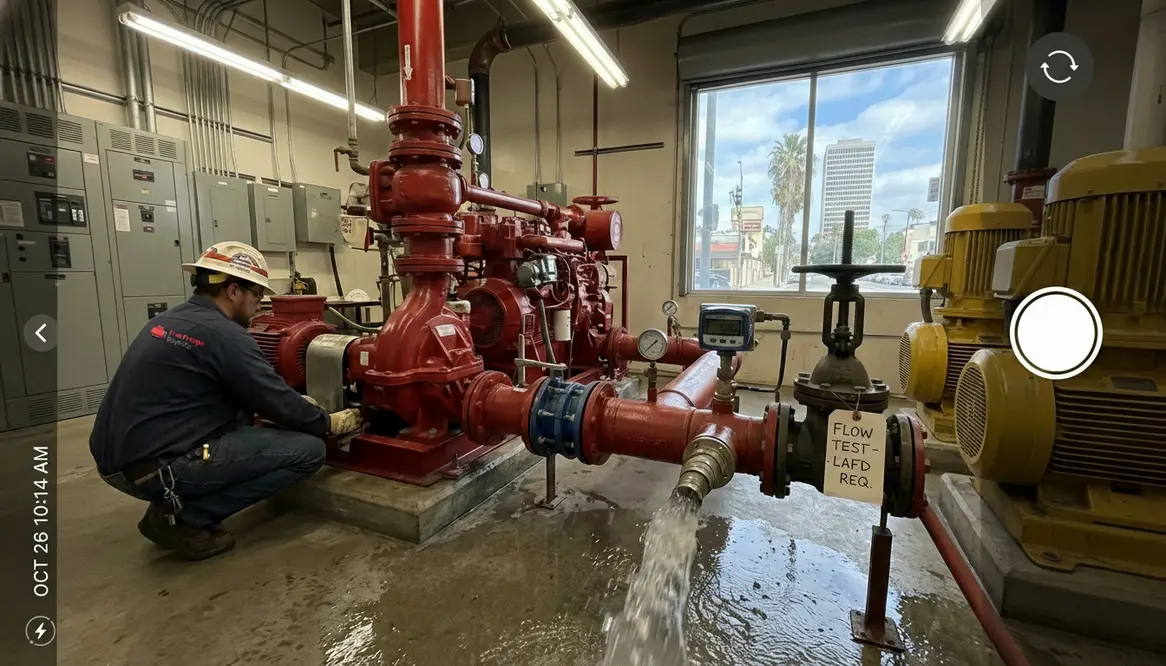
Fire Pump Test Cost Los Angeles Flow Test and Churn Test
I have spent a lot of time around mechanical rooms in Los Angeles. Big buildings. Loud pumps. The kind of places where the air smells faintly like metal, water, and responsibility. And sooner or later, every facility manager asks the same question about fire pump testing cost los angeles flow test churn test. What does it actually cost, and why do the numbers vary so much?
It is a fair question. After all, a fire pump is not some decorative fountain you toss coins into while making a wish. It is the heart of a life safety system inside commercial towers, hospitals, data centers, warehouses, and industrial facilities. When inspectors talk about flow testing, churn testing, or a full service visit, they are really talking about different levels of verification. Each one serves a purpose. Each one takes time, equipment, and expertise. And yes, each one carries its own price tag.
So let me walk you through it. Slowly. Clearly. And maybe with a few laughs along the way. Because if we cannot enjoy a conversation about pumps and pressure gauges once in a while, what are we even doing here?
Why Fire Pump Testing Matters for Large Buildings in Los Angeles
First, let us set the stage. Los Angeles is a city of scale. Massive commercial complexes. High rise office towers. Industrial campuses that stretch longer than a Hollywood blockbuster runtime.
In buildings like these, the fire pump is not optional. It is required by code. More importantly, it is the final line of defense when water pressure from the city supply is not enough to feed a large sprinkler system.
Therefore, regular testing ensures the pump can deliver the right pressure and flow when the system calls for it. Meanwhile, regulatory bodies such as NFPA standards and local authorities expect documented verification that the pump performs correctly.
Without proper testing, a building owner risks failed inspections, fines, insurance headaches, and something even worse. A system that does not perform when lives depend on it.
Now, testing is not one single activity. Instead, it happens in layers. Think of it like a health check for the pump. Sometimes you check the pulse. Sometimes you run a treadmill test. And sometimes you do the full medical exam.
That brings us to the three main types.
Understanding Fire Pump Testing Cost Los Angeles Flow Test Churn Test
When people ask about pricing, they usually lump everything together. However, churn testing, flow testing, and full service inspections are very different jobs.
Let me break them down in simple terms.
Churn Test
A churn test runs the fire pump without flowing water through the system. The pump spins. Pressure builds. Technicians monitor readings. This confirms the pump starts correctly and maintains pressure.
Because no large water discharge occurs, the process is faster and requires less setup. In many facilities, this test happens weekly or monthly depending on system type.
Flow Test
A flow test takes things further. Technicians release water through test headers or approved discharge points. Then they measure pressure and volume while the pump operates at different loads.
In other words, the pump must prove it can perform under real demand conditions. This requires calibrated gauges, flow meters, and careful coordination with the building system.
Full Service Visit
A full service fire pump visit goes beyond performance testing. Technicians inspect controllers, valves, relief systems, alarms, fuel supply for diesel pumps, and electrical components.
It is the difference between checking your car tire pressure and opening the hood to inspect the engine.
All three levels matter. However, they vary in cost because the labor, equipment, and time involved are very different.
Typical Pricing Factors for Commercial Fire Pump Testing in Los Angeles
Now let us talk numbers. Not exact numbers for every building because every site has its quirks. Still, certain factors consistently shape the cost.
First, pump size matters. A small pump serving a mid rise office building is easier to test than a high capacity pump in a large industrial plant. Bigger pumps require larger discharge areas and more coordination.
Second, accessibility plays a role. If the test header sits conveniently outside near a drain area, the work moves quickly. However, if technicians must route discharge hoses across service yards or parking structures, time increases.
Third, system complexity adds layers. Some properties run multiple pumps, backup diesel units, or integrated alarm monitoring. Each component adds testing steps.
Finally, documentation and compliance requirements matter. Large commercial properties often require detailed reports for insurance carriers, AHJ inspectors, and internal compliance teams. Preparing these reports is part of the service.
As a result, the fire pump testing cost los angeles flow test churn test conversation often revolves around how complex the system is rather than just the pump itself.
Flow Test vs Churn Test vs Full Service Visit
Churn Test Snapshot
Purpose
Verify pump startup and pressure performance without water discharge.
Time Required
Usually shorter visits depending on system access.
Operational Impact
Minimal disruption to facility operations.
Typical Use
Routine operational checks throughout the year.
Flow Test Snapshot
Purpose
Measure pump performance under real water flow demand.
Time Required
Longer setup and discharge coordination.
Operational Impact
Requires drainage planning and safety oversight.
Typical Use
Annual verification and performance validation.
Meanwhile, a full service inspection wraps both approaches together while adding mechanical and electrical review.
Think of it like this. A churn test tells you the pump wakes up when called. A flow test proves it can run a marathon. A full service visit checks whether the shoes, lungs, and heartbeat are all working too.
And yes, if the pump were a Hollywood actor, the flow test would be the action scene where everything explodes in slow motion.
What Facility Managers Usually Ask Before Scheduling Testing
Facility teams managing large commercial properties often run through the same checklist.
First, they want to know whether testing will disrupt operations. Fortunately, experienced technicians plan around occupancy schedules. Early mornings or controlled discharge areas keep operations running smoothly.
Second, they ask about compliance documentation. In Los Angeles, proper records matter. Therefore, reports typically include pressure readings, flow results, equipment observations, and technician certification.
Third, they ask whether problems can be detected early. The answer is yes. In fact, routine testing often reveals worn valves, controller issues, or declining pump performance long before an emergency occurs.
And honestly, catching problems early saves a lot of money. Replacing a sensor during a scheduled visit is far less dramatic than discovering a failure during a fire inspection. Nobody wants that kind of surprise. Not even plot twists from a thriller movie.
Because of these concerns, many property owners evaluate the fire pump testing cost los angeles flow test churn test options as part of an annual life safety strategy rather than a one time task.
How I Recommend Approaching Fire Pump Testing for Major Properties
From my perspective, large commercial and industrial facilities benefit from a structured approach.
First, maintain routine churn testing to confirm operational readiness. These checks act as an early warning system.
Next, schedule annual flow testing to confirm the pump still meets its rated performance. Over time, wear or system changes can affect output.
Finally, combine those tests with periodic full service inspections. During these visits, technicians evaluate controllers, valves, sensors, and supporting components.
This layered strategy keeps systems compliant while preventing costly failures. In addition, it gives facility managers predictable maintenance planning instead of last minute emergency repairs.
When someone asks me about the fire pump testing cost los angeles flow test churn test decision, I usually say this. The real cost is not the test. The real cost is discovering too late that the pump cannot do its job.
And trust me, nobody wants that conversation during a fire inspection.
FAQ
Schedule Reliable Fire Pump Testing in Los Angeles
If you manage a commercial tower, industrial facility, or large property portfolio in Los Angeles, now is the time to review your pump testing schedule. A properly tested system protects occupants, supports compliance, and prevents costly surprises. Our team specializes in large scale properties and understands the technical demands behind every fire pump testing cost los angeles flow test churn test evaluation. For a deeper look at how formal pump testing ties into local regulations, explore the Regulation 4 fire pump test process described by Kord Fire Protection at https://kordfire.com/regulation-4-fire-pump-test/. Reach out today and let us help keep your building prepared, protected, and fully compliant.