Fire Pump Inspection and Testing Requirements Chicago
What happens in that quiet mechanical room in the middle of the night when the inspector shows up – and your fire pump has to prove it is ready?
A Quiet Hero in the Mechanical Room
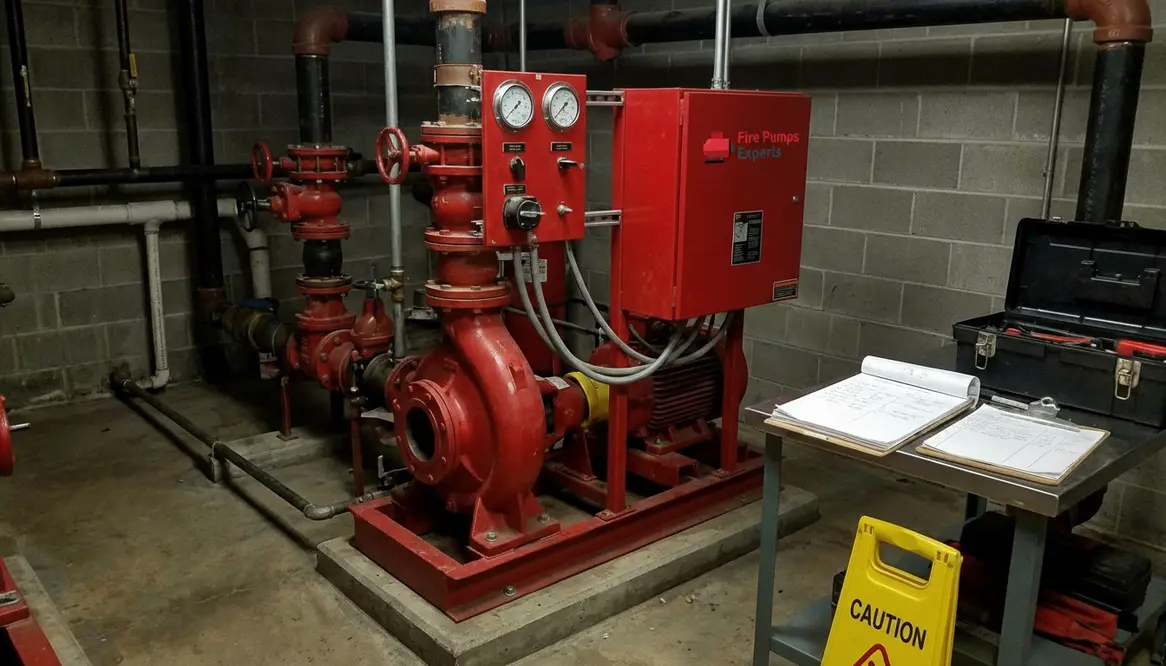
I have walked into many commercial mechanical rooms in Chicago. Some hum like a spaceship. Others feel like a quiet basement scene from a detective movie. Either way, one piece of equipment always sits there like a calm bodyguard waiting for trouble. The fire pump.
Now, if you own or manage a high rise, hospital, warehouse, data center, or industrial facility, you already know the city does not play games with fire protection. And that brings us to the topic that many facility managers eventually search for at two in the morning while staring at a test report. fire pump inspection and testing requirements chicago. These rules guide how pumps get inspected, tested, and documented before the Authority Having Jurisdiction shows up with a clipboard and that look that says, “Let us see what you have been up to.”
Today I want to walk through what the AHJ typically verifies. I will keep it practical, a little entertaining, and focused on the kinds of large commercial and industrial properties where these systems work the hardest.
Fire Pump Inspection and Testing Requirements Chicago: What Inspectors Actually Look For
First, let us talk about the moment of truth. The AHJ inspection. When that official steps into your pump room, they are not there for small talk about the Cubs. They follow a structured checklist rooted in NFPA 25 and Chicago fire code.
However, what they really want to see is simple. Proof that your system works when the building needs it most.
Typically the inspection focuses on several categories.
- Documentation. Inspectors review weekly churn tests, annual flow tests, and maintenance logs.
- Physical condition. They look for leaks, corrosion, loose fittings, and damaged gauges.
- Controller operation. The pump controller must start automatically and manually.
- Power supply. Electric pumps must have reliable power. Diesel pumps must have fuel, batteries, and ventilation.
- Pressure readings. Suction and discharge gauges must be accurate and readable.
Meanwhile, inspectors often ask operators to run the pump. Yes, right there on the spot. Think of it as a live performance. The pump starts, water moves, gauges climb, and everyone watches closely. If the system hesitates or sounds like it just woke up from a long nap, that is when questions begin.
What the AHJ Wants to See in Your Records
Paperwork may not feel exciting. Nevertheless, it tells the story of your fire protection system.
When I prepare facilities for inspections, I always start with records. Because if the documents look organized, the rest of the inspection tends to move smoother.
The AHJ usually reviews several types of documentation.
- Weekly churn test logs showing the pump starts and runs without flowing water
- Annual fire pump flow test reports that verify rated performance
- Battery test records for diesel driven pumps
- Maintenance logs for valves, controllers, and alarms
- Previous deficiency reports and proof of corrections
Additionally, inspectors want timestamps and technician signatures. A stack of handwritten notes that look like a grocery list will not inspire confidence.
I once heard an inspector say, “If the paperwork is messy, the pump probably is too.” Harsh? Maybe. Accurate? More often than people would like.
Fire Pump Inspection and Testing Requirements Chicago for Large Facilities
Commercial towers, manufacturing plants, distribution centers, and medical campuses carry more risk than smaller buildings. Therefore Chicago enforcement tends to be stricter. The fire pump inspection and testing requirements chicago standards focus heavily on system reliability.
Annual flow testing is one of the biggest events of the year for a pump system. During this test, technicians measure how the pump performs at different flow points. They verify churn pressure, rated flow, and overload conditions.
If the pump fails to meet its curve, the AHJ will notice quickly.
Beyond the Pump: Inspecting the Room Around It
Furthermore, inspectors look at the entire environment around the pump. A perfectly functioning pump does little good if the room floods, overheats, or loses power during a fire.
They evaluate things such as:
- Clear access around the pump and controller
- Working floor drains and proper room drainage
- Ventilation for diesel engines
- Reliable electrical feeds and transfer switches
- Protection from freezing temperatures
In other words, the pump room must behave like a professional workspace. Not a storage closet for extra pallets and that one ladder nobody claims.
Two Areas That Cause the Most Inspection Headaches
Operational Testing
Many facilities perform the weekly churn test but forget to watch the details. During inspection, the AHJ checks start sequence, pressure stability, and alarm signals. If the pump surges, fails to reach pressure, or sends no supervisory signal, the problem surfaces immediately.
Additionally, relief valves, circulation valves, and sensing lines must function correctly. A small stuck valve can throw off the whole performance. It is like a drummer missing the beat during a concert. Suddenly everyone notices.
Controller and Power Reliability
The controller acts as the brain of the fire pump. Inspectors verify that automatic start signals from the pressure switch activate the pump without delay. They also check manual start buttons and alarm indicators.
For diesel systems, battery health and fuel supply receive extra attention. Meanwhile electric pumps must demonstrate stable voltage and proper disconnect labeling. If the controller wiring looks like spaghetti night at an Italian restaurant, expect follow up questions.
When these two areas receive proper attention throughout the year, most inspections move smoothly.
How I Prepare Facilities Before an AHJ Visit
Whenever I help prepare a large commercial property for inspection, I follow a simple philosophy. Make the pump look like it is ready for a magazine cover.
First, I review the building’s interpretation of the fire pump inspection and testing requirements chicago. Then I confirm that all weekly and monthly checks happened on schedule.
The Physical Walkthrough
Next comes the physical walkthrough.
- I verify gauges are readable and calibrated
- I confirm valve positions match system diagrams
- I check controllers for warning lights or faults
- I inspect couplings, packing glands, and piping joints
- I ensure the pump room stays clean and accessible
After that, we run a controlled pump start. Listening matters here. Pumps speak in sound and vibration. When everything runs smoothly, the pump has a steady mechanical rhythm. When something is wrong, it sounds like a washing machine full of bowling balls.
Finally, we organize the records. A clean binder or digital log often makes the inspection feel less like an interrogation and more like a routine check.
Why Chicago Takes These Requirements Seriously
Chicago has a long history with high density construction. Skyscrapers, manufacturing corridors, and vast logistics centers fill the city and its surrounding industrial zones. Consequently, fire protection systems must operate with precision.
The fire pump inspection and testing requirements chicago framework exists because when sprinklers need pressure, they need it immediately. There is no loading screen. No buffering wheel.
Therefore the city expects building operators to treat fire pumps like mission critical infrastructure. Because in many ways, they are.
And let us be honest. When a pump works properly, nobody celebrates. There are no fireworks. No parade. Just a quiet system doing its job in the background. Calm. Steady. Always there.
Deepening Your Fire Pump Knowledge
If you want to dig further into how codes and standards shape fire pump design and performance, resources that explain NFPA 20 in plain language can be helpful. For example, a detailed overview like NFPA 20 fire pump design and compliance guidance helps connect what you see in the mechanical room with the requirements behind it.
Frequently Asked Questions
Keep Your System Ready Before the Inspector Arrives
Chicago inspections should never feel like a surprise exam. With the right preparation, your pump system performs exactly as designed. Our team focuses on commercial and industrial facilities that rely on dependable fire protection every day. If you want confidence before the next inspection, we can help evaluate your system, verify compliance, and ensure your pump stands ready when it matters most. Reach out today and keep your building protected.