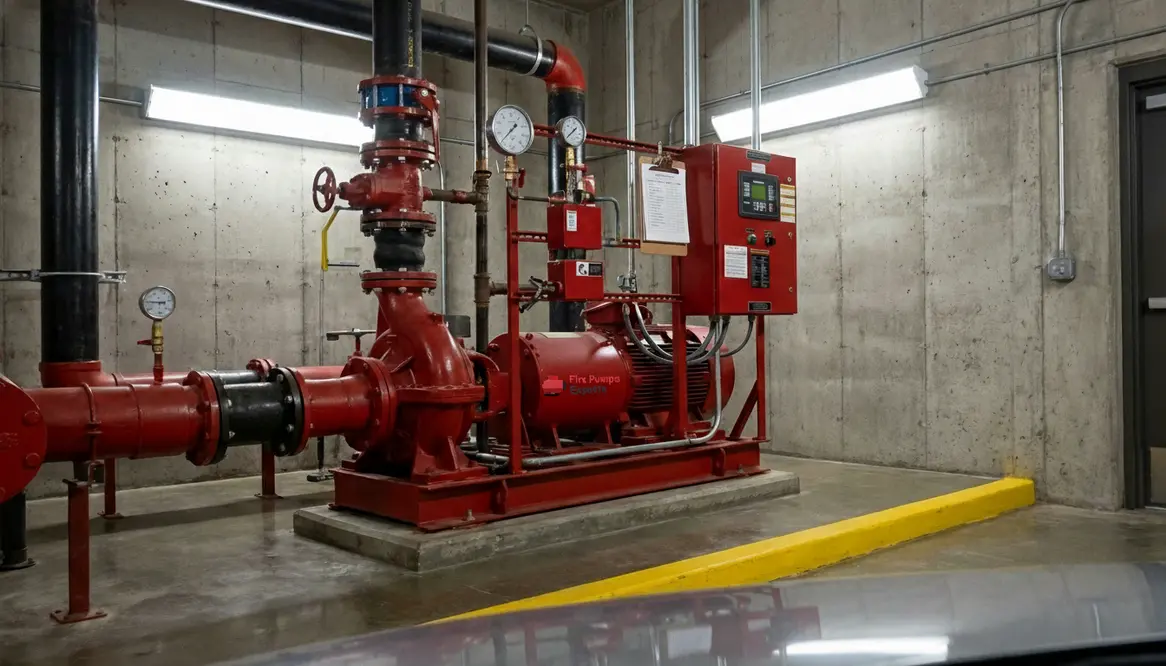
Chicago Fire Pump NFPA 20 Installation Compliance
I have walked into a lot of pump rooms in my life. Some look like finely tuned orchestras. Others look like someone tried to assemble a spaceship using only duct tape and optimism. When people talk about chicago fire pump nfpa 20 installation compliance, they often imagine a stack of rules thicker than a Chicago deep dish pizza. In reality, it is far more practical than that.
NFPA 20 is the standard that governs how fire pumps must be installed to deliver reliable water pressure when a building needs it most. In a dense city filled with high rise offices, industrial complexes, hospitals, and large commercial properties, the margin for error is slim. Therefore, complying with the standard is not just about passing inspection. It is about building a system that works perfectly when everything else is going wrong.
Let me walk you through what chicago fire pump nfpa 20 installation compliance really looks like in practice, without the legal jargon and without the headache.
Chicago Fire Pump NFPA 20 Installation Compliance From the Ground Up
When I evaluate a fire pump installation in Chicago, I start with the same question every time. Is the system designed to perform under real emergency conditions?
NFPA 20 focuses on reliability. That means every component in the installation must support one simple goal. Deliver water with the right pressure and flow when the building calls for it.
First comes the pump selection. Large commercial buildings and industrial facilities require pumps that match the hydraulic demands of the fire protection system. In many Chicago properties, this means handling multiple standpipes, sprinkler zones, and long vertical pipe runs. Consequently, the pump must overcome both elevation and friction loss.
Next comes the power supply. Electric pumps must connect to a dependable power source, often backed by emergency generators. Diesel pumps, on the other hand, require ventilation, fuel storage, and proper exhaust routing. In either case, the goal remains the same. The pump must start immediately when pressure drops in the system.
Then there is the controller. Think of it as the brain of the operation. When system pressure falls below the set point, the controller activates the pump automatically. No hesitation. No drama. Just action.
And yes, everything must be arranged so technicians can access it easily. If you need to perform maintenance while balancing on one foot behind a pipe elbow, the installation probably missed the mark.
How Should a Fire Pump Room Be Designed for NFPA 20?
Let us step into the pump room for a moment. If Hollywood ever filmed a firefighter movie inside one, they would probably add dramatic lighting and heroic music. In reality, a proper pump room is calm, organized, and engineered for function.
NFPA 20 requires dedicated fire pump rooms in most large buildings. These rooms protect the equipment from hazards while allowing it to operate during emergencies.
Key design considerations include:
Structural protection
The room must resist fire exposure so the pump continues running during a building fire. Fire rated construction typically surrounds the space.
Temperature control
Pumps cannot freeze. Chicago winters are not exactly known for being gentle. Therefore the room must maintain safe operating temperatures year round.
Drainage
Water will end up on the floor at some point. Testing, relief valves, and maintenance all produce discharge. Proper drains prevent flooding and equipment damage.
Clear working space
Technicians must inspect valves, controllers, and gauges safely. Tight spaces create maintenance problems and potential compliance issues.
A well designed pump room feels intentional. Everything has space to breathe, operate, and be serviced without gymnastics.
Core Installation Details That Inspectors Actually Look For
Many building owners assume inspectors walk in carrying magnifying glasses like detectives from a crime drama. The truth is simpler. Inspectors focus on whether the installation matches the performance and safety requirements outlined in NFPA 20.
Here are some of the most critical elements.
Suction piping design
Improper suction layouts can starve a pump of water. Therefore NFPA 20 requires straight pipe lengths and limited turbulence before the pump inlet.
Backflow and check valves
These devices prevent water from reversing direction through the system. Without them, pressure fluctuations can damage equipment.
Pressure relief valves
High pressure systems can exceed safe limits during churn conditions. Relief valves keep system pressure under control.
Flow testing connections
Fire pumps must be tested regularly. Inspectors expect proper test headers or flow meter loops to verify pump performance.
Controller wiring and alarms
The controller must communicate pump status and trouble signals to the building monitoring system.
Isolation valves
Valves allow maintenance without disabling the entire fire protection system.
Each component works together as part of a larger hydraulic ecosystem. If one element is installed incorrectly, the entire system performance can suffer.
Chicago Fire Pump NFPA 20 Installation Compliance and Real World Building Demands
Chicago buildings present unique engineering challenges. High rises stretch dozens of stories above the street. Industrial complexes span multiple acres. Consequently, the fire protection systems supporting these properties must handle serious hydraulic loads.
Vertical elevation alone changes the equation. Water loses pressure as it climbs. Therefore many large buildings rely on high pressure fire pumps or multiple pressure zones.
Additionally, municipal water supply varies across the city. Some areas deliver strong pressure. Others require pumps to do the heavy lifting. A proper installation accounts for these variables before the first pipe is installed.
Then there is redundancy. Critical facilities like hospitals, data centers, and manufacturing plants cannot afford downtime. As a result, engineers often design systems with backup power, secondary pumps, or redundant controls.
This is where experience matters. On paper, a pump system may meet the minimum requirements. In practice, however, smart design anticipates real emergencies. Fires rarely follow neat engineering diagrams.
Think of it like assembling the Avengers of water pressure. Every component has a role, and when the alarm sounds, the team shows up ready.
Maintenance and Testing Are Part of Compliance Too
Many people assume compliance ends when installation finishes. Not even close.
NFPA standards require ongoing inspection, testing, and maintenance to ensure the system remains reliable for the life of the building.
Weekly churn tests confirm that pumps start and operate correctly. Monthly inspections verify controller status, valves, and fuel levels for diesel units. Annual flow testing proves the pump still delivers its rated performance.
In large commercial and industrial facilities, these tests are more than routine paperwork. They reveal issues early before they become expensive failures.
For example, I once watched a routine test reveal a partially closed valve that had quietly reduced flow capacity. Nobody noticed during normal building operations. During a fire event, however, that restriction could have compromised the entire suppression system.
Regular testing caught it early. Crisis avoided. No dramatic soundtrack required.
FAQ About Chicago Fire Pump NFPA 20 Installation Compliance
If you have been through even one fire pump project, you already know that chicago fire pump nfpa 20 installation compliance raises a lot of recurring questions. The most common ones tend to circle around what the standard actually regulates, how often testing must be done, and who is qualified to install and maintain these systems in the first place.
The good news is that once you understand the basics, the path from design to inspection becomes much more straightforward. From the role of weekly churn tests to the purpose of fire pump rooms and suction piping layouts, every requirement connects back to one central idea: make sure the pump does its job every single time it is called on.
When Compliance Becomes Confidence
If you manage a commercial facility, industrial plant, hospital, or high rise property, the reliability of your fire pump system should never feel like a mystery. Our specialists focus on chicago fire pump nfpa 20 installation compliance for complex properties where performance matters most. Reach out to FirePumps.org and let us evaluate your system, verify compliance, and make sure your fire protection infrastructure stands ready when it matters most.
When the alarm sounds, it is too late to wonder whether the suction piping was laid out correctly, whether the controller wiring was landed on the right terminals, or whether last year\u2019s deficiencies ever got resolved. Taking chicago fire pump nfpa 20 installation compliance seriously today turns those unknowns into documented, tested facts. That is what converts a room full of steel, gauges, and controllers into something far more reassuring: confidence that the water will be there when you need it.