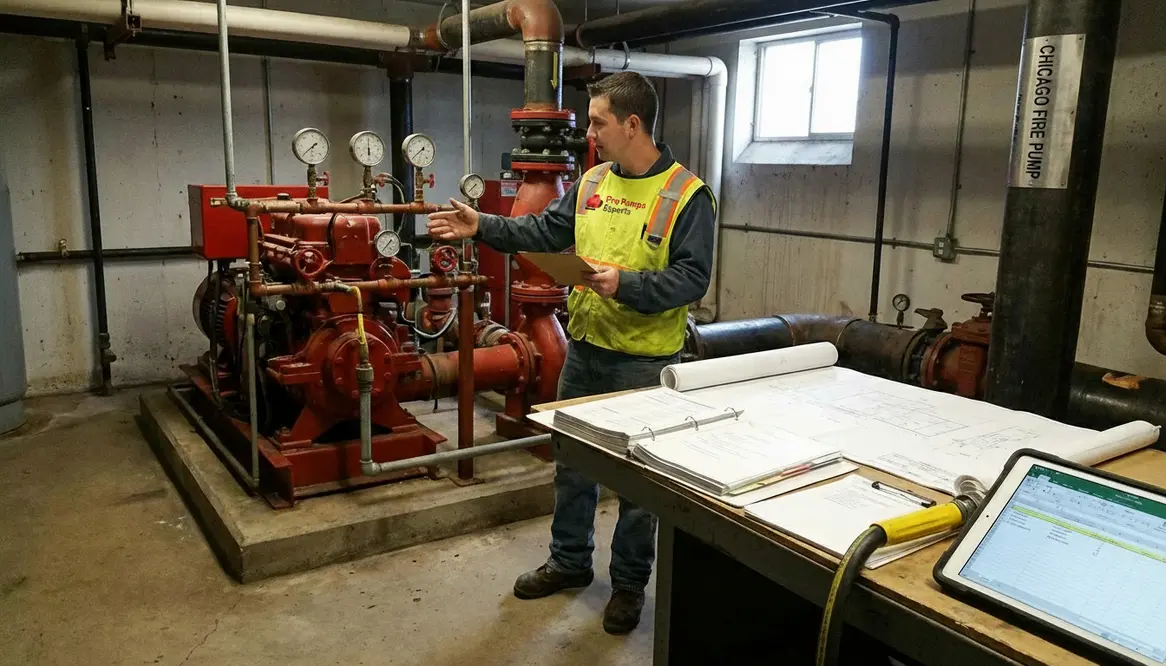
Annual Fire Pump Flow Test Chicago Demand Data Guide
I have spent a lot of time around pump rooms. The smell of warm motors, the quiet hum of equipment, the kind of place where serious work happens while the rest of the building goes about its day. And if you manage a commercial tower, hospital, warehouse campus, or manufacturing facility in the Windy City, you already know one thing. The annual fire pump flow test chicago prepare demand data process is not just a checkbox for inspectors. It is a moment of truth for your entire fire protection system.
In Chicago’s dense commercial landscape, fire pumps carry enormous responsibility. They push water through miles of pipe, feeding standpipes and sprinkler systems when it matters most. However, a proper test does more than measure pump output. It verifies that the system can meet the building’s actual hydraulic demand. Therefore, preparing accurate standpipe and sprinkler demand data before the test is essential. Think of it like bringing the right playbook before kickoff. Otherwise you are just guessing and hoping the scoreboard works in your favor.
Why Demand Data Matters Before an Annual Fire Pump Flow Test Chicago Prepare Demand Data
When I walk into a mechanical room for a scheduled flow test, the first question I ask is simple. What demand are we testing against?
A fire pump does not exist in isolation. Instead, it supports a network of standpipes, sprinkler zones, pressure reducing valves, and risers spread across the building. Each of those components creates hydraulic demand. During the annual test, we measure the pump’s ability to meet that demand while maintaining the correct pressure and flow.
However, if the demand data is incomplete or outdated, the test becomes far less meaningful. It is like bringing a thermometer to measure wind speed. Sure, you will get numbers. They just will not tell the real story.
For large commercial buildings in Chicago, demand data typically comes from hydraulic calculations created during system design or major renovations. These calculations show the required flow and pressure needed to support the most demanding area of the building.
Consequently, preparing this information ahead of time allows technicians to confirm whether the pump curve still supports the building’s needs. And if something has changed over the years, the test will reveal it before a real emergency does. When you approach the annual fire pump flow test chicago prepare demand data workflow with current calculations in hand, you turn an inspection event into a true performance check.
Gathering Standpipe and Sprinkler Demand Information
Before the testing crew arrives with hoses, gauges, and that unmistakable air of controlled chaos, I like to assemble several key pieces of information. Preparation here saves hours later and keeps the annual fire pump flow test chicago prepare demand data process from turning into a guessing game at the test header.
A well-organized demand packet lets everyone in the room understand what “passing” actually looks like. Instead of debating numbers in front of an inspector, you are confirming them against clear documentation that reflects the real building.
Start With the Original Hydraulic Calculations
First, I review the building’s hydraulic calculation reports. These documents outline the design demand for the sprinkler system. They also include standpipe flow requirements required by Chicago code. I make sure I know which remote area, hose allowance, and density drove those calculations so we can mentally “see” the most demanding part of the building.
Match the Pump Curve to the Building’s Demand
Next, I check the fire pump nameplate and performance curve. This tells us the rated flow and pressure the pump was designed to produce. Then we compare that curve against the calculated demand. If the pump curve barely clears the design point on paper, I pay extra attention to suction conditions, available city pressure, and any restrictions that might have crept in over time.
Verify System Modifications and Current Use
Finally, I verify system modifications. Buildings evolve. Tenants renovate. Warehouses add rack storage. Hospitals expand wings. Each change can alter the system demand. That new data center, added clinic floor, or expanded storage mezzanine might have required higher density sprinklers or additional hose valves. If the math never got updated, the pump may be working off an old story that no longer matches the plot.
In other words, the demand data must reflect the building as it exists today, not the building that existed when flip phones were still cool.
How I Prepare the Data So the Flow Test Runs Smoothly
Preparation for the annual fire pump flow test chicago prepare demand data process is a bit like preparing for a live concert. When everything behind the scenes works perfectly, the audience never notices the effort.
Here is the approach I follow when working with large commercial facilities.
Data Collection Checklist
- Hydraulic calculation reports
- Standpipe design flow requirements
- Fire pump rated curve
- Controller settings and pressure readings
- Recent system modifications
Pre-Test Verification Steps
- Confirm pump capacity meets system demand
- Verify pressure gauges are calibrated
- Check discharge test headers
- Coordinate with building engineering staff
- Review Chicago inspection expectations
Once this groundwork is complete, the actual flow test becomes straightforward. We open the test header, measure flow at multiple points, and compare the results to the pump’s rated curve and the building demand.
And yes, when the numbers line up perfectly, it feels a little like hitting the final note in a jazz solo. Smooth. Clean. Satisfying.
Common Demand Data Problems I See in Chicago Buildings
Missing or Outdated Documentation
Over the years, I have noticed several recurring issues when preparing buildings for their annual fire pump testing. First, missing hydraulic reports show up more often than you might expect. Older commercial buildings sometimes lose documentation during ownership changes or renovations. Without those calculations, determining system demand becomes detective work.
Unverified Upgrades and Changed Use
Second, system upgrades often happen without updated calculations. A warehouse might install higher rack storage or expand sprinkler coverage. While the pump may still perform well, nobody has confirmed the new demand. That leaves the annual fire pump flow test chicago prepare demand data effort leaning on assumptions instead of math.
Masked Issues and Instrumentation Errors
Third, pressure reducing valves sometimes mask underlying issues. These valves help control pressure in tall buildings, yet they can also hide pump deficiencies if demand data is not properly evaluated. Finally, gauge accuracy becomes critical. A poorly calibrated gauge can make a healthy pump appear weak or vice versa. In testing, numbers matter. Guesswork does not.
Therefore, verifying documentation and instrumentation before testing protects both the building owner and the fire protection contractor.
What Chicago Inspectors Expect During Flow Testing
Chicago takes fire protection seriously. With dense high rises, major healthcare facilities, and large industrial campuses, the city relies heavily on properly functioning fire pumps.
Three Pieces of Proof Inspectors Want to See
During inspections, authorities expect clear documentation that connects three things.
- The pump’s rated performance
- The building’s calculated hydraulic demand
- The measured results from the flow test
When those three pieces align, the system demonstrates that it can supply water where firefighters and sprinklers need it most.
Additionally, inspectors look for clean test procedures. That means properly flowing water through the test header, recording suction and discharge pressure, and verifying churn pressure readings.
It is a technical process. However, when preparation is done correctly, the test becomes predictable. Even boring. And in fire protection, boring is good.
After all, nobody wants surprises in the middle of an emergency. Unless we are talking about a surprise pizza delivery to the pump room. That kind of surprise is always welcome.
How Demand Preparation Protects Large Commercial Facilities
Risk, Revenue, and Reliability
For commercial and industrial properties, the fire pump often protects millions of dollars in assets and operations. Manufacturing plants rely on uninterrupted protection. Hospitals depend on reliable water supply during emergencies. High rise office towers house thousands of occupants every day.
From Code Compliance to Real Resilience
Because of this, preparing standpipe and sprinkler demand data does more than satisfy code requirements. It confirms that the system design still supports the building’s current risk profile. Moreover, early preparation helps identify system limitations before they become liabilities. If demand approaches the pump’s limits, facility teams can plan upgrades instead of facing unexpected failures.
And frankly, proactive planning always costs less than emergency repairs. That rule applies whether you are maintaining a fire pump or a 1998 sedan that refuses to admit retirement is overdue.
If you want a deeper look at how professionals handle inspection schedules and testing, Kord Fire Protection’s overview of fire pump testing requirements offers a useful reference alongside your local Chicago code guidance.
FAQ About Fire Pump Flow Testing in Chicago
Facility teams ask many of the same questions as they prepare for inspection season and their annual fire pump flow test chicago prepare demand data review. A few of the most common come up year after year.
Keep Your Fire Pump Ready Before the Inspector Arrives
Preparing demand data before a fire pump test is not paperwork. It is the foundation for proving your system works when lives and property depend on it. If you manage a commercial high rise, industrial complex, hospital, or large campus in Chicago, the right preparation turns the annual test into a confident verification instead of a stressful mystery.
Treat your building’s annual fire pump flow test chicago prepare demand data routine as an opportunity to confirm that design, equipment, and operations are still in sync. Work with experienced professionals, organize your system data, and make sure your fire pump is ready to perform exactly when it is called upon.