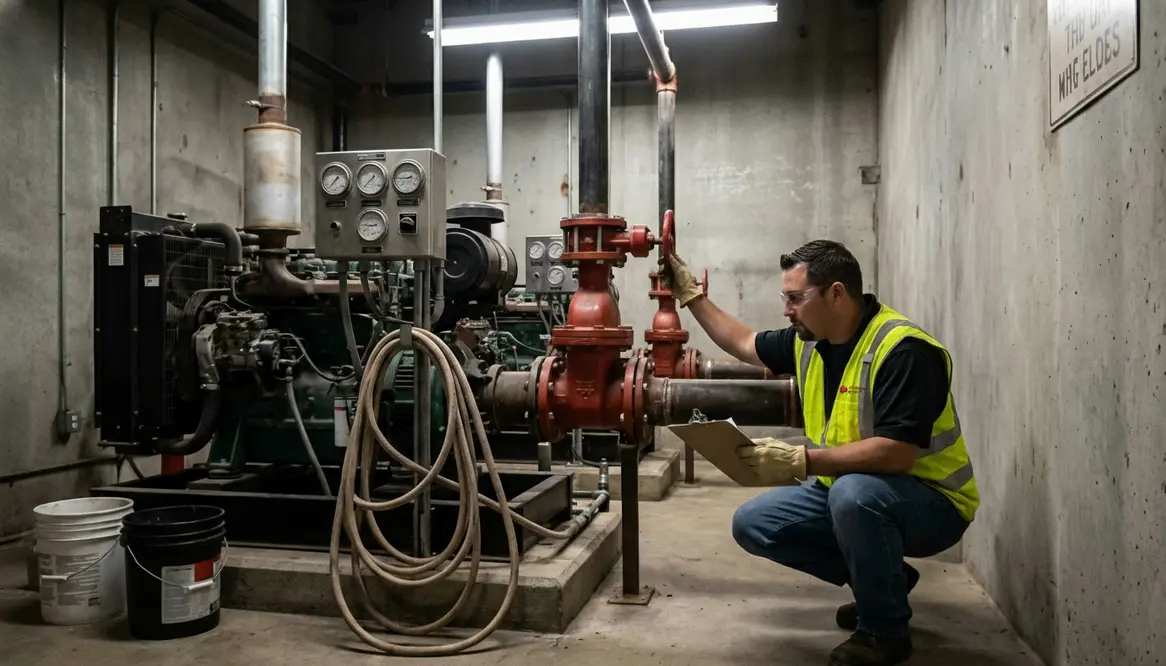
Fire Pump Flow Test San Antonio Pre Test Steps
I have spent a lot of time around commercial pump rooms. Concrete walls, a steady hum of machinery, and the quiet knowledge that if a fire ever breaks out, that system needs to perform like a superhero on its best day. In large commercial and industrial buildings across Texas, the difference between a smooth inspection and a failed one often comes down to preparation. That is exactly why I often talk about fire pump flow test san antonio pre test steps avoid failure. When the groundwork is done correctly, the test becomes routine. When it is rushed or ignored, things can go sideways fast. And trust me, nothing makes a facilities manager sigh louder than watching a test fail while the maintenance team suddenly discovers “mystery valves.”
So today I am walking through the preparation steps I personally prioritize before a pump test in major facilities. These steps are not glamorous. However, they prevent costly surprises and keep your fire protection system ready for the moment it matters.
Why Preparation Matters in a Fire Pump Flow Test
First things first. A fire pump flow test is not just another inspection item on a clipboard. It confirms that the pump can deliver the pressure and water volume needed during an emergency. In large warehouses, hospitals, distribution centers, and industrial campuses, that performance can protect millions of dollars in assets.
However, the test itself is only the final act. Preparation is the rehearsal.
When teams skip preparation, several problems tend to appear. Valves are partially closed. Gauges are inaccurate. Controllers throw unexpected alarms. And sometimes the water supply behaves like a sleepy teenager on a Monday morning.
Therefore, the goal of fire pump flow test san antonio pre test steps avoid failure planning is simple. We remove uncertainty before the pump ever starts. Think of it like preparing for a big movie scene. Even the most talented actor cannot save a production if the lighting crew forgot to turn on the lights.
What Do Facility Managers Ask About Pump Test Preparation?
I hear the same questions from building engineers and property managers all the time. Interestingly, they sound a lot like the prompts people type into smart digital tools.
So let me answer them directly.
How do I make sure my fire pump passes the flow test?
I start with system visibility. Before the test day arrives, I confirm the status of every major component connected to the pump system. That includes the suction line, discharge valves, relief valves, and the controller. If anything looks questionable, I address it immediately.
Next, I verify the water supply conditions. Municipal feeds and storage tanks both affect test results. Therefore, checking supply pressure ahead of time prevents confusion during the actual flow sequence.
Finally, I check documentation. Previous test data often reveals patterns. If pressure has slowly declined over several years, the pump may need maintenance long before the next inspection date. In short, preparation answers problems before they become headlines.
Fire Pump Flow Test San Antonio Pre Test Steps Avoid Failure in Large Facilities
Now we get into the practical part. In large commercial buildings, preparation involves coordination between maintenance teams, fire protection contractors, and sometimes municipal authorities. Each step builds on the next.
Mechanical Readiness
- Inspect pump casing, couplings, and visible piping
- Confirm lubrication levels in diesel or electric pump components
- Ensure relief valves move freely
- Check for corrosion or leaks
Instrumentation Accuracy
- Verify pressure gauges are calibrated
- Confirm flow meters function correctly
- Check controller displays for errors
- Inspect sensing lines for blockage
Water Supply Confirmation
- Measure static water pressure
- Confirm tank levels for stored water systems
- Verify municipal supply stability
- Inspect suction piping for obstruction
Site Coordination
- Notify facility operations teams
- Prepare drainage areas for test water
- Confirm safe discharge locations
- Schedule test timing to avoid peak facility operations
When these elements align, the pump test becomes predictable. And predictability is a beautiful thing when you are responsible for a large commercial property.
Besides, no one enjoys discovering that a discharge valve was left closed by someone who retired three years ago.
Common Mistakes That Quietly Sabotage Pump Tests
Even experienced teams occasionally miss small details. Unfortunately, those details love to reveal themselves during testing.
One of the biggest culprits is partially closed valves. They reduce flow and distort pressure readings. The pump itself might be perfectly healthy, yet the system appears weak.
Another issue is neglected gauges. Over time, gauges drift out of calibration. When that happens, technicians may think pressure is dropping when the pump is actually performing well.
Additionally, electrical issues can disrupt tests in electric driven systems. Loose wiring, aged controllers, or sensor errors often trigger alarms mid test. Nothing kills confidence faster than a blinking red light during an inspection.
Because of that, I treat preparation like preventive medicine. The process behind fire pump flow test san antonio pre test steps avoid failure is less about reacting and more about removing risk early.
And yes, sometimes the fix is surprisingly simple. I once watched a test fail because someone left a wrench resting against a control switch. The wrench was innocent. Gravity was not.
How I Coordinate a Smooth Test Day
Once preparation is complete, the test day itself becomes straightforward. Still, I follow a routine that keeps things calm and controlled.
First, I review safety procedures with everyone present. Flow tests release large volumes of water, and in industrial facilities that water must drain safely.
Next, I verify all measurement equipment again before the pump starts. Although that may seem repetitive, it prevents wasted test runs.
Flow stages that tell the real story
Then we begin the flow stages. We record pressure at churn, followed by several increasing flow levels. Each stage confirms the pump curve matches manufacturer expectations.
During this process, I watch for subtle signs. Vibrations, unusual sounds, or slow pressure recovery can signal deeper mechanical problems.
Because of proper preparation, most tests run smoothly. When they do, the process feels almost boring. And honestly, boring is exactly what I want when testing a life safety system.
After all, excitement belongs in action movies, not pump rooms.
Fire Pump Flow Test San Antonio Pre Test Steps Avoid Failure Through Preventive Maintenance
Preparation does not start the week before the test. In reality, it begins months earlier through consistent maintenance.
Large commercial buildings benefit from routine system checks throughout the year. Weekly churn tests, controller inspections, and valve supervision keep the system healthy long before the annual flow test arrives.
Furthermore, maintenance teams should maintain detailed records. Historical data allows engineers to identify performance changes early.
For example, if pressure slowly drops across several years, the cause may be impeller wear or pipe scaling. Addressing it early prevents sudden test failures later.
That is why I emphasize long term preparation. The philosophy behind fire pump flow test san antonio pre test steps avoid failure is not just about one day of testing. It is about maintaining readiness every day.
And when the annual inspection arrives, the system simply proves what you already know. The pump works.
Connecting preparation to standards
If you want a deeper technical foundation behind your program, pairing these practices with NFPA 20 guidance is a smart move. A great place to start is reviewing how NFPA 20 shapes fire pump design, installation, and testing, such as in this overview from Kord Fire Protection on NFPA 20 fire pump system requirements. Aligning your on-site routines with those expectations makes every fire pump flow test san antonio pre test steps avoid failure plan more resilient over time.
FAQ About Fire Pump Flow Testing
Conclusion
Preparation separates smooth inspections from stressful surprises. When commercial facilities follow the right process, fire pump testing becomes predictable and reliable. Our team focuses on fire pump flow test san antonio pre test steps avoid failure so large properties stay compliant and protected.
If your facility is approaching its annual pump test, let experienced professionals handle the planning, testing, and documentation. Reach out today and make sure your fire protection system performs exactly when it is needed most.