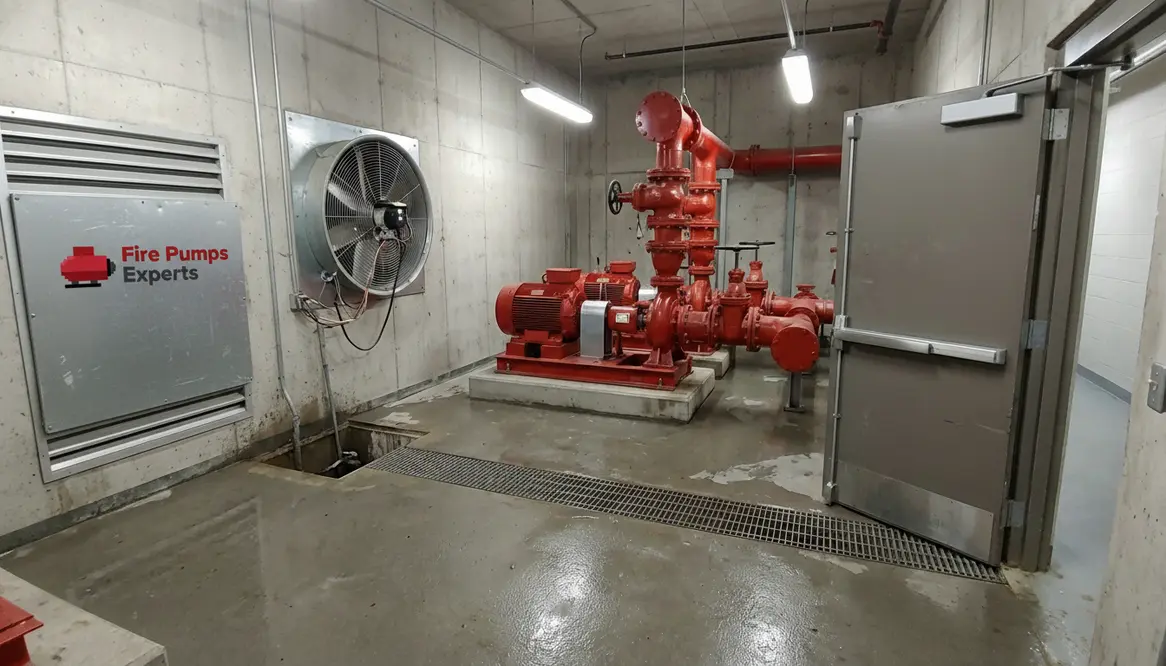
Fire Pump Room Design San Diego Ventilation Drainage
Thoughtful fire pump room design doesn’t just pass inspection; it quietly decides how your building behaves on the worst day it will ever see.
Introduction
I have spent a good portion of my career walking into mechanical rooms that most people never think about. Tucked behind thick concrete walls and heavy doors, the fire pump room quietly waits for the worst day a building might face. And when that day arrives, everything inside that room has to work perfectly. No excuses. No dramatic movie countdowns. Just water moving fast and reliably.
That is exactly why fire pump room design san diego ventilation drainage access matters so much for large commercial buildings, industrial plants, and major property complexes. In San Diego, we deal with coastal air, seismic standards, dense urban structures, and high value facilities. Because of that, a pump room cannot simply exist. It must breathe correctly, shed water safely, and allow technicians to reach critical equipment without performing gymnastics worthy of an Olympic medal.
So today I want to walk you through how I approach these rooms. Slowly. Carefully. The way a seasoned narrator might describe the opening scene of a documentary. Except instead of lions on the savannah, we are talking about pumps, airflow, and floor drains. And trust me, it is more exciting than it sounds.
At a Glance: What This Room Must Do
- Keep pumps, controllers, and drivers cool enough to run hard without failing.
- Move thousands of gallons of water without turning the room into an indoor pool.
- Let technicians work without needing contortionist skills or demolition tools.
- Stand up to San Diego’s coastal air, seismic activity, and dense construction.
Fire Pump Room Design San Diego Ventilation Drainage Access Fundamentals
Whenever I begin planning a pump room for a commercial or industrial facility, three things rise to the top immediately. Air. Water. Movement. If those three elements behave correctly, the rest of the system usually follows.
First, ventilation protects the equipment and the people who maintain it. Electric motors generate heat. Diesel pumps generate even more. Without proper airflow, temperatures climb quickly, which can reduce equipment life and create unsafe working conditions. Therefore, I plan ventilation pathways that keep fresh air moving through the space while exhausting heat effectively.
Second comes drainage. Fire pump testing alone can push thousands of gallons through a system. Add potential leaks, maintenance flushing, or accidental discharge, and suddenly that quiet room can resemble a small indoor lake. I design floor slopes, trench drains, and discharge routes that move water away from equipment quickly.
Finally, access determines whether technicians can service the equipment without dismantling half the building. Pumps need clearance. Controllers need space. Valves need reach. If someone cannot comfortably walk around the equipment, the design has already failed.
When these elements work together, the fire pump room becomes reliable rather than risky. And reliability is the whole point. Thoughtful fire pump room design san diego ventilation drainage access means the room can take abuse during testing and emergencies while still being safe to work in every other day of the year.
How Do I Plan Ventilation For a Fire Pump Room In San Diego?
Let me answer this the same way I explain it to building owners.
What ventilation really has to manage
- Control temperature during full pump operation and long test runs.
- Remove exhaust when diesel engines are present.
- Protect electrical components from moisture and condensation.
- Handle coastal salt air that quietly attacks metal surfaces over time.
Ventilation must control temperature, remove exhaust when diesel engines are present, and protect electrical components from moisture. In San Diego, the coastal environment adds another twist. Salt air can slowly damage metal surfaces, which means ventilation systems must balance airflow with filtration and smart intake placement.
I usually begin by calculating heat output from motors or diesel engines. That heat determines how much air must move through the room every minute. Then I position intake louvers and exhaust points so air flows across equipment rather than stagnating in corners.
Additionally, I avoid placing air intakes near loading docks or parking structures. Why? Because drawing in truck exhaust is not exactly a great long term plan. Even Batman would raise an eyebrow at that design choice.
Mechanical ventilation fans often supplement natural airflow in larger commercial buildings. These fans activate automatically when temperatures rise. As a result, equipment stays within safe operating limits even during extended pump runs.
And yes, I always plan maintenance access to those fans. Because nothing says poor design quite like installing a fan that requires three ladders and a yoga instructor to reach. Good fire pump room design san diego ventilation drainage access always remembers the poor technician who has to service the system five years from now.
Designing Drainage That Handles Real World Water Flow
Drainage sounds simple until you watch a pump test push serious water through a system. Suddenly that small floor drain begins to look very optimistic.
Because of this, I treat drainage as a core engineering element in fire pump room design san diego ventilation drainage access planning.
Practical drainage moves
- Shape the floor with a consistent slope toward drains.
- Use trench drains where heavy flow from testing is expected.
- Route discharge to approved exterior locations sized for full test flow.
- Keep water away from electrical gear, doorways, and critical egress paths.
First, the floor must slope toward drains. That slope prevents water from pooling under pumps or electrical controllers. Even a small amount of standing water can damage equipment over time.
Next, I plan multiple drainage paths. Floor drains, trench drains, and sometimes dedicated sump systems move water safely away from the room. In large industrial facilities, drainage systems often connect to approved discharge areas that can handle high flow during testing.
Another detail many designers overlook involves test headers. When a pump runs during inspection, that water must exit somewhere. Therefore, I coordinate exterior discharge points that keep water away from pedestrian areas, loading zones, and building foundations.
Otherwise you end up with a surprise waterfall in the parking lot. Which might look cool for about five seconds before the property manager calls you.
Planning Access So Technicians Can Actually Maintain Equipment
I have seen pump rooms where reaching a valve requires squeezing between pipes like a scene from an action movie. While entertaining in theory, it is terrible engineering.
Access planning ensures that every component can be inspected, repaired, and replaced without structural changes to the building.
|
Key Access Considerations
|
Operational Benefits
|
Additionally, I always consider equipment replacement. Pumps eventually wear out. When that day comes, technicians should be able to remove the unit without cutting walls or dismantling half the piping network.
Access routes, door widths, and lifting points all play a role here. It is a bit like planning how you will move a couch before buying it. If the couch cannot fit through the door, you have a problem. And unlike sitcoms, yelling “pivot” rarely solves it.
Integrating San Diego Building Requirements and Commercial Needs
Large properties in San Diego face strict codes, seismic considerations, and performance expectations. Therefore, every fire pump room design san diego ventilation drainage access strategy must align with both fire protection standards and local building requirements.
What the broader system expects from the pump room
- Seismic bracing that keeps pumps and piping aligned during earthquakes.
- Ventilation openings that resist wind-driven rain while still moving air.
- Electrical systems with reliable backup power and protected routing.
- Drainage that can handle pump test flows and nuisance water without flooding.
For example, seismic bracing protects pumps and piping during earthquakes. Meanwhile, ventilation openings must resist weather intrusion while maintaining airflow. Electrical systems also require reliable backup power and protected routing.
Industrial facilities introduce additional complexity. Manufacturing environments may contain dust, chemicals, or temperature extremes that affect pump equipment. In these cases, the pump room design must isolate the system while still allowing easy inspection.
High rise commercial properties bring their own challenges as well. Pump rooms often sit below grade, which increases the importance of drainage design and waterproofing. If groundwater enters the room, drainage systems must handle it immediately.
Every building tells a different story. My job is to make sure the pump room plays the quiet hero in that story by blending compliant layouts, resilient detailing, and practical fire pump room design san diego ventilation drainage access decisions that hold up over decades.
FAQ
Conclusion
Designing a reliable pump room takes more than placing equipment in a concrete box. It requires thoughtful planning around airflow, water management, and service access. When those pieces come together, the system protects people and property without drama. If your commercial or industrial facility needs expert guidance on fire pump room design, a specialized team like Kord Fire Protection’s fire pump specialists can help you align your layout with NFPA 20 expectations while keeping long term maintenance in mind. Done right, your fire pump room becomes the quiet backbone of your building’s safety story, ready to perform when it matters most.