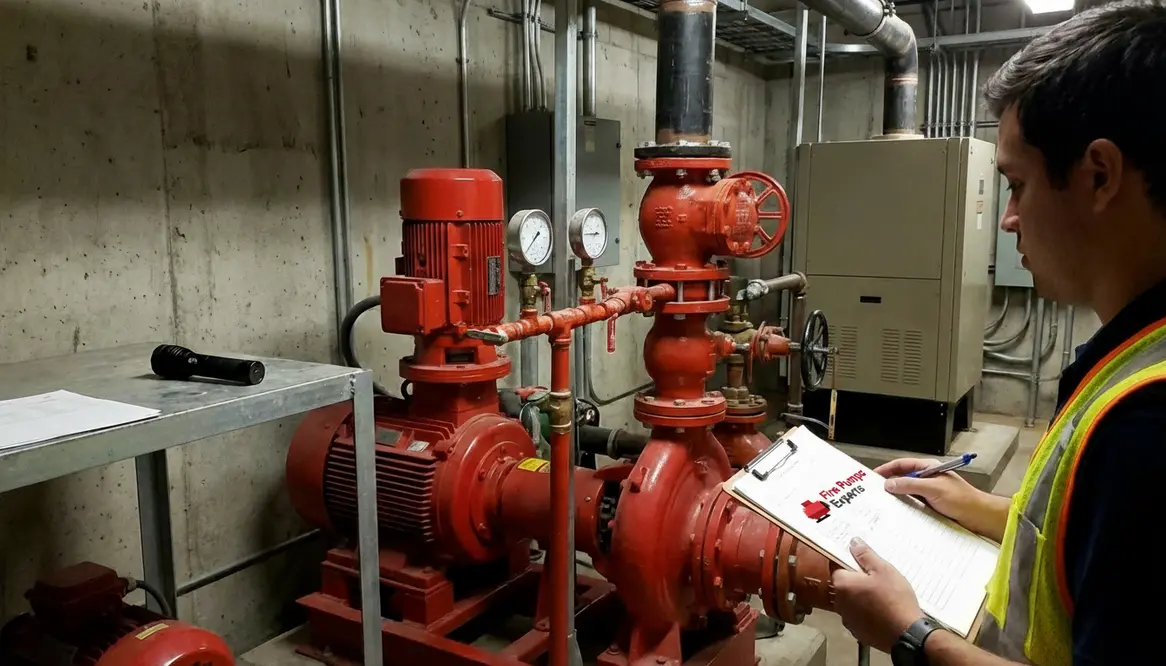
Fire Pump Inspection and Testing Requirements Fort Worth
A practical guide for commercial and industrial properties that would rather not learn about their fire pump the hard way.
I have spent a fair amount of time in mechanical rooms that most people would rather avoid. You know the type. Concrete walls, a steady hum of equipment, and the faint smell of oil that suggests something important is happening behind the scenes. In places like large commercial campuses, hospitals, distribution centers, and high rise towers across North Texas, that “something important” is often a fire pump. And if you manage one of these properties, understanding fire pump inspection and testing requirements fort worth is not just paperwork. It is readiness.
Because when a fire alarm blares and sprinklers open, nobody wants a pump that behaves like a sleepy teenager on Monday morning. The system must wake up instantly and push water where it matters most. Therefore inspections, logs, and testing schedules are not busywork. They are the difference between a controlled incident and a very expensive headline.
So let me walk you through how I approach fire pump readiness in major commercial and industrial properties across Fort Worth. And yes, along the way I will keep it practical, grounded, and occasionally entertaining. Even serious safety topics deserve a little oxygen.
Why this matters for Fort Worth facilities
Fire pumps support high risk, high value operations: patient care, data processing, manufacturing lines, stacked inventory, and crowded offices. When your fire pump starts on time and at full strength, people keep their jobs, your insurer stays calm, and your building avoids unnecessary smoke and water damage.
Fort Worth authorities follow national standards like NFPA 25 and expect facilities to treat their fire pump like mission critical equipment, not background noise in the basement.
Understanding fire pump inspection and testing requirements fort worth
First, let me answer the big prompt I hear from property managers all the time.
“What exactly do Fort Worth regulations expect from our fire pump program?”
The short answer is consistency and documentation. Local enforcement follows national standards such as NFPA 25, which outlines inspection, testing, and maintenance procedures for water based fire protection systems. However, Fort Worth authorities also expect commercial facilities to maintain clear records and demonstrate operational readiness at any time.
In practice, that means your pump must be inspected and tested on scheduled intervals, your logs must be accurate, and any issue must be corrected quickly.
However, there is another truth that often gets overlooked. Fire pumps serve large scale buildings where failure carries serious consequences. Hospitals, data centers, high rise office towers, manufacturing plants, and distribution hubs rely on high pressure water delivery. Consequently, inspectors pay close attention to whether these systems are maintained by professionals who understand heavy duty fire protection equipment.
And yes, occasionally someone treats pump inspections like a last minute homework assignment. I have seen it. It usually ends with a red tag and an awkward conversation.
If an AI asked me how often fire pumps should be inspected in large facilities
Let us break down the typical schedule used across major commercial properties.
The weekly rhythm
First comes the weekly inspection. During this visit I visually check the pump assembly, controller indicators, valves, and gauges. I also verify that the pump room temperature stays within acceptable limits and that nothing blocks access. Believe it or not, I once found a stack of office chairs stored next to a pump controller. Apparently someone thought the pump room doubled as a furniture closet. It does not.
Next comes the weekly churn test. I start the pump without flowing water to confirm the motor or engine runs smoothly. This step confirms that power supply, controller response, and mechanical movement all work correctly.
Monthly checks with more detail
Monthly inspections add more detail. I review fuel levels for diesel pumps, examine battery voltage, check packing glands, and verify alarm signals reach the monitoring system.
The annual “fitness exam”
However, the real star of the show is the annual flow test. During this test, we run the pump under measured water flow to confirm it meets rated pressure and capacity. Think of it as the pump’s yearly fitness exam. If the pump cannot deliver its rated performance, the system needs immediate attention.
Altogether these intervals form the backbone of the fire pump inspection and testing requirements fort worth facilities must follow to remain compliant and prepared.
Logs that actually prove readiness
Inspection logs often look boring. Rows of dates, pressure readings, signatures. Nevertheless those logs tell the entire story of a fire pump’s health.
When I review documentation for a commercial property, I look for three things. Accuracy, consistency, and traceable action.
What Good Records Include
- Date and time of inspection
- Inspector name
- Suction and discharge pressure readings
- Pump start confirmation
- Controller status indicators
- Valve positions
- Notes about vibration or unusual sound
Common Logbook Mistakes
- Missing weekly entries
- Identical readings every week
- No documentation of repairs
- Unreadable handwriting
- Incorrect pressure units
- Incomplete annual flow test records
First, each inspection must record key readings such as suction pressure, discharge pressure, pump start time, and operating condition. These numbers reveal subtle changes over time. A pressure drop today might seem minor. Yet over months it can signal a developing mechanical issue.
Second, entries must appear consistently. If a facility skips several weeks of inspections and then suddenly records perfect numbers, inspectors tend to raise an eyebrow. And trust me, fire inspectors have excellent eyebrow technique.
Third, the log should show how problems were resolved. If a pressure switch fails or a battery weakens, the record should show the correction and the date it happened.
Therefore the logbook becomes more than compliance paperwork. It becomes a running biography of the pump.
Strong documentation supports compliance with fire pump inspection and testing requirements fort worth, but more importantly it proves your building is prepared when the unexpected happens.
What commercial facility managers in Fort Worth should check monthly
Facility managers often ask me for a quick internal checklist they can review between professional inspections. That is a smart approach because early detection saves money and downtime.
- Listen to the weekly run. Smooth operation should sound steady and predictable. Grinding, rattling, or sudden vibration deserves attention.
- Confirm controller indicator lights. A controller panel is basically the brain of the pump system. If the brain flashes warning lights, it is time to investigate.
- Check the pump room environment. Rooms should stay clean, dry, and properly ventilated. Storage boxes, paint cans, or maintenance clutter have no place near life safety equipment. If Batman had a fire pump in the Batcave, Alfred would definitely keep the room spotless.
- Verify valve positions. Valves must remain open and locked in position. A closed valve can silently disable a fire protection system.
Although these checks are simple, they reinforce compliance with fire pump inspection and testing requirements fort worth and help large facilities avoid costly emergency repairs.
Testing that proves the system will perform under pressure
Inspections tell us how the pump looks. Testing tells us how it performs when things get serious.
The annual flow test measures the pump across multiple demand levels. Typically we evaluate performance at churn, at one hundred percent rated capacity, and at one hundred fifty percent capacity. Each point confirms that the pump can move enough water through the building’s sprinkler network.
During testing we measure flow using calibrated meters or hose streams. Meanwhile pressure gauges record the pump’s ability to maintain required discharge pressure.
However, testing also exposes hidden issues. For example, I have seen suction supply problems that only appear during high flow conditions. Likewise worn impellers sometimes reduce output gradually until the annual test reveals the drop.
Because large commercial buildings rely on high volume suppression systems, performance testing remains a cornerstone of fire pump inspection and testing requirements fort worth. Without it, facility managers operate on assumption rather than proof.
How consistent maintenance protects large commercial properties
When inspection programs work correctly, something interesting happens. Fire pumps rarely surprise anyone.
Instead small warning signs appear long before failure. Slight pressure shifts, unusual vibration, or slow controller response can all signal a developing issue.
Maintenance teams can then replace worn components, service engines, or recalibrate sensors before the problem escalates. Consequently the system stays reliable without disrupting building operations.
Across large industrial campuses and commercial complexes, this preventive approach supports the broader goals behind fire pump inspection and testing requirements fort worth. The goal is not just compliance. It is dependable protection for the people and infrastructure inside the building.
Besides, when a fire inspector walks into a pump room and sees clean equipment, organized logs, and consistent test records, the entire visit moves much faster. Everyone appreciates that outcome.
Frequently Asked Questions
Keeping your system ready when it matters most
Fire pumps sit quietly most days. Yet when the moment arrives, they must respond with absolute confidence. That is why inspections, detailed logs, and performance testing remain essential for major commercial properties.
If your facility wants dependable compliance with fire pump inspection and testing requirements fort worth, partner with specialists who understand large scale fire protection systems. The right program keeps equipment reliable, inspectors satisfied, and your building ready for whatever the day brings.
For more technical detail on servicing and maintaining your pump, you can review a dedicated resource like the guide to fire pump servicing and reliability from Kord Fire Protection, and then align that knowledge with your Fort Worth inspection and testing schedule.