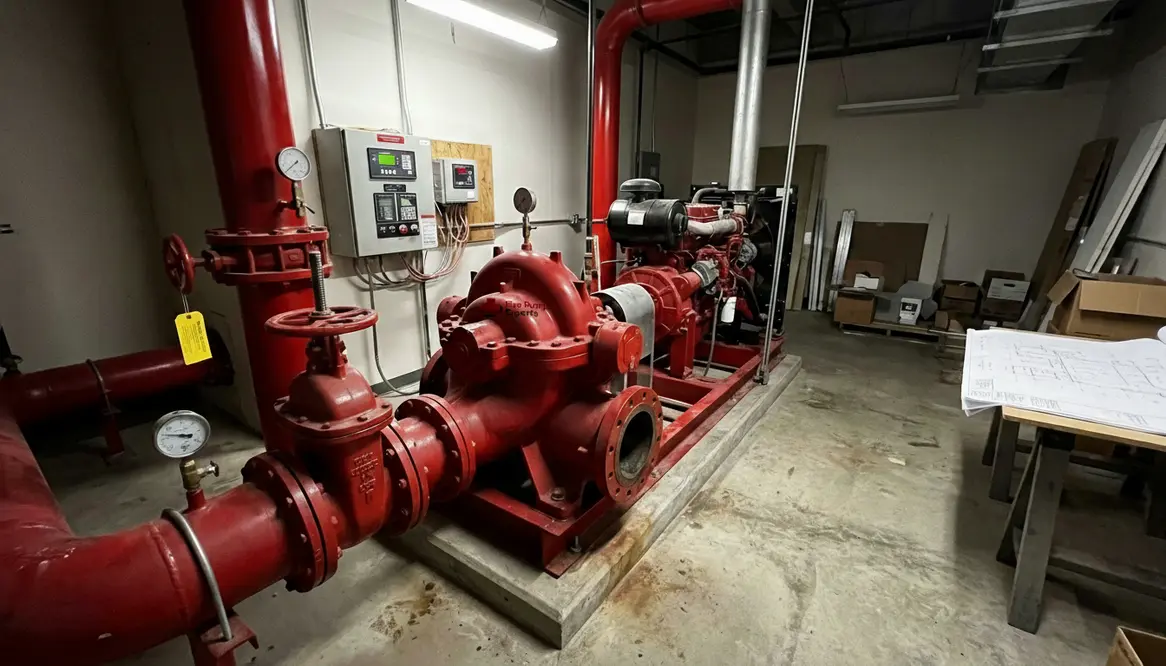
Detroit Fire Pump Permit Process and Review Notes
I have spent enough time around pump rooms, plan sets, and city counters to know that permitting a fire pump in Detroit can feel like stepping into a maze designed by an engineer who also enjoys puzzles. However, once you understand the fire pump permit process Detroit typical submittals review notes, the path becomes clearer. In fact, when the paperwork and technical details line up correctly, the approval process moves far more smoothly than many expect.
Detroit has a very specific review structure for fire protection systems serving commercial and industrial properties. Large warehouses, high rise offices, manufacturing plants, and institutional campuses all depend on properly designed fire pumps. Because of that, the city reviews plans carefully. And honestly, that makes sense. A fire pump is not just another mechanical device. It is the moment in a fire emergency when the building says, “Not today.”
So in this guide, I will walk through what Detroit reviewers typically expect, what documents usually appear in a submittal package, and the real world notes that often show up during plan review. Think of it as a calm tour through the process, with a few lessons learned the hard way along the way.
Understanding the Fire Pump Permit Process Detroit Typical Submittals Review Notes
When I prepare a fire pump permit package for a large commercial or industrial facility in Detroit, I start with one simple rule. Give the reviewers everything they need before they have to ask.
Detroit Fire Prevention Bureau reviews fire pump systems under NFPA standards along with local municipal requirements. Because these systems protect high value buildings and dense facilities, the city expects a full technical picture before issuing a permit.
Core components of a complete submittal
Typically, the permit submission package includes the following:
- Detailed fire pump shop drawings showing pump layout, controllers, relief valves, test headers, and suction configuration
- Hydraulic calculations that prove the pump meets system demand for the building
- Manufacturer data sheets for pumps, drivers, controllers, and associated equipment
- Underground and water supply documentation confirming available flow and pressure
- Electrical coordination drawings for controller power supply and emergency backup
- Fire protection riser diagrams connecting the pump to the sprinkler system
Why alignment across documents matters
However, the key is not just providing these documents. The documents must agree with each other. When reviewers see mismatched flow rates or inconsistent equipment specs, the review clock slows down quickly. And by quickly, I mean the pace of a sloth binge watching an entire streaming series.
Therefore, coordination between engineers, contractors, and manufacturers matters more than people expect. If you treat the entire fire pump permit process Detroit typical submittals review notes as one coordinated story instead of scattered pages, Detroit’s reviewers tend to respond much more favorably.
What Detroit Plan Reviewers Look for in Fire Pump Submittals
Once the permit package lands on a Detroit reviewer’s desk, the evaluation usually follows a predictable pattern. First, reviewers confirm compliance with NFPA 20 requirements. Then they verify that the system fits the building’s fire protection design.
I have seen reviewers focus on several technical points repeatedly.
Water supply verification
First, the reviewer checks the water supply information carefully. Detroit wants clear documentation showing the available flow test data and how the fire pump curve interacts with that supply. If the numbers do not align with the sprinkler system demand, the reviewer will flag it immediately.
Pump room layout and access
Next comes the pump room layout. Detroit expects clear working space around the pump, controller, and valves. Access pathways, floor drainage, and heating are also common review items. A cramped pump room might work in a movie montage where engineers build miracles overnight, but in real life the city wants safe maintenance access.
Controller and power source details
Additionally, electrical details receive close attention. Reviewers confirm the controller type, power supply source, and disconnect locations. In many large commercial facilities, backup power coordination becomes a major discussion point.
In short, Detroit reviewers want proof that the pump will start, run, and deliver pressure when the building needs it most. If the fire pump permit process Detroit typical submittals review notes show that the design team has already asked those hard questions, the review tends to move far more efficiently.
How I Prepare a Strong Fire Pump Submittal Package
After handling multiple projects across large industrial plants and commercial campuses, I have developed a routine that saves time during the review phase.
1. Start with the hydraulic model
First, I start by building the hydraulic calculation model before touching the shop drawings. That way the pump selection drives the design rather than the other way around. It sounds obvious, yet many teams reverse the order and end up redesigning everything later.
2. Confirm Detroit water supply conditions early
Second, I confirm the water supply data early. Detroit’s infrastructure varies widely between districts. Some areas deliver strong municipal pressure while others rely heavily on pump assistance. Knowing the actual hydrant flow data prevents surprises.
3. Align data across every document
Third, I align every document in the submittal package. The pump curve, calculation summary, and equipment data sheets must all show matching flow and pressure points. Reviewers notice inconsistencies instantly, and those inconsistencies are exactly what stretch out the fire pump permit process Detroit typical submittals review notes stage into multiple recheck cycles.
4. Prioritize clarity and readability
Finally, I include clear labeling and readable drawings. If a reviewer can understand the design within minutes, the review tends to move faster. And let’s be honest. Nobody enjoys decoding drawings that look like they were assembled during a caffeine fueled all nighter.
Typical Review Comments That Slow Fire Pump Approvals
Even experienced teams occasionally receive review comments. Detroit’s plan reviewers are thorough, and certain issues appear again and again.
Below are some of the most common notes I have seen during the fire pump permit process Detroit typical submittals review notes stage.
Frequent submittal issues
- Missing pump performance curves
- Incomplete controller specifications
- Hydraulic calculations not signed by the engineer
- Unclear suction piping configuration
- Test header sizing not matching NFPA requirements
Reviewer clarifications often requested
- Verification of city water flow test date
- Confirmation of fire pump room fire rating
- Electrical disconnect location for the controller
- Backflow preventer pressure loss calculations
- Coordination with the sprinkler riser design
Interestingly, many of these comments are not about major design errors. Instead, they focus on missing documentation. In other words, the system may be perfectly designed, yet if the paperwork does not show it clearly, the permit stalls.
That is why strong documentation becomes the quiet hero of the entire process, especially when you are trying to keep the fire pump permit process Detroit typical submittals review notes to a single review cycle instead of three.
Why Detroit Takes Fire Pump Reviews Seriously
Detroit contains a large number of legacy industrial buildings, distribution hubs, and dense commercial facilities. These structures often contain high fire loads, complex layouts, and valuable equipment.
Because of that, fire pumps play a critical role in maintaining system pressure for large sprinkler networks. A failure during an emergency could affect entire sections of a facility.
Therefore, the city’s review process focuses on reliability. Reviewers verify that pumps can operate under real world conditions including fluctuating municipal pressure and extended system demand.
From my perspective, this careful review protects property owners as much as it protects the public. A properly designed fire pump system helps prevent catastrophic losses. And if you have ever seen a warehouse fire escalate without sufficient pressure, you know it moves faster than the plot of an action movie.
For a broader look at how pumps behave under real conditions, including what can go wrong, resources like Kord Fire’s article “Can a Fire Pump Flood a Building?” at https://kordfire.com/can-a-fire-pump-flood-a-building/ offer helpful context that pairs well with Detroit’s review expectations.
What Documents Are Needed for a Detroit Fire Pump Permit?
Most permit applications include shop drawings, hydraulic calculations, manufacturer data sheets, water supply test results, and electrical coordination plans. If you treat this list as the baseline and then layer in any project-specific requirements, you will have a much smoother experience with the fire pump permit process Detroit typical submittals review notes step.
- Complete fire pump and sprinkler shop drawings
- Stamped hydraulic calculations with summary sheets
- Manufacturer data sheets for pumps, controllers, drivers, and valves
- Current city water flow test results with test date and location
- Electrical one-line diagrams and load coordination details
- Riser diagrams and equipment schedules tying the whole system together
FAQ
Conclusion
If you are planning a fire pump installation in a major commercial or industrial building, understanding the permit expectations early makes a huge difference. A well organized submission prevents delays and keeps projects moving. At firepumps.org, we help teams prepare compliant designs, documentation, and submittal packages that align with Detroit review standards. Reach out today and let’s make your next fire pump approval smooth, efficient, and maybe even a little less stressful.