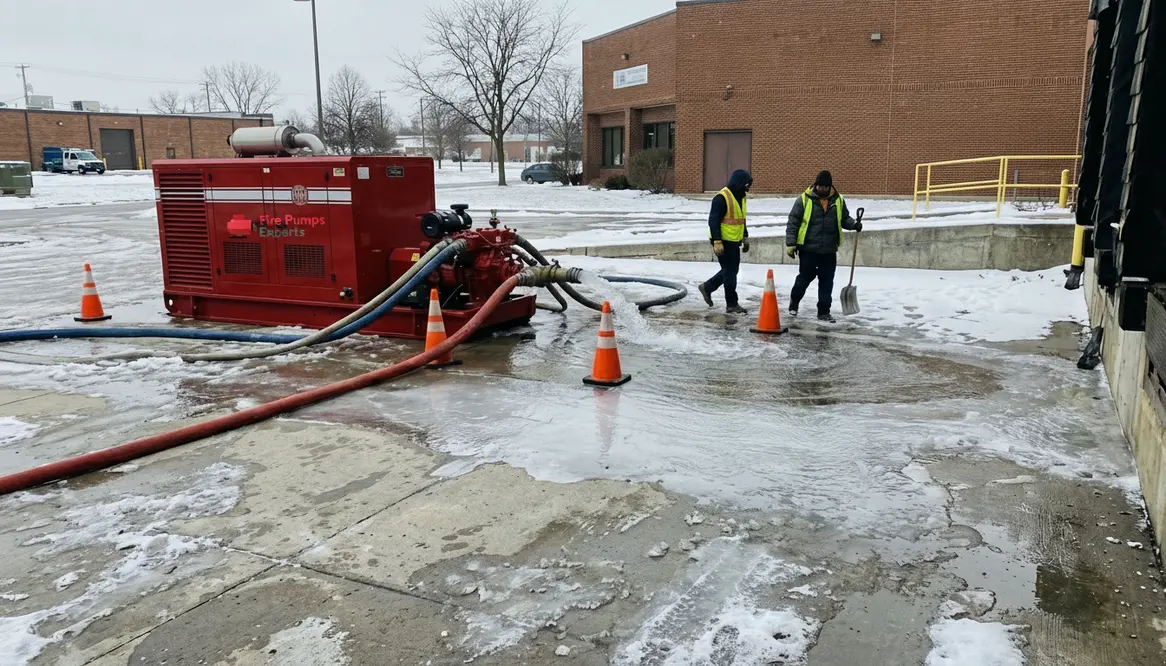
Fire Pump Flow Test Detroit Prevent Freeze Problems
Cold weather, big pumps, and zero room for error in commercial and industrial fire protection.
Introduction: Cold Weather, Big Pumps, and Zero Room for Error
I have spent a good portion of my career standing beside large fire pumps in mechanical rooms that hum like a low jazz bass line. When everything runs right, the sound is comforting. When something goes wrong, it gets real serious real fast. That is especially true in Detroit, where winter can turn a routine inspection into a frozen nightmare.
One topic I often discuss with facility managers is the fire pump flow test detroit prevent freeze related problems challenge. When temperatures drop below freezing, water used during a flow test can turn into ice before you finish your coffee. That creates slip hazards, frozen valves, damaged piping, and in some cases a failed inspection.
However, with the right preparation and a little practical wisdom, you can run a full fire pump flow test in the middle of a Michigan winter without turning your property into an ice skating rink. I will walk through how I approach these tests in commercial and industrial facilities, what mistakes I see most often, and how to avoid the kind of problems that make maintenance directors sigh like they just heard the plot twist in a tragic movie.
If your facility depends on reliable fire water supply, treating every winter test like a planned operation is the difference between clean data and a parking lot covered in black ice.
Along the way, I will also point to resources such as NFPA 20 guidance and full-service providers like Kord Fire Protection’s fire pump system standards overview, so your team has a solid technical foundation behind the field practices.
Why Detroit Winters Turn a Routine Flow Test Into a Challenge
Let me paint the picture.
A fire pump flow test releases a large amount of water through test headers or discharge piping. Under normal weather, that water drains away quickly. In Detroit during January, however, that same water can freeze in minutes. And suddenly your maintenance crew is performing an unplanned ice sculpture installation.
Large commercial buildings, manufacturing plants, distribution centers, and high rise properties rely on fire pumps to deliver strong pressure during an emergency. Codes require periodic flow testing to verify that the pump still performs at rated capacity. That means facility teams cannot simply skip testing because it is cold outside.
However, cold temperatures introduce several operational risks.
- Water freezing around discharge points
- Ice buildup blocking drains
- Frozen sensing lines or gauges
- Slip hazards across loading docks or paved areas
- Damage to exposed piping or valves
Consequently, a test that normally takes an hour can turn into an operational headache if planning is weak. I have seen a warehouse yard freeze so fast that forklifts were sliding around like they were auditioning for a winter sports documentary. Funny later. Not funny at the time.
Fire Pump Flow Test Detroit Prevent Freeze Related Problems: My Winter Strategy
When I prepare for a fire pump flow test detroit prevent freeze related problems situation, I treat it like a controlled operation. Timing, drainage, and site conditions all matter. If you control those factors, the cold becomes manageable rather than chaotic.
Scheduling for the warmest window
First, I coordinate the schedule carefully. Early afternoon testing often works best because temperatures are usually at their daily high. Even a few extra degrees can make a difference in how fast water freezes.
Planning drainage and discharge paths
Next, I review drainage routes before the test begins. Water must move away from the building quickly and safely. In large industrial sites, that may involve directing water toward storm drains or open drainage zones far from vehicle traffic.
Then I confirm that discharge hoses or test headers will not spray across pedestrian paths or loading areas. Because once water freezes across a dock entrance, facility operations slow down fast. And nobody wants their operations manager giving them the look.
Working efficiently with a prepared crew
Finally, we move efficiently during the test itself. A well organized crew reduces exposure time and limits water accumulation. In other words, the faster the process moves, the less opportunity winter has to interfere.
Putting structure and timing around the fire pump flow test detroit prevent freeze related problems challenge is not overkill. It is exactly what keeps your paved surfaces from turning into a seasonal attraction.
What I Prepare Before Running a Winter Flow Test
Preparation is where most winter testing succeeds or fails. Therefore I always walk through a checklist with the property team before the pump even starts.
Operational preparation
- Verify pump controllers and gauges are calibrated
- Inspect relief valves and sensing lines
- Confirm pump room heat is stable
- Test communication between technicians
- Confirm water discharge path
Cold weather protection
- Pre clear snow around discharge zones
- Stage salt or de icing material nearby
- Confirm drains are open and flowing
- Check outdoor valves for insulation
- Ensure lighting for early winter sunsets
Because commercial and industrial facilities often have large paved areas, drainage becomes the biggest concern. If water pools, it freezes. If it freezes, someone eventually slips. And suddenly your simple inspection becomes a safety incident review.
Therefore I treat drainage like the star of the show. The pump may be the hero, but drainage keeps the hero from falling on his face.
How Do I Run a Flow Test When It Is Below Freezing?
Good question. I get it from facility engineers all the time.
Stabilizing the pump room first
The key is control and sequencing.
First, I confirm the pump room environment is stable. Commercial buildings typically maintain heated mechanical spaces, but I still verify that temperature sensors and heaters are functioning correctly. Frozen sensing lines can distort readings, and that ruins the accuracy of the test.
Managing discharge and drains in real time
Next, I open the discharge gradually and monitor flow rates carefully. Large industrial pumps can move enormous volumes of water, and sudden discharge can overwhelm drains. By stepping through flow points steadily, we keep conditions manageable.
Meanwhile, a technician monitors outdoor discharge zones. If water begins freezing near traffic areas, we immediately adjust the flow direction or increase drainage management.
Keeping the test tight and coordinated
Additionally, we move quickly between rated flow points. NFPA standards require testing at multiple capacity levels. However, efficient coordination keeps total discharge time short.
Think of it like conducting an orchestra. Everyone knows their cue, everyone moves in rhythm, and the performance ends before the winter weather decides to improvise. That is exactly how a fire pump flow test detroit prevent freeze related problems plan should feel from start to finish.
Common Mistakes I See During Winter Pump Testing
Even experienced teams sometimes overlook small details that create large problems.
Assuming indoor equipment means total protection
For example, some facilities assume that indoor equipment means the whole system is protected. Unfortunately, outdoor discharge points tell a different story. A perfectly heated pump room does not prevent ice forming fifty feet away at the test header.
Skipping fast cleanup and surface treatment
Another mistake involves delayed site cleanup. Once the test finishes, water remains across pavement and drains. If temperatures drop even slightly, that water freezes into a slick layer. Therefore I always insist that crews apply salt or sand immediately after the test.
Underestimating winter setup time
I also see facilities underestimate the time required for winter setup. Clearing snow, verifying drainage, and staging equipment takes planning. Rushing into a test without those steps is like starting a road trip without checking the fuel gauge. Eventually you will regret it.
Letting communication become an afterthought
And finally, communication matters. Large commercial properties often involve multiple teams including maintenance staff, safety officers, and outside inspectors. If everyone knows the plan, the test runs smoothly. If not, confusion spreads faster than gossip in a break room.
Fire Pump Flow Test Detroit Prevent Freeze Related Problems in Large Facilities
In major commercial properties and industrial campuses, the fire pump flow test detroit prevent freeze related problems conversation becomes even more important. These properties often run multiple pumps, large diameter discharge lines, and high volume water flow.
That scale means small mistakes multiply quickly.
For instance, distribution centers can discharge thousands of gallons during testing. If that water spreads across loading docks, trucking operations may stop entirely. Likewise, manufacturing plants with complex drainage systems require careful planning to avoid water freezing near sensitive equipment or employee walkways.
Therefore I always work closely with facility management to map out the entire water path before testing begins. Where will the water go? How quickly will it drain? What happens if temperatures suddenly drop?
Those questions guide every successful winter test.
And frankly, when the planning is right, the test becomes almost routine. The pump roars to life, the gauges climb smoothly, the data gets recorded, and the building walks away with verified protection. That is the outcome every property owner wants from a fire pump flow test detroit prevent freeze related problems plan that has been thought through from start to finish.
FAQ: Fire Pump Flow Testing in Cold Weather
Conclusion
Winter does not have to sabotage your fire protection testing. With the right planning, a skilled crew, and a clear strategy for managing water discharge, even a Detroit January can cooperate. If you manage a commercial or industrial facility and want your next fire pump test handled safely and professionally, connect with specialists who understand cold weather operations. The right team keeps your system compliant, your property safe, and your parking lot free of accidental ice rinks.