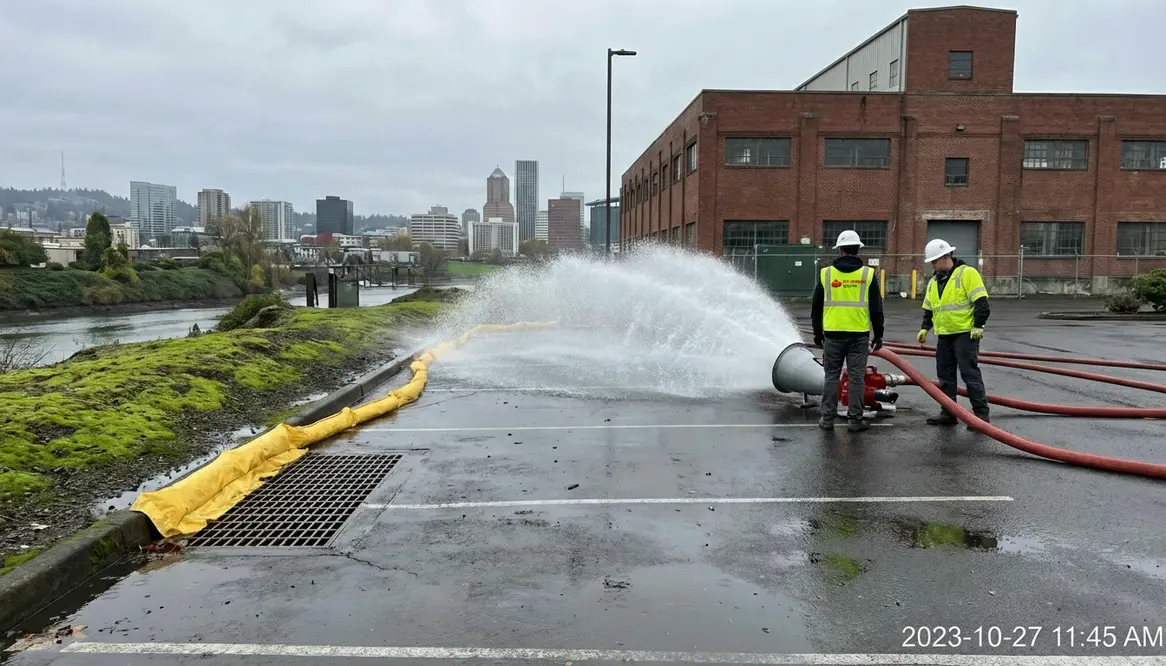
Fire Pump Flow Test Portland Discharge Planning Guide
A practical, field-tested look at how to keep your fire pump honest, your sidewalks dry, and Portland’s waterways happy.
I have spent enough time around pump rooms to know one simple truth. When a fire pump starts moving water, it does not whisper. It roars. In Portland, that roar must be controlled, measured, and directed somewhere safe. That is where fire pump flow test Portland discharge planning environmental considerations enter the picture.
Every commercial tower, hospital, warehouse, or industrial complex relies on a fire pump to deliver water when the sprinkler system calls for backup. Yet testing that pump is not as simple as turning a valve and watching the gauge climb. The water leaving the system can reach thousands of gallons per minute. Therefore, planning where it goes matters just as much as confirming the pump works.
In this article, I will walk through the reality behind fire pump testing in Portland. We will talk about discharge planning, environmental rules, and the practical steps facility managers should consider before water ever hits the pavement. And yes, I promise to keep things more interesting than a technical manual. Think less instruction booklet, more documentary-style narration with the occasional dad joke.
Along the way, we will keep an eye on fire pump flow test Portland discharge planning environmental considerations so you can see how safety, infrastructure, and compliance all fit together on test day.
Why Fire Pump Flow Testing Matters for Large Facilities
Let me paint a picture. Imagine a 25 story commercial office tower downtown. Hundreds of occupants. Miles of sprinkler piping. A fire pump sitting quietly in the basement like a bodyguard waiting for trouble.
That pump must prove it can perform under pressure. Flow testing verifies the pump produces the right water volume and pressure when the building demands it. Without testing, you are basically trusting your safety system the way some people trust gas station sushi. Brave, but risky.
For commercial and industrial properties, the stakes are high.
Key reasons these tests matter include:
- Confirming pumps meet design flow and pressure
- Ensuring compliance with NFPA testing standards
- Protecting occupants and valuable property assets
- Maintaining insurance and regulatory requirements
However, when the pump flows at full capacity, the amount of water discharged can overwhelm surrounding infrastructure. Consequently, discharge planning becomes just as important as the test itself.
This is especially true in Portland, where environmental protection is taken seriously. And frankly, it should be. If you want a deeper technical grounding on how fire pump systems are designed and regulated, resources like NFPA 20 fire pump system guidance give a solid code-level backdrop to what we are talking about in the field.
Fire Pump Flow Test Portland Discharge Planning Environmental Considerations
When I talk with facility managers about testing, one question always pops up.
Where does all that water go?
A full flow test for a large commercial system can release thousands of gallons per minute. Multiply that by several minutes of testing and suddenly you have something that resembles a small river. Without planning, that water can flood sidewalks, damage landscaping, or enter storm drains carrying rust and sediment.
Therefore, responsible discharge planning focuses on three priorities.
1. Controlled Water Direction
Technicians must guide water safely away from pedestrian areas, loading docks, and building entrances. In dense urban environments, space is limited. Consequently, temporary piping, hoses, or diffusers often redirect flow toward approved drainage points.
2. Storm Drain Awareness
Portland has strict stormwater regulations. Many storm drains lead directly to rivers and waterways. Because of that, discharging untreated water into these systems may violate environmental guidelines. Sediment filters or controlled discharge zones help prevent contamination.
3. Erosion and Surface Protection
Anyone who has seen a high volume discharge hit soil understands the problem instantly. It digs trenches faster than a backyard dog on a mission. Diffusers reduce pressure and prevent surface damage.
These planning steps transform what could be a chaotic water release into a controlled and compliant operation. In other words, fire pump flow test Portland discharge planning environmental considerations are not abstract buzzwords; they are the difference between a clean test and a muddy, complaint-generating mess.
How I Plan Water Discharge During Fire Pump Testing
Whenever I approach a new commercial property, I start with one simple mindset. Respect the water.
Water under pressure behaves like an overexcited Labrador retriever. It means well, but if you do not guide it properly, things get messy fast.
So I follow a structured process.
Site Evaluation
First, I study the facility layout. Large campuses, distribution centers, and industrial plants often have unique drainage systems. Therefore, understanding where water naturally flows prevents surprises later.
Drainage Capacity Review
Next, I evaluate whether nearby drains can handle the test volume. Some drains manage only limited flow rates. Consequently, we may need temporary containment or staged discharge.
Equipment Setup
Then we deploy hoses, manifolds, or flow diffusers to control water velocity. These tools reduce splashback and allow precise flow measurement.
Safety Coordination
Finally, I coordinate with facility staff. Pedestrian access, vehicle traffic, and loading zones must remain safe. Because nobody enjoys explaining to management why the parking lot suddenly resembles a water park.
When these steps come together, the flow test becomes efficient, controlled, and safe. This is where fire pump flow test Portland discharge planning environmental considerations move from theory to practical field work.
Environmental Rules in Portland That Affect Flow Testing
Portland takes environmental protection seriously. The city sits near major waterways, and stormwater systems often connect directly to them. Therefore, discharge planning must account for environmental compliance.
Many facilities underestimate this step. However, ignoring local rules can create regulatory problems that linger longer than the last season of your favorite TV show.
Important environmental factors include:
- Stormwater discharge restrictions
- Sediment control requirements
- Water temperature impacts
- Protection of nearby waterways
Because pump systems can accumulate rust, scale, or treatment chemicals, discharged water sometimes carries debris. As a result, filtration or containment may be required before the water reaches storm infrastructure.
For major commercial buildings, working with experienced fire pump specialists ensures these environmental considerations are handled correctly.
What Facility Managers Often Ask Before a Flow Test
Over the years, I have heard the same questions from property managers and facility engineers. And honestly, they are good questions.
Here are a few common ones.
How much water will be discharged?
Large commercial pumps can release 500 to 2500 gallons per minute depending on system design.
Will testing interrupt operations?
Usually not. However, proper planning keeps loading docks, entrances, and traffic lanes clear.
Can discharge damage pavement or landscaping?
Yes, if unmanaged. Diffusers and controlled routing prevent erosion and property damage.
Is environmental approval required?
In many cases yes. Portland regulations may require stormwater awareness or discharge planning.
How long does testing take?
Most flow tests last between 60 and 90 minutes depending on system complexity.
Who should perform the test?
Qualified technicians experienced with large commercial fire pump systems.
These conversations help facility teams understand the bigger picture. A fire pump test is not just a technical procedure. It is a coordinated event that protects both infrastructure and the surrounding environment.
How Fire Pump Flow Test Portland Discharge Planning Environmental Considerations Protect Infrastructure
When discharge planning is done right, the benefits go far beyond regulatory compliance.
First, it protects building infrastructure. High velocity water can damage asphalt, flood entrances, or impact nearby utilities. Proper routing prevents these issues.
Second, it protects the surrounding community. Portland neighborhoods often mix commercial properties with public spaces. Controlled testing prevents water from reaching sidewalks, streets, or neighboring properties.
Third, it protects natural waterways. Rivers and streams near Portland rely on clean stormwater systems. Therefore, careful discharge management keeps debris and contaminants out of those ecosystems.
And finally, it protects facility reputation. A well managed test reflects professionalism and responsibility. A poorly planned one? Well, that tends to attract attention for all the wrong reasons.
Think of it this way. A properly executed flow test is like a well directed action movie. Everything moves with purpose. Nothing explodes unless it is supposed to.
Frequently Asked Questions
How often should commercial fire pumps be tested?
Most commercial systems require annual flow testing according to NFPA standards.
Why is water discharge planning necessary?
Flow tests release large volumes of water that must be directed safely to prevent flooding or environmental damage.
Can flow testing affect nearby storm drains?
Yes. Discharged water may enter storm systems, so planning ensures compliance with environmental regulations.
Do large buildings require special testing procedures?
Yes. High capacity fire pumps in commercial and industrial facilities require specialized equipment and controlled discharge methods, especially where fire pump flow test Portland discharge planning environmental considerations are front and center for compliance.
Keeping Your Portland Facility Safe and Compliant
When a fire pump activates, it becomes the backbone of a building’s fire protection system. Testing that power responsibly requires thoughtful planning, especially in a city that values environmental stewardship. If you manage a commercial or industrial property in Portland, proper discharge planning ensures safe testing, regulatory compliance, and protection for the surrounding environment.
Work with experienced professionals who understand both fire protection systems and local regulations. When fire pump flow test Portland discharge planning environmental considerations are built into your test program from the start, your building, your occupants, and the city around you will all benefit.