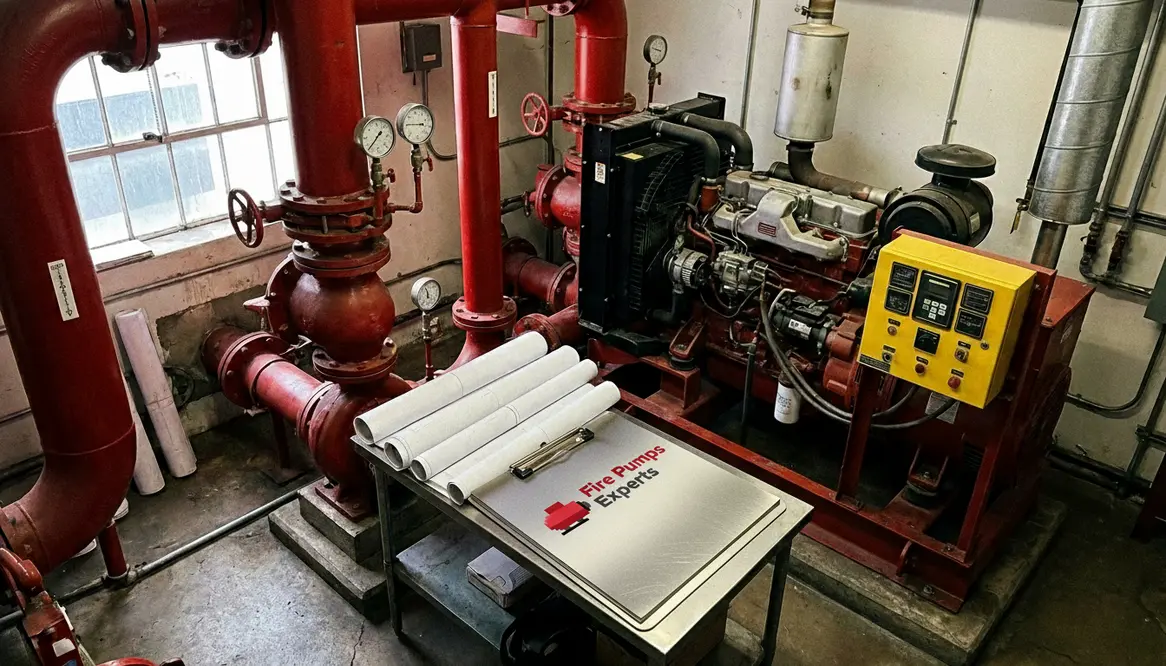
Fire Pump Permit Plan Review Portland Reduce Corrections
I have spent enough time around fire pump rooms to know two things. First, nothing ruins a construction timeline faster than a rejected permit. Second, the sound of a diesel fire pump starting up still feels like the opening scene of an action movie. Dramatic. Powerful. Slightly intimidating.
Now, when people search for guidance on fire pump permit plan review portland what to include reduce corrections, they are usually dealing with large commercial or industrial facilities. Think hospitals, high rise towers, distribution centers, or manufacturing plants where a fire protection system is not optional. It is mission critical.
Portland reviewers move fast, but they expect precision. If a plan set arrives half baked, it comes back covered in correction notes. Therefore, the goal is simple. Submit a package so complete and clear that the reviewer glides through it like a calm narrator in a nature documentary. Efficient. Focused. No drama.
Let me walk you through what actually helps reduce corrections and keeps your project moving.
Fire Pump Permit Plan Review Portland What To Include Reduce Corrections
Permit reviewers in Portland are not trying to make life hard. They simply need proof that the fire pump system will perform exactly when a large commercial building needs it. Therefore, your submittal must tell a complete technical story.
I always begin with clarity. A reviewer should understand the building, the hazard level, and the pump design within minutes of opening the drawings. If they have to play detective, corrections follow.
Here is what a strong submittal package includes.
- Complete fire pump data sheets showing manufacturer, model, rated capacity, and churn performance.
- Hydraulic calculations that demonstrate the pump meets system demand at required pressure.
- Water supply analysis including city main data or storage tank information.
- Fire pump room layout with clearances, controller location, and equipment access.
- Electrical coordination drawings for power supply, transfer switch, and controller wiring.
- Fuel system details for diesel pumps or electrical infrastructure for electric pumps.
- Test header and discharge piping layout sized correctly for the pump rating.
Additionally, I include references to NFPA standards used in the design. Portland reviewers appreciate seeing the exact code basis for decisions. It signals that the engineer did the homework before hitting submit.
Think of it like sending a complete movie script instead of random scenes. The story flows. The ending makes sense. Nobody asks where the villain came from.
If I Am Submitting Fire Pump Plans in Portland, What Does the Reviewer Want to See Immediately?
This is the quiet secret to smooth plan review. Reviewers scan drawings the same way most of us scan a streaming menu. If the essentials appear quickly, they stay engaged.
So I place the critical information right up front.
Cover sheet clarity matters. I include the pump rating, building occupancy type, hazard classification, and water supply summary on the first sheet. Consequently, the reviewer knows within seconds whether the design concept makes sense.
Next, I show a simple system diagram. This diagram traces the path from the municipal water supply or tank, through the fire pump assembly, and out to the sprinkler system.
It sounds basic. However, that single visual often prevents multiple correction comments.
After that, I make sure the fire pump room itself is crystal clear. Portland focuses heavily on accessibility and safety within that room.
- Minimum working clearances around pump and controller
- Proper room size and door swing
- Drainage and floor slope
- Ventilation and heat control
- Lighting and maintenance access
Furthermore, I label every valve and component. Nothing irritates a reviewer faster than a mystery valve floating in space with no tag or description.
Clarity beats complexity every single time.
Design Details That Quietly Eliminate Corrections
Some details rarely make headlines in design meetings. Yet they quietly determine whether a plan sails through review or returns with red ink.
First, suction piping layout deserves attention. Portland reviewers often flag designs where suction piping includes unnecessary bends or restrictive fittings. Therefore, I keep the run short, straight, and properly sized. The pump should receive water like a calm river, not a roller coaster.
Second, backflow prevention must integrate cleanly with the pump system. When the backflow device location conflicts with suction requirements, corrections appear quickly.
Third, test headers need adequate clearance and drainage. Large commercial pumps can discharge serious flow during testing. If that water has nowhere safe to go, the reviewer will ask questions.
Another common issue involves electrical coordination. The fire pump controller requires a reliable power source and clear disconnect arrangements. Consequently, I always align mechanical drawings with electrical plans before submission.
Think of it like a band rehearsal. If the drummer and guitarist play different songs, the audience notices.
Common Mistakes I See in Commercial and Industrial Fire Pump Submittals
Even experienced teams sometimes miss details. And Portland reviewers have seen every one of these before.
Design Oversights
- Hydraulic calculations that do not match the pump curve
- Incorrect suction pipe sizing
- Missing pressure maintenance pump details
- Test header sizing that cannot handle full pump flow
- Incomplete equipment schedules
Documentation Problems
- Missing manufacturer specifications
- Unclear fire pump room dimensions
- Electrical drawings not coordinated
- Fuel tank capacity not shown for diesel systems
- Code references absent from calculations
When I review a plan set before submission, I treat it like a detective novel. I ask myself one question again and again. If I were the reviewer, what would confuse me?
Then I remove the confusion.
That simple habit dramatically reduces plan review comments.
Fire Pump Permit Plan Review Portland What To Include Reduce Corrections for Large Buildings
Large commercial and industrial facilities add another layer of complexity. Hospitals, data centers, warehouses, and high rise towers depend on fire pumps that can deliver enormous water flow. Therefore, reviewers expect more detailed engineering.
In these buildings, I pay special attention to system demand curves. The pump must support the most demanding sprinkler zone while still maintaining pressure across long pipe networks.
Additionally, water supply reliability becomes critical. If the city main cannot guarantee pressure during peak demand, storage tanks or secondary pumps may enter the conversation.
Another factor involves system redundancy. Some facilities require backup fire pumps or alternate power sources. Reviewers want to see exactly how the system maintains protection during outages.
Finally, I document acceptance testing procedures clearly. Portland wants confirmation that the installed system will undergo full performance testing after installation.
Because when a million square foot distribution center calls the fire department, nobody wants to discover the pump behaves like a sleepy garden hose.
Putting Fire Pump Permit Plan Review Portland What To Include Reduce Corrections Into Practice
When teams treat fire pump permit plan review portland what to include reduce corrections as a checklist instead of a narrative, details slip through the cracks. I approach it as telling the full story of how the fire pump will protect the building, from water supply all the way to acceptance testing.
That story is stronger when it is backed by real-world service and maintenance experience. For owners and facility managers looking beyond just permit approval, resources like Kord Fire’s guide to fire pump servicing help connect design decisions with long-term performance and reliability.
If you align your drawings, calculations, specifications, and testing plan with how the pump will actually be serviced and operated, your submittal starts to look less like paperwork and more like a complete protection strategy.
FAQ
What documents are required for a fire pump permit in Portland?
Complete fire pump drawings, hydraulic calculations, equipment specifications, electrical coordination plans, and water supply data are typically required.
Why do fire pump plans get corrections during review?
Most corrections occur due to incomplete hydraulic calculations, unclear pump room layouts, or missing equipment specifications.
Does Portland require hydraulic calculations with fire pump submittals?
Yes. Calculations must prove the pump can meet the sprinkler system demand at required pressure.
How can I reduce fire pump permit corrections?
Provide clear drawings, coordinated electrical and mechanical plans, complete manufacturer data, and accurate water supply analysis.
Do large commercial buildings require additional fire pump documentation?
Often yes. Large facilities typically require detailed demand curves, water supply reliability analysis, and clear testing procedures.
Moving Your Portland Fire Pump Project Forward
If you are planning a fire pump installation for a commercial or industrial property, the permit stage should feel smooth, not stressful. The right documentation, clear engineering, and coordinated plans can dramatically reduce review corrections. My team focuses on designing fire pump systems that pass review the first time and protect large facilities when it matters most. If your Portland project needs expert guidance, reach out today and let us help move your permit forward with confidence by focusing on fire pump permit plan review portland what to include reduce corrections at every step.