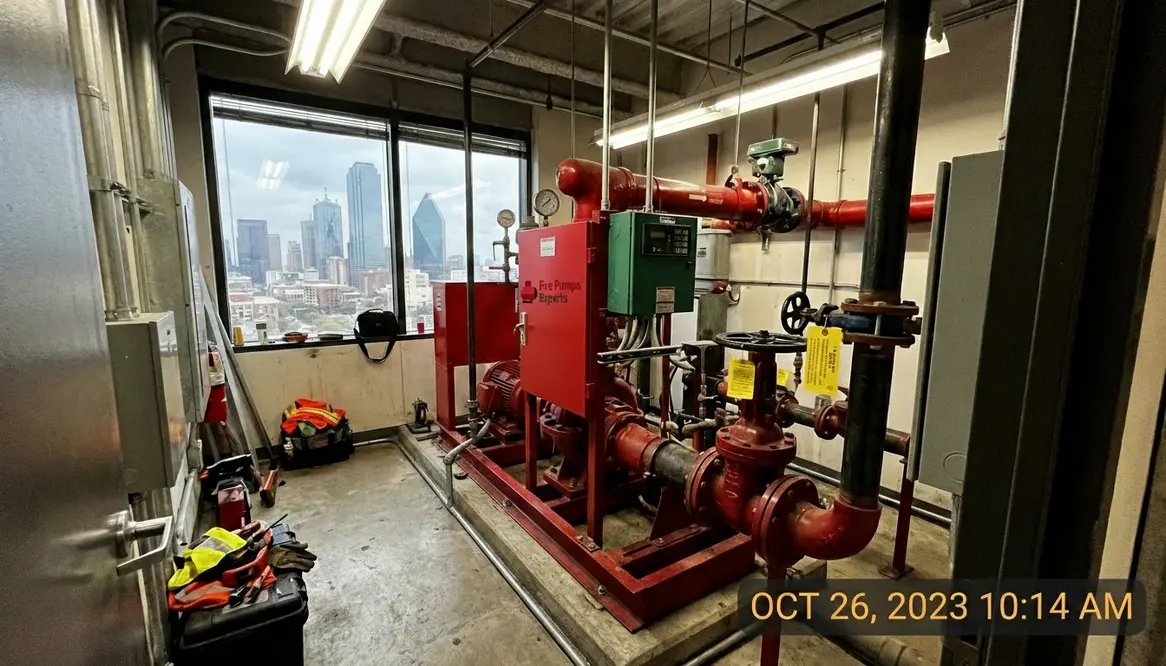
Dallas fire pump installation challenges and tips
Years in the field have taught me that the right fire pump plan can be the quiet difference between a close call and a catastrophe in a Dallas high‑rise or industrial site.
I have spent years walking mechanical rooms that hum like quiet engines of survival, and I can tell you this much right away. A solid Dallas fire pump installation is not just another line item on a construction budget. It is the heartbeat of a building’s fire protection system. In a city where commercial growth moves fast and codes keep pace, getting this right matters. So let me walk you through the real challenges I see on Dallas commercial projects, with a steady hand and maybe a light smile along the way.
Quick take
Dallas buildings are growing taller, denser, and more complex. That means your Dallas fire pump installation has to handle tight mechanical rooms, fluctuating city water, and unforgiving inspections—all while being easy to maintain for the next 25 years.
The goal is simple: a system that quietly works every single day, and roars to life only when it absolutely has to.
Why Dallas fire pump installation gets complicated fast
Dallas does not do anything halfway. The skyline grows, regulations evolve, and building demands rise. As a result, installing fire pumps in large commercial and industrial facilities becomes a layered task.
First, space constraints show up early. Mechanical rooms often feel like a game of Tetris where every inch counts. However, fire pumps demand clearances, access, and airflow. You cannot just tuck them into a corner and hope for the best.
Then there is water supply. Municipal pressure can vary across Dallas, and that means I often need to design around inconsistent flow. Therefore, selecting the right pump type and capacity becomes critical. One wrong assumption, and suddenly your system is about as useful as a screen door on a submarine.
Finally, coordination across trades can get messy. Electrical, plumbing, and fire protection teams all need to move in sync. When they do not, delays stack up quickly.
How Dallas fire pump installation fits into the bigger fire protection picture
The pump does not live alone. It ties into sprinklers, standpipes, fire alarms, generators, and in some cases on‑site water storage. When you change one element, three others usually raise their hand and demand attention. That is why I treat layout, power, and hydraulic calculations as one conversation, not three separate meetings that happen months apart.
If you ever want a solid overview of how professional pump service and maintenance should look, take a look at resources like the fire pump systems page from Kord Fire at https://kordfire.com/fire-pump/. Seeing how service teams think about testing, repair, and long‑term performance can help you design an installation that is easier to live with for decades.
What do I need to plan before installing a fire pump in a Dallas commercial building?
I always tell clients that preparation is where success lives. If you skip this phase, the project will remind you later, usually at the worst possible time.
Start with a detailed hydraulic analysis. This tells me exactly how much pressure and flow the building needs. Then, I match that with the available water supply. If they do not align, I adjust the system design before anything gets installed.
Dallas fire pump installation pre‑planning checklist
- Confirm building hazard classification and design density.
- Document available city water pressure and flow at different times of day.
- Identify power sources and any backup requirements early.
- Block out realistic pump room space and access paths.
- Align expectations with ownership on testing, maintenance, and inspection routines.
Next, I look at code compliance. Dallas follows strict fire codes, and inspections are not forgiving. Therefore, I ensure every component meets NFPA standards and local requirements. This includes controllers, backup power, and alarms.
Access planning also matters. I need enough room for maintenance because a fire pump is not a set it and forget it piece of equipment. Think of it more like a classic car. It runs beautifully, but only if you give it attention.
Common site challenges I see in large Dallas projects
Every site has its personality. Some are cooperative. Others feel like they woke up and chose chaos.
Challenge
- Limited mechanical room space
- Inconsistent city water pressure
- Delayed equipment delivery li>Coordination gaps between trades
My approach
- Rework layouts early with all stakeholders
- Use booster systems or storage tanks
- Pre order critical components
- Hold weekly coordination meetings
Because of these issues, I stay proactive. I would rather solve a problem on paper than on a jobsite where everyone is staring at each other like it is a group project gone wrong.
Dallas fire pump installation and code compliance realities
Code compliance in Dallas is not just a checklist. It is a living, breathing requirement that shapes every decision I make. Inspectors expect precision, and frankly, so do I.
I ensure proper pump sizing, correct controller setup, and reliable backup power. In many commercial and industrial properties, a diesel backup or generator is not optional. It is essential.
Testing also plays a major role. Acceptance testing must prove the system can perform under real conditions. Therefore, I always plan for full flow testing and document everything carefully. If it is not documented, it did not happen. That is the rule.
What inspectors really want to see
- Evidence that your hydraulic calculations are accurate and up to date.
- Clear labeling, neat conduit, and accessible valves and controllers.
- Documented acceptance testing at required flow rates.
- Schedules and logs that prove ongoing weekly and monthly pump testing.
And yes, inspections can feel intense. However, when everything passes, it is a quiet moment of satisfaction. Like finishing a long novel and realizing every chapter came together just right.
How I keep projects moving without losing my mind
Let me be honest. Fire pump projects can test your patience. However, I rely on a few steady habits to keep things smooth.
- Communicate constantly. I talk with contractors, engineers, and inspectors before issues grow. Silence may be golden in some situations, but not here.
- Protect the schedule. I align equipment delivery with installation timelines. This avoids the classic scenario where a pump arrives late and everyone suddenly develops a nervous twitch.
- Guard quality like it is your job. I double check installations, verify alignments, and ensure every connection meets standards. Because in this line of work, close enough is never enough.
Where Dallas fire pump installation most often goes sideways
- Underestimating how much space the pump, controllers, and piping actually need.
- Ignoring the impact of fluctuating city water pressure over 24 hours.
- Ordering specialty equipment too late in a supply‑chain‑tight market.
- Letting “value engineering” quietly erode long‑term reliability.
When I hear someone say, “It is just a pump; how hard can it be?” I know we are about to have a very important conversation.
FAQ about fire pump installation in Dallas commercial projects
Over the years, the same questions come up on nearly every Dallas fire pump installation. Here are a few straight answers.
Final thoughts and your next step
When I approach a project, I see more than pipes and pumps. I see a system that must perform without hesitation when it matters most. A well executed installation protects lives, assets, and reputations. If you are planning a commercial or industrial build in Dallas, now is the time to get serious about your fire protection strategy.
Reach out, ask the right questions, and make sure your system stands ready long before it is ever needed. Whether you are in design, mid‑construction, or staring at a mechanical room that already feels too full, treating your Dallas fire pump installation as the heartbeat of the building—not an afterthought—will always be time well spent.