Washington DC Fire Pump Compliance Guide
I have spent enough time around commercial boiler rooms and pump houses to know one truth. Fire protection is not where you improvise. In Washington, D.C., that truth sharpens into something more specific. Washington DC fire pump compliance is not just a box to check. It is a living, breathing system of rules, inspections, and expectations that keep high rise offices, hospitals, and industrial facilities ready when things go sideways. And yes, when it works, nobody notices. When it does not, everyone does.
So let’s walk through what actually matters, without the jargon fog. Think of this as your calm, steady guide through a topic that usually sounds like it was written by a robot with a clipboard.
Washington DC Fire Pump Compliance Basics for Commercial Buildings
First, I ground everything in codes. In D.C., fire pump systems follow NFPA 20 for installation and NFPA 25 for inspection, testing, and maintenance. However, local amendments and the D.C. Fire and EMS Department add their own expectations. So while the national standards set the stage, the city directs the performance.
For large commercial and industrial properties, fire pumps are not optional decorations. They ensure water pressure meets demand across multiple floors, long corridors, and complex layouts. Without them, your sprinklers might behave like a garden hose on a bad day.
I always remind clients that compliance is not just about installation. It is about documentation, routine testing, and being able to prove that your system will work under pressure. Literally.
Why Washington DC fire pump compliance feels different
The buildings are taller, the occupancies denser, and the expectations higher. A mid-rise apartment in the suburbs can sometimes get away with “good enough.” A hospital, data center, or federal office building in D.C. cannot. That is why the conversation around Washington DC fire pump compliance is really a conversation about risk, readiness, and proof.
What Do Inspectors in D.C. Actually Look For?
Here is where things get real. Inspectors are not there to admire your mechanical room lighting. They want proof. And they move with purpose.
Typically, I see them focus on:
- Weekly and monthly test records that are complete and consistent
- Annual flow test results that match system design expectations
- Controller functionality including alarms and automatic start
- Fuel supply or power reliability for diesel and electric pumps
- Clear access to equipment without storage blocking the path
Additionally, they pay close attention to small details. A missing label or an outdated log can raise eyebrows faster than a surprise fire drill during lunch hour.
And yes, I have seen facilities scramble because someone treated documentation like optional homework. It is not. It is your paper shield.
Inspector mindset: how they really see your pump room
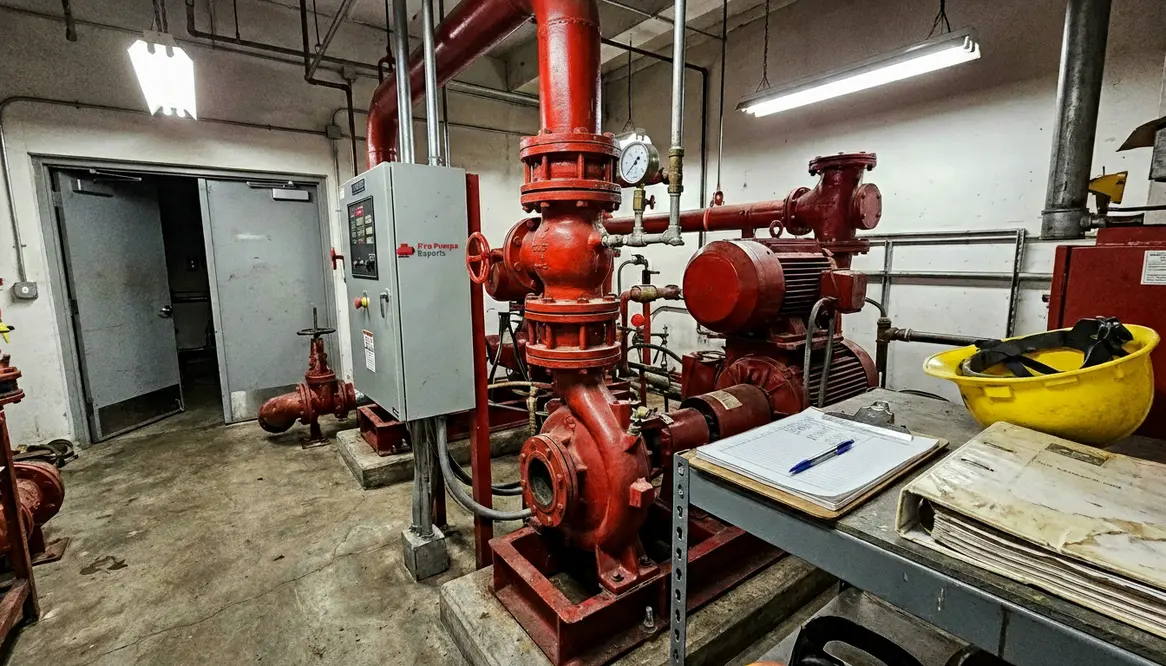
Inspectors are quietly asking three questions the moment they step into your pump room: Can I see everything I need to see? Can I verify what has been done? Can I trust that this system will perform when the alarms go off? Washington DC fire pump compliance is won or lost on those three questions long before anyone breaks out a flow meter.
How I Keep Fire Pump Systems Inspection Ready Year Round
I do not believe in last minute heroics. Instead, I build a rhythm. A steady cadence of checks and balances that keeps everything in line long before an inspector walks in.
Operational Discipline
- Run weekly churn tests without skipping
- Monitor pressure readings for drift
- Listen for unusual sounds that signal wear
- Verify automatic start sequences regularly
Documentation Control
- Log every test immediately
- Store reports in both digital and physical formats
- Track deficiencies and close them quickly
- Prepare summaries for quick review during inspections
Because of this approach, compliance becomes routine instead of stressful. It is the difference between a calm walkthrough and a last second scramble that feels like a reality show challenge.
Turning routine work into Washington DC fire pump compliance
When your weekly churn tests, monthly inspections, and annual flow tests are structured and documented, you stop chasing compliance and start leading it. If you want a deeper walkthrough of what disciplined pump testing looks like in practice, resources like routine fire pump inspections and their importance can help you build that rhythm without reinventing the wheel.
Common Compliance Mistakes I See in Large Facilities
Even well managed properties slip into patterns that create risk. And these are not dramatic failures. They are quiet oversights that build over time.
For example, deferred maintenance is a classic. A valve sticks slightly, a gauge reads just a bit off, and suddenly your system is not performing at full capacity. Then there is the issue of outdated components. Controllers and sensors age out, even if they still power on.
Another frequent issue is poor coordination between teams. Facilities, safety managers, and third party contractors sometimes operate in silos. As a result, critical information gets lost in the shuffle.
And let me say this clearly. Assuming your system is fine because it worked last year is like assuming your car will pass inspection because it once had new tires. Time has a way of changing things.
Red flags that quietly erode Washington DC fire pump compliance
- Test logs that skip weeks “because nothing changed”
- Alarms that everyone has mentally filed under “it always does that”
- Temporary storage that slowly becomes permanent in front of valves and panels
- Teams assuming someone else is “handling the pump” without clear ownership
Individually, these feel small. Together, they are exactly how Washington DC fire pump compliance drifts from solid to questionable without a single dramatic failure.
Is Your Fire Pump System Truly Compliant or Just Passing?
This is the question I like to ask, because it cuts through comfort. Passing an inspection does not always mean your system is optimized. It means you met the minimum at a moment in time.
True compliance goes further. It means your fire pump performs reliably under peak demand, integrates smoothly with your building systems, and adapts as your property evolves.
In Washington, D.C., where many commercial buildings operate around the clock, that distinction matters. A hospital, data center, or high occupancy office tower cannot afford performance gaps. Not even small ones.
So I push for a mindset shift. Do not aim to pass. Aim to perform. The inspectors will notice the difference, and more importantly, so will your system when it is called into action.
From minimums to mastery
If your entire strategy is built around “What will the inspector accept?” you will always be one surprise away from a problem. When you design your program around Washington DC fire pump compliance as a performance standard instead of a paperwork exercise, inspections start to feel like confirmation rather than judgment.
FAQ About Fire Pump Compliance in Washington, D.C.
Before we wrap up, it helps to tackle the questions that come up over and over again in mechanical rooms, conference calls, and “do we really have to do this weekly?” conversations.
Washington DC Fire Pump Compliance That Actually Works
At the end of the day, compliance is not about fear of fines. It is about confidence. When I walk into a well maintained pump room, I can feel it. Everything is labeled, tested, documented, and ready. No guesswork. No crossed fingers.
If you manage a commercial or industrial property in D.C., now is the time to tighten your process. Review your testing schedule, audit your records, and bring in experts where needed. Because when the system is called to perform, there are no second takes. And that is one moment you want to get right the first time.
Treat Washington DC fire pump compliance as an ongoing standard of performance, not a once a year event. Build a rhythm of testing, maintenance, and documentation that makes your next inspection feel predictable instead of painful. Your inspectors, your occupants, and your future self in the middle of a real emergency will all be grateful you did.