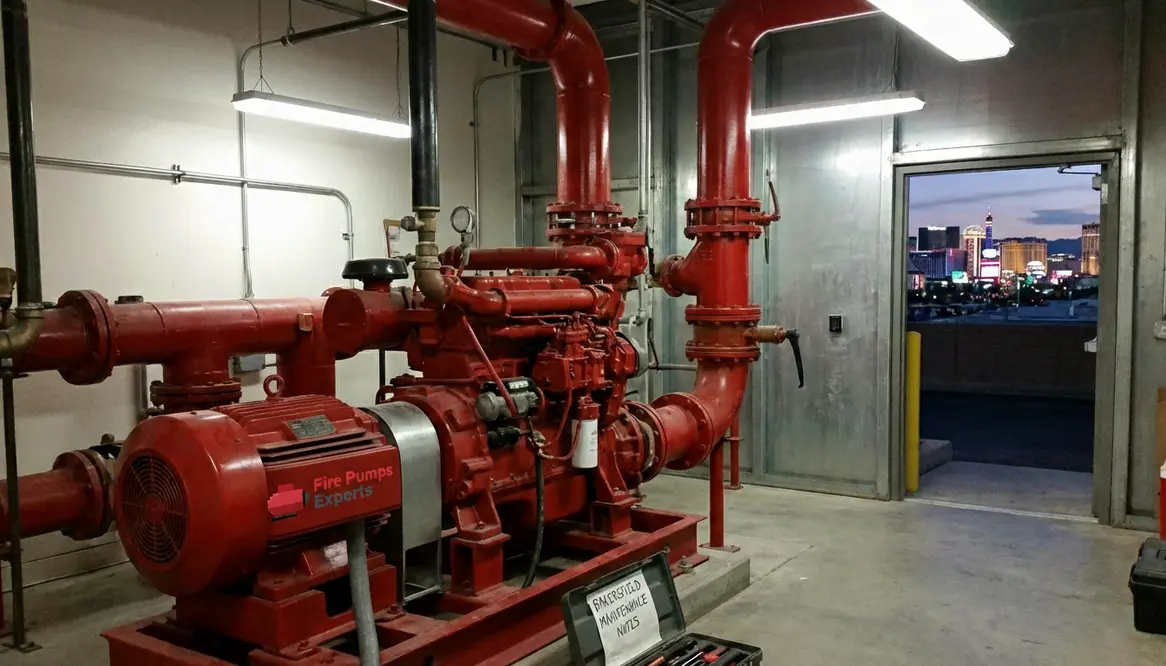
Las Vegas Fire Pump Sizing and Water Supply Guide
I have spent years around fire protection systems, and one thing becomes clear fast: if your fire pump fails, nothing else really matters. Even in Las Vegas, where the lights never sleep and the stakes stay high, reliability is everything. I often draw from my experience with Bakersfield fire pump maintenance because the same principles apply across major commercial and industrial properties. Whether it is a casino tower or a distribution hub, the system must perform without hesitation. And trust me, fire does not care if you are on the Strip or off the grid.
How do I size a fire pump for a Las Vegas commercial building?
I start with demand, always. Fire pump sizing is not about guessing or rounding up for peace of mind. Instead, I calculate the required flow and pressure based on the building’s hazard classification, sprinkler design, and standpipe requirements. Then, I account for elevation changes because in Las Vegas, those high rise hotels do not exactly stay modest.
Next, I factor in system losses. Friction loss in pipes, fittings, and valves adds up quickly. Therefore, I build a curve that matches the pump performance to real world conditions. It is a bit like casting a superhero. Too weak, and the system fails. Too strong, and you create pressure issues that could damage equipment. Nobody wants a Hulk smash moment inside a sprinkler line.
Finally, I verify everything against NFPA 20 standards and local codes. Las Vegas authorities take compliance seriously, and rightly so. A properly sized pump is not just efficient. It is legally and operationally sound. For anyone who wants a deeper code driven overview of pump requirements, resources like this NFPA 20 fire pump guide from Kord Fire Protection help frame what compliant design really looks like.
Key sizing checkpoints
- Confirm hazard classification and sprinkler density.
- Determine standpipe requirements for high rise or multi level buildings.
- Measure available city water pressure and flow at the site.
- Calculate friction and elevation losses through the entire system.
- Select a pump curve that matches real demand, not wishful thinking.
- Validate everything against NFPA 20, local amendments, and AHJ requirements.
Understanding Water Supply Challenges in Las Vegas
Las Vegas brings a unique twist to water supply. Unlike cities with abundant surface water, this region depends heavily on controlled sources. Therefore, I always evaluate reliability before anything else.
First, I check municipal supply data. While city water can be dependable, pressure fluctuations still occur during peak demand. Then, I consider redundancy. Many large facilities install on site storage tanks because relying on a single source is a gamble I would not take.
Additionally, temperature plays a role. Extreme heat can affect equipment performance and water density. It sounds minor, but over time, these factors influence system consistency. That is why lessons learned from Bakersfield fire pump maintenance often translate well here. Hot climates demand attention to detail.
Key Water Supply Factors
- Municipal pressure consistency
- On site storage capacity
- Redundancy planning
- Seasonal demand changes
Common Risks I Watch For
- Undersized supply lines
- Pressure drops during peak hours
- Insufficient backup systems
- Delayed refill rates
Balancing Pump Power and System Efficiency
I have seen facilities oversize pumps thinking bigger equals safer. In reality, that approach creates more problems than it solves. Excess pressure can strain pipes, valves, and fittings. It is like using a fire hose to water a houseplant. Sure, it works, but at what cost?
Instead, I aim for balance. I match the pump output precisely to system demand. Then, I integrate controllers that allow smooth operation under varying conditions. As a result, the system runs efficiently without unnecessary wear.
Moreover, energy consumption matters. Large commercial properties in Las Vegas already carry heavy power loads. A well sized pump reduces operational costs while maintaining full compliance. It is a win win, and frankly, your utility bill will thank you.
Efficiency lessons from hot-climate systems
Hard earned experience with Bakersfield fire pump maintenance has made one pattern obvious: in hotter regions, efficiency is directly tied to reliability. Pumps that run closer to their best efficiency point run cooler, last longer, and are far less likely to throw unwelcome surprises during a real emergency.
What role does maintenance play in long term reliability?
I will be blunt here. Even the best designed system fails without proper maintenance. I have seen pristine installations fall apart simply because no one checked the pump regularly.
Routine testing ensures the pump starts instantly and delivers the expected output. Weekly churn tests, monthly inspections, and annual performance evaluations are not optional. They are essential. In fact, my background in fire pump service practices similar to Bakersfield fire pump maintenance reinforces this point every time.
Additionally, I pay attention to small warning signs. Unusual vibrations, pressure drops, or delayed starts often signal bigger issues ahead. Catching them early saves money and prevents downtime. And in a city like Las Vegas, downtime is about as welcome as a power outage during a headline show.
Maintenance habits that keep pumps ready
- Documenting every weekly churn test result, not just “pass” or “fail.”
- Logging suction and discharge pressures during every test for trend analysis.
- Inspecting controllers, batteries, and phase rotation as carefully as the pump itself.
- Scheduling annual flow tests that truly exercise the system, not just the paperwork.
- Using Bakersfield fire pump maintenance style checklists that force attention to the small things: packing leaks, minor noise changes, warm bearings, and subtle vibration.
Design Considerations for Large Scale Facilities
Commercial and industrial properties require a different mindset. I do not design for minimum compliance. I design for resilience.
For example, I often recommend split systems or multiple pumps for critical facilities. This setup ensures that if one unit fails, another takes over instantly. Furthermore, I evaluate layout efficiency. Long pipe runs increase friction loss, so I optimize routing whenever possible.
Another key factor is future expansion. Las Vegas grows fast, and buildings often evolve. Therefore, I leave room in the system for increased demand. It is much easier to plan ahead than to retrofit later.
And yes, I always coordinate with other building systems. Fire protection does not operate in isolation. It must integrate seamlessly with electrical, structural, and operational components.
Las Vegas project checklist
- Confirm zoning, high rise, and special hazard requirements early with the AHJ.
- Evaluate whether multiple fire pumps or split systems improve reliability.
- Model friction loss for long casino, resort, or warehouse floorplates.
- Reserve space, power, and water capacity for future expansions.
- Apply the same discipline used in Bakersfield fire pump maintenance: assume the building will only get more complex, not less.
Conclusion
If you manage a large commercial or industrial property in Las Vegas, fire pump sizing and water supply are not areas to cut corners. I bring the same disciplined approach I use in Bakersfield fire pump maintenance to every project, ensuring systems perform when it matters most. Let us take a closer look at your setup, identify gaps, and build a solution that stands up to real world demands. Because when fire protection works right, it stays invisible. And that is exactly the point.