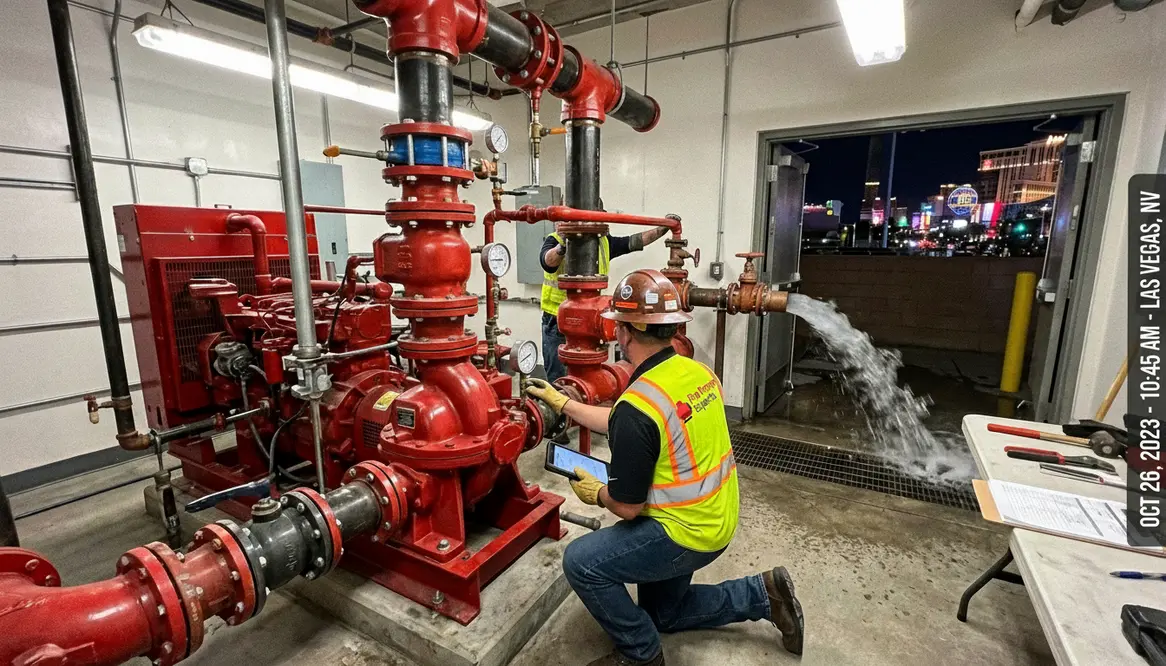
Fire Pump Acceptance Testing Las Vegas Commercial
I have spent enough time around fire systems to know one truth. When a fire pump fails, it does not fail quietly. It fails when everything is on the line. In Las Vegas, where commercial towers glow brighter than a casino floor at midnight, fire pump acceptance testing is not just a checkbox. It is the moment of truth. While I often work with agricultural facility fire protection systems in broader regions, the same discipline applies here. Whether it is a data center or a high rise hotel, the pump must perform on command. No excuses. No second takes.
What is fire pump acceptance testing in Las Vegas commercial projects
Fire pump acceptance testing is the formal process where I verify that a newly installed pump meets design and code requirements before a building opens its doors. In Las Vegas, inspectors do not play around. And frankly, neither do I.
During testing, I measure flow, pressure, alarms, and automatic start functions. Then, I compare those results to the engineered specifications. If something is off, even slightly, it gets flagged. Because when a fire breaks out, nobody wants a pump that behaves like it just woke up from a long nap.
Additionally, I coordinate with contractors, engineers, and authorities having jurisdiction. Everyone has a stake in the outcome, but I keep the focus on performance. Not opinions.
Why acceptance testing matters for large scale facilities
Las Vegas is a city of scale. Massive resorts. Expansive convention centers. Industrial facilities that hum day and night. Therefore, the fire protection systems must match that scale.
Acceptance testing ensures that water supply, pressure consistency, and system integration all function together. Without that harmony, even the best designed systems can stumble.
Moreover, I have seen how lessons from agricultural facility fire protection translate into commercial work. In both cases, reliability is everything. A pump must start instantly, deliver consistent pressure, and sustain performance under stress. It is not glamorous work, but it is the kind that saves millions in property and, more importantly, lives.
Key steps I follow during fire pump testing
I approach every test with a methodical rhythm. No rushing. No guessing.
Pre test inspection
I start by checking installation quality, alignment, and power supply. If something looks off, I stop right there.
Churn test
Next, I run the pump at no flow. This tells me if the system maintains pressure without demand.
Flow testing
Then comes the main event. I test at 100 percent, 150 percent, and sometimes beyond rated capacity.
Alarm verification
I confirm that alarms and signals trigger properly. Because silence is not golden in fire protection.
Controller checks
I test automatic and manual starts. The system must respond instantly.
Documentation
Finally, I record every detail. If it is not documented, it did not happen.
Each step builds on the last. As a result, I walk away with a complete picture of system performance.
Common issues I uncover during Las Vegas acceptance tests
You would think brand new systems would behave perfectly. You would be wrong.
I often find pressure drops caused by undersized piping or hidden obstructions. Sometimes controllers are wired incorrectly. Other times, pumps struggle because of poor suction conditions.
Then there are the human moments. Valves left closed. Settings overlooked. It happens more than anyone likes to admit. However, that is exactly why acceptance testing exists. It catches problems before they become headlines.
Interestingly, the same attention to detail I apply in agricultural facility fire protection carries over here. Different environment, same principle. Systems must work under pressure. Literally.
How I prepare clients for a smooth acceptance test
A smooth test does not happen by accident. It takes preparation.
First, I make sure all equipment is installed and operational before scheduling. Then, I coordinate water supply availability. In Las Vegas, that can be more complex than it sounds.
Next, I walk the site with the project team. We review expectations, test procedures, and safety measures. That way, nobody is caught off guard.
And yes, I remind everyone that this is not the time for guesswork. It is the time for precision. Think of it like a live performance. You rehearse so opening night goes off without a hitch. Or at least without setting off the sprinklers.
The same mindset guides my work with agricultural facility fire protection projects: careful planning, realistic testing conditions, and clear communication before a single valve is turned.
FAQ quick answers for fire pump acceptance testing
What is the purpose of acceptance testing
It confirms the fire pump meets design and code requirements before operation.
How long does testing take
Most tests take several hours depending on system size and complexity.
Who must be present during testing
Typically contractors, engineers, inspectors, and the testing authority.
What happens if a system fails
Issues must be corrected and the system retested until it passes.
Is acceptance testing required in Las Vegas
Yes, it is required for commercial and industrial buildings before occupancy.
Tying Las Vegas testing to broader fire pump reliability
Fire pump acceptance testing in Las Vegas might feel like a high-stakes event, but the fundamentals are the same ones I rely on across commercial and agricultural facility fire protection work: clear standards, solid documentation, and performance that can be trusted when heat, smoke, and chaos arrive at the same time.
Once acceptance testing is complete, ongoing inspection and servicing keep that performance intact. If you want a deeper look at how regular testing and maintenance protect your system long after opening day, explore this resource on fire pump testing requirements and best practices. It aligns well with what I look for when I sign off on a pump and expect it to keep delivering years down the road.
Final thoughts and next steps
Fire pump acceptance testing is where theory meets reality. In a city like Las Vegas, there is no room for uncertainty. I make sure every system I test is ready to perform when it matters most. If you are preparing a commercial project, now is the time to get it right. Reach out, schedule your testing, and let us make sure your system does not just exist, but performs exactly as it should when the stakes are highest.