Las Vegas Warehouse Fire Pump Room Requirements
Practical insights from inside the mechanical rooms of Southern Nevada warehouses.
I have spent enough time around commercial facilities in Southern Nevada to know one thing for certain: when it comes to warehouse fire pump planning, Las Vegas does not play games. And that is a good thing. Between the dry desert air, high value properties, and strict code enforcement, fire protection here is taken seriously. So, while it might not sound as exciting as a night on the Strip, understanding fire pump room requirements can save your building, your investment, and quite possibly your peace of mind. And trust me, peace of mind is cheaper than rebuilding a warehouse.
At a glance: Las Vegas warehouse pump rooms
- Tight local enforcement layered on NFPA 20
- High-value, high-risk warehouse occupancies
- Desert heat, dust, and reliability challenges
- Design decisions that can make or break inspections
What are fire pump room requirements in Las Vegas?
Let me answer this the way I would explain it standing in a mechanical room, coffee in hand, trying not to trip over conduit.
In Las Vegas, fire pump rooms must meet both national standards and local amendments. The backbone is NFPA 20, which governs installation of stationary pumps. However, Clark County and the City of Las Vegas add their own expectations.
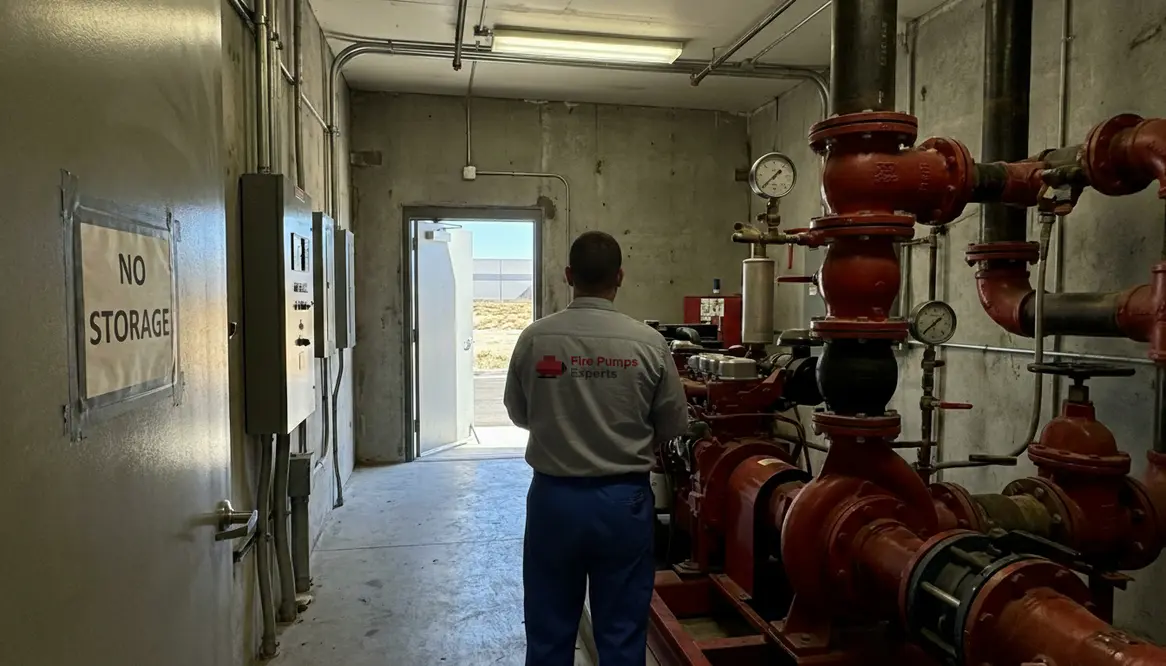
First, the room must be dedicated. No storage. No “we will just tuck this here for now.” Fire inspectors have seen it all, and they are not amused. Second, access matters. You need clear, direct entry from the exterior or a protected interior route. In an emergency, nobody wants to navigate a maze like it is an escape room challenge.
Core Las Vegas pump room expectations
- Dedicated, non-storage room
- Direct exterior or protected interior access
- Proper lighting and drainage
- Environment controlled for temperature and dust
Additionally, the room must maintain proper temperature. Equipment does not like extremes, even in a city known for them. Therefore, heating or cooling systems are often required to keep everything within operational range.
Finally, drainage and lighting are essential. Because when something goes wrong, it will likely involve water. A lot of it.
Why warehouse fire pump planning matters in desert conditions
Las Vegas brings a unique twist to fire protection. It is dry, it is hot, and it is growing fast. So, warehouse fire pump planning here is not just about meeting code. It is about adapting to environment.
For example, water supply reliability becomes critical. Municipal systems are strong, but large commercial and industrial properties often require additional assurance. That is where fire pumps step in, boosting pressure exactly when needed.
Moreover, dust and heat can impact equipment longevity. So, I always recommend thinking beyond installation. Consider ventilation, filtration, and routine maintenance access from day one.
Reality check for desert pump rooms
- High ambient temperatures stressing motors and controllers
- Fine dust collecting on equipment and filters
- Expanding warehouse footprints pushing water demand
- Need for reliable, tested fire pump service partners
If you want a deeper look at pump reliability, this guide to fire pump servicing breaks down how servicing supports long-term performance in demanding conditions.
And here is a truth that might sting a little: cutting corners upfront usually costs more later. Fire systems are not the place to test your luck, unless you enjoy conversations that begin with “why did this fail?”
Designing a compliant fire pump room for large facilities
When I approach design for a large warehouse or industrial building, I think in layers. Each layer supports the next.
First comes location. Ideally, I place the pump room on an exterior wall. This simplifies access and improves safety for fire crews. Then comes structural integrity. The room must withstand fire exposure, often requiring specific fire rated construction.
Next, I focus on layout. Equipment spacing is not arbitrary. You need clearance for maintenance, inspection, and replacement. I have seen rooms so tight you would need to inhale just to walk through. That is not compliant, and it is definitely not practical.
Power supply is another big piece. Electric fire pumps need reliable service, often backed by emergency power. Diesel pumps bring their own considerations, including fuel storage and exhaust systems.
And of course, controls and alarms must be visible and accessible. Because when something triggers, you want immediate clarity, not confusion.
Key Design Elements
- Dedicated room with no shared use
- Exterior or protected access
- Proper drainage systems
- Temperature control
- Fire rated construction
Operational Priorities
- Reliable power or fuel source
- Clear maintenance space
- Accessible controls
- Ventilation for equipment health
- Compliance with local amendments
Common mistakes I see in commercial fire pump rooms
Now, let me share a few things I have seen that made me pause, sigh, and occasionally laugh.
One common mistake is treating the pump room like extra storage. Someone always thinks, “It is just a small box of parts.” Then suddenly, it looks like a warehouse inside a warehouse.
Another issue is poor coordination during construction. Electrical, plumbing, and fire systems sometimes compete for space like characters in a sitcom. However, unlike sitcoms, there is no laugh track when things go wrong.
I also see undersized rooms. On paper, everything fits. In reality, maintenance becomes a gymnastics routine. That is not what inspectors or technicians want.
Finally, ignoring local code nuances can cause delays. Las Vegas jurisdictions are clear, but only if you take the time to read and apply their requirements carefully.
How I approach warehouse fire pump planning for long term reliability
I like to think of fire pump rooms as quiet guardians. They sit there, doing nothing, until the one day they must do everything.
So, I design with that moment in mind. I prioritize durability, accessibility, and simplicity. Because in an emergency, complexity is the enemy.
Additionally, I coordinate early with architects, engineers, and contractors. This prevents last minute changes that often lead to compromises. And yes, compromises in fire protection are rarely the good kind.
I also emphasize testing and commissioning. A system that has not been properly tested is like a parachute you have never opened. Technically reassuring, but not something I would bet on.
Design mindset for reliable pump rooms
- Think long-term maintenance from day one
- Protect against heat, dust, and mechanical damage
- Keep pathways and valves obvious and accessible
- Align warehouse fire pump planning with inspection realities
FAQ about fire pump rooms in Las Vegas
Before we wrap up, here are some quick answers to questions that come up again and again when talking about warehouse fire pump planning and pump rooms in the Las Vegas area.
Final thoughts and next steps
If you are managing a commercial or industrial property in Las Vegas, now is the time to take a closer look at your fire pump room. Smart warehouse fire pump planning today prevents costly problems tomorrow. I encourage you to evaluate your current setup, align with local codes, and invest in a design that will hold up when it matters most. When you are ready, connect with experts who understand large scale systems and can guide you every step of the way.