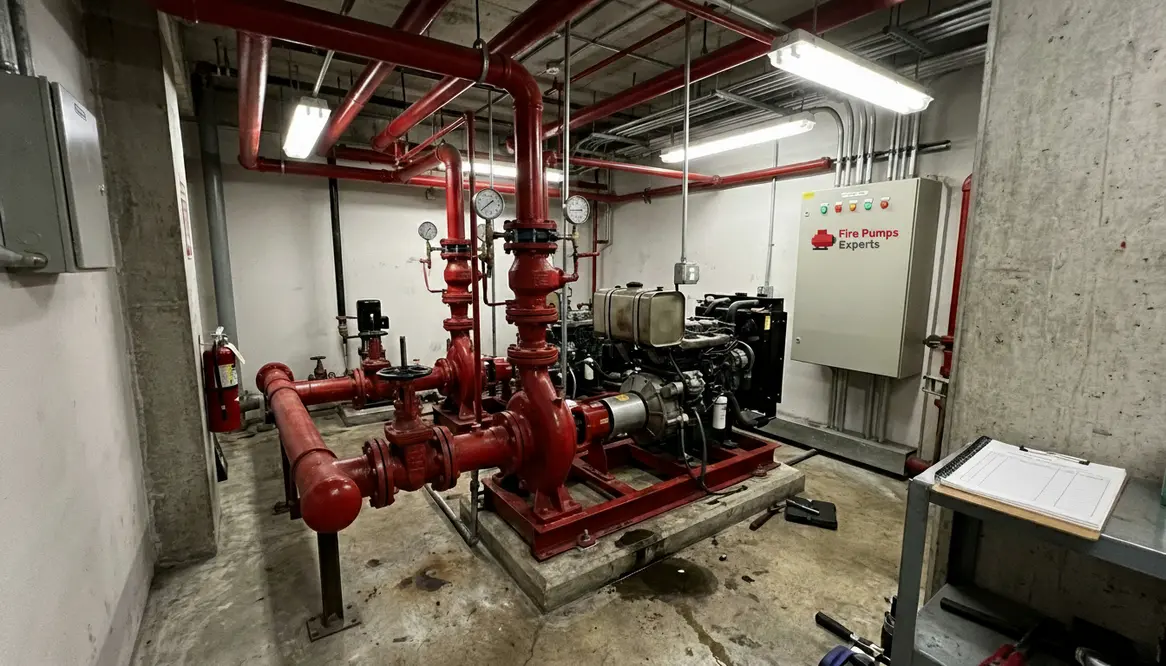
Vertical Development Fire Pumps for High Rise Buildings
I have spent enough time around high rise construction to know one thing for certain. Gravity is not your friend when water needs to go up. That is where vertical development fire pumps step in, quietly doing the heavy lifting so your building stays protected when it matters most. In tall commercial and industrial structures, these systems are not optional. They are the backbone of fire protection, ensuring water pressure remains strong from the lobby to the top floor, even if that floor feels like it is flirting with the clouds.
So let’s walk through what actually applies to these systems, without turning it into a snooze fest. I will keep it practical, grounded, and just interesting enough that you do not start checking your phone halfway through.
What fire pump requirements apply to vertical developments
First things first, the requirements are not random. They are rooted in codes like NFPA 20, which governs fire pump installation, and NFPA 13, which addresses sprinkler systems. However, when you build upward, the rules tighten. Why? Because water pressure drops as elevation increases, and fire does not politely stay on the lower floors.
Therefore, most high rise commercial buildings require a dedicated fire pump system capable of maintaining pressure across all levels. In many cases, this includes:
- A primary fire pump sized for peak demand
- A backup power source, often a diesel engine or generator
- Redundant controllers to ensure reliability
Additionally, local codes often require pressure zoning. This means dividing the building into vertical sections, each with controlled pressure levels. Otherwise, your pipes would experience more stress than a first day intern during a surprise audit.
How do I size fire pumps for high rise buildings?
I get this question a lot, and the answer is not as simple as picking the biggest pump on the shelf and calling it a day. In fact, oversizing can be just as problematic as undersizing.
To size a system correctly, I look at total building height, required flow rate, and system demand at the most remote sprinkler head. Then, I factor in friction loss through piping and elevation pressure loss. As a rule of thumb, every foot of vertical rise costs you about 0.433 psi. That adds up quickly when your building stretches past 20 stories.
Moreover, standpipe systems play a critical role. These systems require specific flow and pressure at hose connections, which directly impacts pump selection. So, the final sizing is always a balance between hydraulic calculations and code requirements.
And yes, software helps. But experience keeps you from trusting it blindly.
Critical components of vertical development fire pumps
<b>Pump assembly</b>
This includes centrifugal pumps designed for high pressure output. They must handle sustained operation without failure.
<b>Drivers</b>
Electric motors are common, but diesel engines provide reliability when power fails. And in emergencies, power tends to disappear faster than snacks in a break room.
<b>Controllers</b>
These act as the brain of the system, automatically starting the pump when pressure drops.
<b>Water supply</b>
Reliable supply is essential. This may come from municipal systems, storage tanks, or both.
<b>Pressure relief valves</b>
These prevent excessive pressure in lower zones, which can damage pipes.
<b>Jockey pumps</b>
Small but important, they maintain system pressure and prevent unnecessary pump starts.
Together, these components create a system that reacts instantly and performs under stress. And unlike most of us, it does not complain about it.
Installation and compliance for vertical development fire pumps
Installation is where theory meets reality. And reality tends to be less forgiving. Fire pump rooms must meet strict requirements, including fire rated construction, proper ventilation, and easy access for maintenance.
Furthermore, alignment and testing are non negotiable. A poorly aligned pump can fail prematurely, and in a high rise environment, failure is not just inconvenient. It is dangerous.
Commissioning tests must confirm flow rates, pressure levels, and automatic operation. In addition, ongoing inspection and testing schedules must follow NFPA standards. This includes weekly churn tests and annual flow testing.
It sounds like a lot, and it is. However, skipping steps here is like ignoring the check engine light for months. Eventually, something gives.
Common challenges in high rise fire protection systems
Even with proper design, challenges show up. For example, pressure fluctuations between zones can create instability. Therefore, engineers must carefully balance system pressures.
Another issue is space. Mechanical rooms in commercial towers are often tight, and squeezing in a full fire pump system can feel like assembling furniture in a closet.
Then there is redundancy. High value properties cannot afford downtime, so backup systems must be integrated seamlessly. This includes secondary pumps and alternate power supplies.
Finally, coordination across trades becomes critical. Structural, electrical, and mechanical teams must align. Otherwise, you end up with conflicts that delay projects and inflate costs.
Future trends shaping vertical fire protection
Technology continues to improve these systems. Smart monitoring now allows real time tracking of pump performance, pressure levels, and system health. As a result, facility managers can spot issues before they become emergencies.
Additionally, energy efficient designs are gaining traction. Variable speed pumps reduce energy use while maintaining required pressure. That is good for both operational budgets and sustainability goals.
And while automation is increasing, human oversight still matters. Because at the end of the day, no algorithm fully replaces experience, at least not yet.
How vertical development fire pumps fit into your overall strategy
When you step back and look at the entire protection strategy for a tower, vertical development fire pumps do not sit on the sidelines. They tie together sprinklers, standpipes, and suppression systems into something that actually works under pressure.
From plan review meetings to final inspections, these systems show up in conversations about life safety, resilience, and business continuity. Whether you are dealing with a mixed use high rise or a pure commercial development, ignoring pump performance is a fast way to end up with expensive redesigns later.
That is why engineering teams, owners, and authorities having jurisdiction all pay close attention to pump curves, test results, and zoning diagrams. When everyone understands how vertical development fire pumps support the building, decisions around upgrades and retrofits become far less painful.
FAQ
Keeping your building ready when it counts
When I look at fire protection in tall structures, I see more than equipment. I see a system that quietly stands guard every day. Vertical development fire pumps are not just a requirement. They are a commitment to safety, continuity, and responsibility. If you manage or design a commercial property, now is the time to review your system, ensure compliance, and plan upgrades where needed. Because when the moment comes, your preparation should already be doing the talking.
If you are mapping out a new project or rethinking protection for an existing tower, start with the fundamentals: water supply, pressure zoning, and the performance of your vertical development fire pumps. From there, align your design decisions with NFPA standards, local code requirements, and the realities of your building’s height and use. A well planned system will not just pass inspection; it will stand up when the alarms sound and the only thing that matters is that water gets exactly where it is needed.