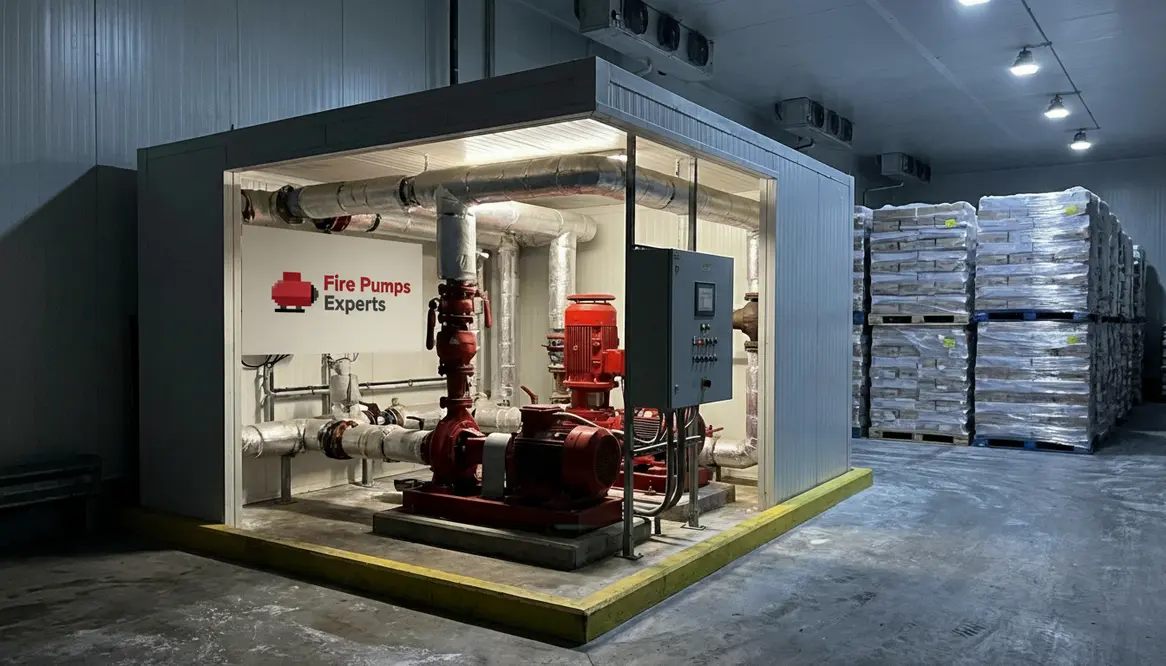
Fire Pump Considerations for Refrigerated Buildings
I have spent years walking through cold storage warehouses that feel more like movie sets from a sci fi thriller than a place to store frozen goods. Somewhere between the frost covered pipes and the hum of compressors, one thing always stands out. Fire risk does not disappear just because the air is cold. In fact, it often becomes more complex. That is where Fire pump considerations for refrigerated buildings come into play. Within these specialized environments, fire protection systems must work harder, think smarter, and stay reliable even when temperatures drop well below freezing.
Why Cold Storage Warehouses Need Specialized Fire Pumps
Cold storage facilities are not your average commercial buildings. They are tightly sealed, heavily insulated, and often packed with combustible materials like packaging and pallets. Because of this, I always treat them as high stakes environments.
Moreover, low temperatures can freeze standard sprinkler systems, rendering them useless at the worst possible moment. Therefore, fire pumps must deliver consistent pressure while supporting dry or preaction systems designed specifically for freezing conditions. It is a bit like asking a car to start in the Arctic. If it is not built for the job, it simply will not perform.
Additionally, water supply reliability becomes critical. Municipal systems may not provide adequate pressure, so I often recommend dedicated fire pumps that ensure strong and steady flow when it matters most.
All of these factors shape core Fire pump considerations for refrigerated buildings, from where equipment is located to how it is powered and monitored.
Fire Pump Considerations for Refrigerated Buildings: Core Design Factors
When I design or evaluate systems, I focus on a few key elements that make or break performance.
Temperature protection
First, the pump room itself must stay above freezing. Heated enclosures or indoor installations are essential. Otherwise, even the best pump can fail before it starts.
System compatibility
Next, the fire pump must align with dry pipe or preaction systems. These systems delay water release until activation, which prevents frozen pipes but requires precise pressure control.
Redundancy and reliability
In large industrial facilities, I always push for backup power sources. A diesel driven pump or generator can keep protection active during outages. Because if the power goes out during a fire, that is not a plot twist anyone wants.
Material durability
Cold temperatures can make materials brittle. Therefore, components must withstand thermal stress without cracking or failing under pressure.
These core Fire pump considerations for refrigerated buildings shape pump sizing, layout, and long term maintenance strategies in any frozen environment.
How Do I Size a Fire Pump for a Refrigerated Warehouse?
Understanding the demand
I get this question often, and the answer is not one size fits all. However, the process follows a clear path.
First, I calculate the required flow based on hazard classification. Cold storage often falls into higher hazard categories due to storage height and materials. Then, I evaluate the most demanding sprinkler zone.
Accounting for losses and real conditions
After that, I account for pressure losses across the system, including friction, elevation, and valve restrictions. Only then do I select a pump that meets both flow and pressure demands simultaneously.
Finally, I test the system under realistic conditions. Because on paper, everything looks perfect. In real life, things get interesting.
Careful pump sizing is one of the most overlooked Fire pump considerations for refrigerated buildings, yet it has a massive impact on how the system performs when a sprinkler head actually opens.
Comparing Pump Types for Cold Storage Applications
Not all fire pumps behave the same in freezing environments. Here is how I typically break it down when working with large scale facilities.
Electric fire pumps
- Ideal for facilities with stable power
- Lower maintenance needs
- Must be in heated spaces
Diesel fire pumps
- Operate during power failures
- Require fuel storage and ventilation
- Perform well in remote or high risk sites
In many cases, I recommend a combination approach. Electric for primary use and diesel for backup. It is the fire protection equivalent of having both a seatbelt and airbags.
Selecting the right type and combination is another practical layer within Fire pump considerations for refrigerated buildings, especially when operations run 24/7 and downtime is not an option.
Fire Pump Considerations for Refrigerated Buildings in Large Facilities
When dealing with industrial scale warehouses, complexity increases quickly. These are not small buildings. They are massive, often automated, and sometimes operate around the clock.
Zoning and monitoring
Because of this, zoning becomes critical. I design systems that isolate sections, allowing targeted response without shutting down the entire facility. Additionally, I integrate monitoring systems that provide real time data on pump performance.
Access and compliance
Another key factor is maintenance access. Equipment must remain accessible even in cold zones. I have seen setups where routine inspection felt like an expedition. That is not sustainable.
Furthermore, compliance with standards such as NFPA 13 and NFPA 20 is non negotiable. These guidelines shape everything from pump sizing to installation practices, ensuring systems perform under pressure.
In very large sites, Fire pump considerations for refrigerated buildings also extend to how the fire water supply is looped around the property, how many pump rooms are needed, and how failures are managed without shutting down the entire operation.
Common Mistakes I See and How to Avoid Them
Freezing and underestimating demand
First, placing pumps in unheated areas. This is a fast track to frozen components and system failure.
Second, underestimating water demand. Cold storage fires can grow rapidly, especially with high piled storage.
Testing and planning ahead
Third, skipping regular testing. Fire pumps are not decorations. They need routine checks to ensure readiness.
Finally, ignoring future expansion. Facilities grow, and systems must scale accordingly. Planning ahead saves both time and money.
Avoiding these missteps is just as important as getting the calculations right, and each one ties back to practical Fire pump considerations for refrigerated buildings from concept through to long term operation.
FAQ: Fire Pumps in Cold Storage Warehouses
Keep Your Facility Protected and Operational
In my experience, the right fire pump system does more than meet code. It protects inventory, operations, and people without hesitation. If you manage or design a cold storage facility, now is the time to review your setup. Work with specialists who understand Fire pump considerations for refrigerated buildings and know how to apply them in real world conditions. Because when the temperature drops, your fire protection should not.
For more on technical guidance, case studies, and standards updates, resources such as https://firepumps.org and applicable NFPA documents can help you validate designs and keep your cold storage facility ready for the unexpected.