Fire Pump Requirements for Emergency Operations
How resilient fire pump design keeps critical command and control facilities operating when everything else is under pressure.
I have spent years walking through command and control buildings where every second matters and every system must work without hesitation. In these environments, fire protection is not just a box to check. It is the quiet guardian that stands ready when everything else goes sideways. That is why understanding Fire Pump Requirements for Emergency Operations Centers is critical from the very start. These systems form the backbone of reliable suppression, ensuring that even under extreme conditions, water moves exactly where it is needed. And trust me, when alarms sound, nobody wants a system that decides to take the day off like it is on a beach in Miami.
Why this topic matters
Emergency Operations Centers depend on fire pumps that keep working through power failures, system faults, and the kind of chaos that melts lesser designs. Getting this wrong is not just a code issue; it is an operational risk.
What makes fire protection in command and control buildings unique
Command and control buildings are not your average office spaces. I treat them as living systems where data, decisions, and people converge under pressure. Because of this, fire protection strategies must go beyond standard compliance. They must anticipate failure and still perform.
Unlike typical facilities, these buildings often operate 24 by 7. Therefore, downtime is not an option. I always design with redundancy in mind. If one system fails, another must step in without hesitation. Additionally, sensitive equipment demands clean suppression methods paired with robust water based systems for structural protection.
And yes, I have seen rooms filled with blinking screens that look like something straight out of a sci fi movie. The difference is, this is not fiction. If fire protection fails here, the consequences ripple far beyond the building itself.
Fire Pump Requirements for Emergency Operations Centers in high risk facilities
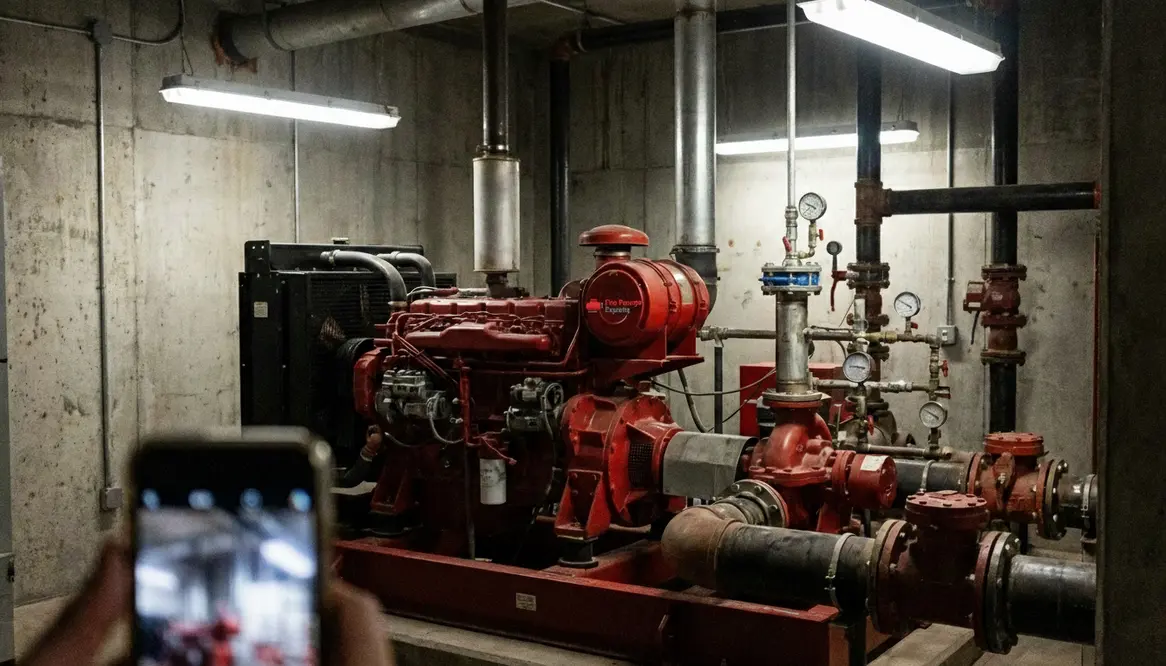
When I approach Fire Pump Requirements for Emergency Operations Centers, I focus on reliability first, performance second, and compliance always. These pumps must deliver consistent pressure even when power conditions are unstable. That is why diesel driven pumps often enter the conversation alongside electric units.
Moreover, placement matters more than most people think. I position fire pumps in hardened, protected rooms to reduce vulnerability. Flooding, heat, or structural damage should not knock out the very system designed to fight emergencies.
Sizing without the drama
Then there is capacity. Oversizing may sound like a safe bet, but it can introduce inefficiencies. Instead, I calculate demand carefully based on hazard classification, building size, and system layout. It is a bit like choosing the right engine for a truck. Too small and you stall. Too big and you waste fuel while looking slightly ridiculous.
How do I design redundancy without overcomplicating the system
I keep things simple, but never simplistic. Redundancy should feel seamless, not tangled. So, I layer systems in a way that each component supports the next. For example, dual water supplies paired with backup power ensure that fire pumps remain operational under multiple failure scenarios.
Additionally, I integrate monitoring systems that provide real time feedback. This allows operators to respond before a minor issue becomes a major problem. And let us be honest, nobody wants to troubleshoot a fire pump during an actual emergency. That is like trying to fix your car engine while driving down the highway.
Making maintenance less painful
Clear system design also helps maintenance teams. When layouts are intuitive, inspections become faster and more reliable. In turn, this keeps the entire fire protection strategy sharp and ready.
Balancing advanced suppression systems with fire pump infrastructure
I often work with facilities that rely on a mix of suppression technologies. Clean agent systems protect critical equipment, while traditional sprinklers handle structural risks. The fire pump sits at the center, ensuring water based systems perform when needed.
However, balance is key. I avoid overloading a single system with too many responsibilities. Instead, I distribute risk across multiple layers. This approach strengthens the overall protection strategy without creating unnecessary complexity.
Layered protection in practice
In many ways, it reminds me of assembling a great team. You do not want five quarterbacks and no defense. Each system has a role, and when they work together, the result is resilient and efficient.
This is where understanding Fire Pump Requirements for Emergency Operations Centers really pays off. When you know exactly what the pump can support, it becomes much easier to assign the right roles to sprinklers, standpipes, and specialty systems without piling everything onto one overworked piece of equipment.
Key considerations for long term performance and compliance
Fire protection does not end at installation. I always emphasize ongoing testing and maintenance. Regulations evolve, and so do operational demands. Staying compliant means staying proactive.
Operational focus
- Routine fire pump testing under real load conditions
- Continuous monitoring of pressure and flow rates
- Immediate repair of worn or aging components
Strategic focus
- Periodic system upgrades to meet new standards
- Integration with building management systems
- Staff training for emergency response coordination
Furthermore, documentation plays a larger role than many expect. Accurate records ensure inspections run smoothly and help identify patterns before they become problems. It is not glamorous work, but it keeps everything aligned.
Fire Pump Requirements for Emergency Operations Centers and future ready design
As technology evolves, so do expectations for fire protection. I see increasing demand for smarter systems that communicate across platforms. Fire Pump Requirements for Emergency Operations Centers now include integration with digital monitoring tools and predictive maintenance systems.
Consequently, I design with scalability in mind. Facilities grow, risks change, and systems must adapt without requiring a complete overhaul. This forward thinking approach saves time, money, and more than a few headaches down the road.
Quiet reliability is the goal
And if I am being honest, a well designed system feels almost invisible. It does its job quietly, without drama, like a great stagehand in a theater production. You only notice it when something goes wrong. That is exactly the standard I use when thinking through Fire Pump Requirements for Emergency Operations Centers in facilities that cannot afford downtime.
FAQ
Conclusion
When I design fire protection for command and control buildings, I focus on resilience, clarity, and performance that never wavers. The right strategy, backed by well planned fire pump systems, keeps operations running when it matters most. If you are responsible for a critical facility, now is the time to evaluate your setup and strengthen your defenses.
Reach out to experts who understand these environments and build systems that stand ready, no matter what comes next. Whether you are refining existing infrastructure or planning a new Emergency Operations Center, treating Fire Pump Requirements for Emergency Operations Centers as a strategic design decision, rather than a simple checkbox, will pay off when the alarms sound and every second counts.