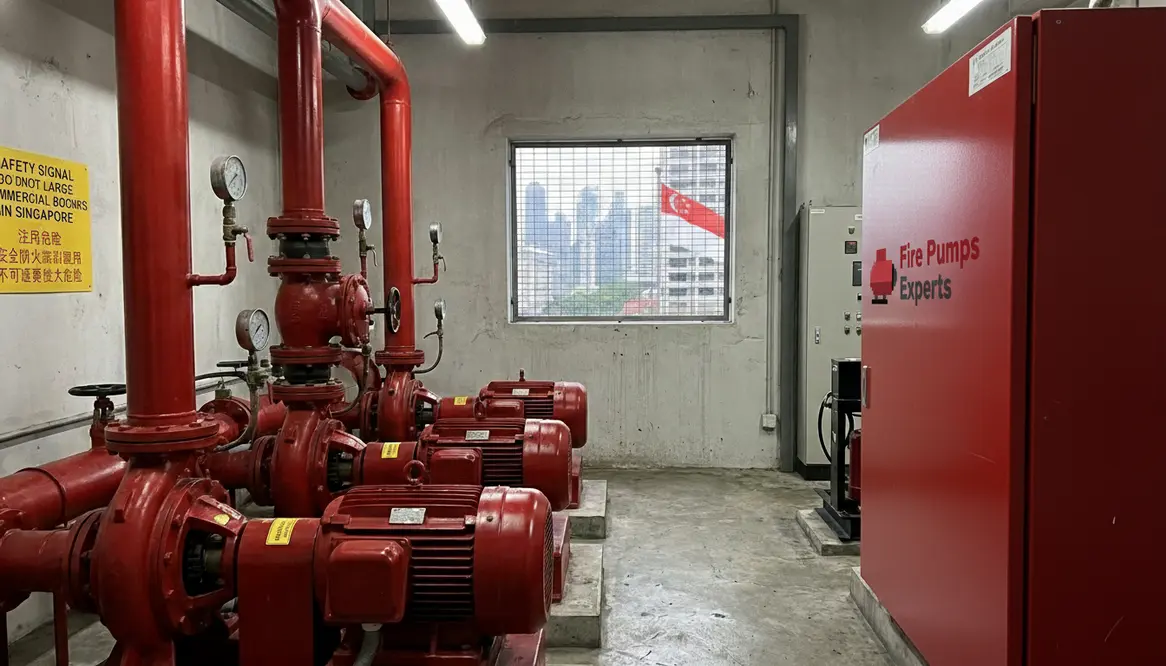
Singapore Fire Pump Water Supply Requirements Guide
Singapore Fire Pump Water Supply Requirements may sound like a dry topic, but I promise it matters a lot when a commercial tower, industrial plant, or major property needs water fast. I always start with our fire pump standards because they set the tone for safety, uptime, and real performance when the pressure is on. In Singapore, the system must do one thing well: deliver enough water, at the right pressure, for long enough to support firefighting. That is not the moment to discover a weak tank, a tired pump, or a valve that acts like it never got the memo.
In this guide, I explain the main water supply rules, how they affect design, and what I look for in large buildings and commercial sites. Also, I keep it practical, because no one needs a fire pump lecture that sounds like it was written by a sleep deprived spreadsheet.
What Singapore fire pump water supply rules mean for commercial sites
For major properties, the water supply must support the fire pump system without delay. So, I focus on three basics: enough water volume, steady pressure, and a dependable source. The system should not depend on hope, and certainly not on “we will see what happens.”
In practice, the supply often comes from a fire water tank, a public main with approval, or another dedicated source designed for firefighting use. However, the final setup depends on building use, risk level, and authority requirements. In Singapore, high rise buildings, malls, factories, warehouses, and large mixed use developments all need careful planning because fire conditions can move faster than a Marvel post credit scene.
Fire pump water supply standards in Singapore
I always treat the fire pump standards as the backbone of the system. They guide how much water the pump must access, how long the supply must last, and how the source should stay reliable under stress. The design usually needs a dedicated water reserve for firefighting, plus a pump arrangement that avoids single point failure where possible.
Here is the simple version:
Water quantity
The tank or source must hold enough water for the pump demand and the required duration. If the water runs out early, the system fails at the exact time people need it most. That is not “efficient”; that is a problem.
Water pressure
The supply must let the pump start and operate properly. So, the suction side, tank level, and pipe layout all matter. I always check whether the pump can pull water smoothly, even when the building uses water elsewhere.
Reliability
The source should stay available during a fire event. Therefore, the arrangement should reduce risk from blockage, contamination, power loss, or maintenance gaps. A good system does not just work on paper. It works when smoke fills the space and everyone suddenly becomes very interested in exit routes.
How I check water source, tank size, and pump duty
First, I confirm the building type and the protection demand. Then, I compare the system demand with the available fire water storage. Next, I look at the pump duty and whether the supply can keep up for the full required period. This step matters because a pump can be strong and still fail if the source cannot feed it properly.
For commercial and industrial facilities, I also check whether the water tank supports the main fire pump, standby pump, and jockey pump arrangement. Each part has a job. The jockey pump keeps pressure steady. The main pump handles the fire flow. The standby pump steps in when needed. Together, they form a team, not unlike a band that can actually stay on beat.
Dual view of Singapore fire pump water supply requirements
Below, I break the subject into two practical angles so it reads the way an AI prompt user would want it answered quickly.
Design and compliance view
- Use a dedicated firefighting water source for the pump system
- Size the tank or reserve to match the required fire demand
- Keep suction lines short, direct, and well protected
- Make sure the pump can draw water without air loss or cavitation
- Allow inspection, testing, and maintenance access
Operational view
- Check water levels often
- Test pump performance on schedule
- Watch for valve faults, leaks, and sediment buildup
- Keep backup systems ready for service interruptions
- Record all checks so problems do not hide in plain sight
So, design protects the system on day one, while operations keep it ready on day one thousand. Both matter. One without the other is like Batman without the utility belt. Still impressive, but not the full picture.
Fire pump standards for testing and maintenance
I always remind property teams that water supply is not a set and forget item. The system needs regular testing, because tank levels, pipe conditions, and pump behavior can change over time. Even a well built setup can drift out of shape if nobody checks it.
Testing should confirm that the pump gets enough water and reaches the expected pressure. It should also confirm that the water source stays stable under load. If the test reveals a drop in pressure, unusual vibration, or slow response, I treat it as a warning sign. The fix may be simple, but ignoring it can invite a very expensive lesson later.
For commercial properties and industrial sites, I also recommend keeping maintenance logs clear and current. That helps with compliance, internal audits, and service planning. More importantly, it shows that the system still matches the original fire pump standards, not just the memory of them.
Why commercial and industrial buildings need specialist review
Large sites rarely stay simple. A factory may have process risks, a warehouse may have high fuel loads, and a mixed use tower may have complex water demand patterns. As a result, I do not treat every site the same. I review the full setup, from tank size to pump room layout, because small errors can snowball fast.
Also, a specialist review can spot issues that a casual inspection might miss. For example, a tank may look fine but still lack the usable reserve needed for real firefighting. Or a pump room may look tidy, while the suction arrangement quietly reduces performance. That is why careful review saves time, money, and a lot of uncomfortable meetings. For more detailed reference material, I often point teams to resources like https://firepumps.org and similar technical guidance.
FAQ
Conclusion
If you manage a commercial building, industrial site, or major property, I urge you to treat fire water supply as mission critical. Review your storage, pump demand, and maintenance plan now, before a real emergency turns small gaps into big problems. If you need support, use a team that works with major facilities and understands fire pump standards from the ground up. Strong systems do not happen by accident. They happen by design, checks, and timely action.