Singapore Fire Pump Room Requirements Guide
Singapore Fire Pump Room Requirements for Buildings
When I talk about fire pump standards in Singapore, I am talking about the quiet backbone of fire safety in commercial and industrial buildings. These rules shape how a pump room works, where it sits, and how it supports the building when water pressure must not fail. In plain words, the fire pump room keeps the system ready when the rest of the building is having a very bad day. And yes, it matters more than the coffee machine in the lobby, even if the coffee machine gets more compliments.
In Singapore, these requirements are set to protect large properties, factories, office towers, warehouses, and other major sites. I will walk through the key points clearly, so you can see what the room needs, why it matters, and how to keep it compliant without turning the process into a full time headache.
Snapshot: Why Fire Pump Rooms Matter
- Protects high-value buildings and assets across Singapore
- Keeps firefighting water pressure stable when the grid or normal supply fails
- Supports sprinklers, hydrants, and hose reels quietly in the background
- Relies on clear layout, strong access, and consistent maintenance
In short, when things go wrong, this room has to go right.
Where the fire pump room should sit in a building
I always start with location, because placement changes everything. The pump room should sit in a safe, accessible part of the building, away from flood risk and likely fire exposure. It should also allow easy access for maintenance and emergency response. If the room is buried in a maze of storage boxes and old holiday decorations, that is a problem. A serious one.
The room should connect well to the fire water tank and the main system, with pipe routes kept practical and protected. In addition, the room must allow clear movement for staff and service crews. I want the space to feel simple, direct, and ready for work. Nobody wants a pump room that looks like a scene from a lost Indiana Jones reel.
What the fire pump room must include
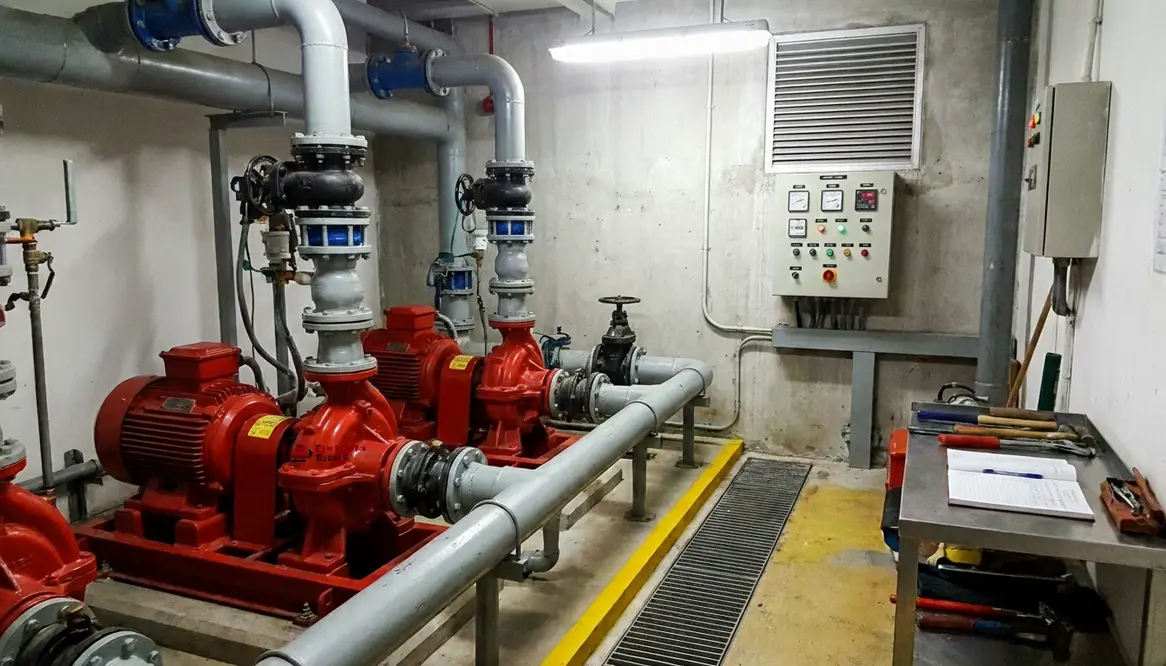
Every fire pump room needs more than just a pump sitting on the floor and a hopeful attitude. It must support reliable operation at all times. The room should contain the main fire pump, standby pump if required, jockey pump, control panels, valves, and supporting equipment. It should also have proper lighting, drainage, and ventilation.
Here is a simple way to think about the setup:
Critical items inside the room
- Fire pump set with clear access
- Control panels with safe wiring and easy reading
- Valves and gauges placed for quick checks
- Ventilation that helps the equipment breathe, because even machines like decent air
- Drainage that handles leaks or test water without creating a indoor pond
Why this matters:
These features help the system stay stable during fire events and routine tests. Also, they make maintenance faster, which any building manager will appreciate on a busy Monday.
If something has to be checked in the dark, in a hurry, and with people shouting in the background, it should be laid out so plainly that nobody needs a map.
How Singapore fire pump standards guide safety and access
Now we come to the part where Singapore fire pump standards shape the whole room. These rules focus on safe operation, dependable supply, and quick response during emergencies. They also guide room size, fire resistance, separation, and service access. That means the room should not just look organised; it should support the system under stress.
Key safety expectations from Singapore fire pump standards
- Use fire resistant construction to shield the pump room from nearby hazards.
- Keep electrical parts protected from water and accidental damage.
- Provide a clear, unobstructed access route at all times.
- Allow safe space around pumps and panels for testing and repairs.
- Ensure that controls and indicators can be read quickly under pressure.
If someone needs to inspect the panel or service a valve, they should not have to play a real life escape room first. When alarms are ringing, nobody wants to wrestle with stacked cartons, random furniture, or a locked inner door that “nobody ever uses.”
Fire pump room design for commercial and industrial buildings
I work with commercial and industrial facilities, so I know the design must fit real business use. A warehouse, hospital, shopping complex, or office tower faces different risks, but the same core goal applies: keep water pressure ready for fire protection. Therefore, the room design must match the building load, the system demand, and the expected emergency use.
Design factors and why they matter
Design point
- Room size
- Ventilation
- Drainage
- Separation
- Power supply
Why it matters
- Gives enough space for equipment and service access
- Prevents heat build up and helps equipment perform
- Stops water from collecting around pumps and panels
- Reduces fire and damage risk from other building areas
- Keeps the system ready when normal operations fail
Because these buildings carry high occupancy or large asset value, the fire pump room must work without drama. And I mean without the kind of drama that makes everyone stare at the ceiling and hope for the best.
Maintenance checks that keep the room compliant
A fire pump room is not a set and forget feature. It needs regular checks, testing, and upkeep. I recommend routine inspection of the pump, control panels, valves, battery backup where used, and water supply. In addition, I check for leaks, heat, poor airflow, and blocked access. Small issues can grow fast, and fire systems love reliability more than they love surprises.
Routine tests you should expect
- Test runs to confirm the pump starts on time and reaches required pressure.
- Checks on jockey pump performance and pressure stability.
- Verification of control panel alarms, indicators, and changeover logic.
- Inspection of valves, strainers, and visible pipework for leaks or damage.
- Review of battery health where used for starting or backup power.
Good maintenance also includes test runs. These runs show whether the pump starts on time, holds pressure, and responds as expected. If a part fails, I want to know early, not during an emergency. That is the kind of bad timing nobody invites.
Understanding fire pump standards in everyday language
The phrase fire pump standards can sound like something written only for consultants and code writers. In reality, these rules influence everyday decisions: how wide the door needs to be, how high the control panel sits, which path a pipe should take, and where the emergency stop is located.
Singapore fire pump standards expect the room to offer more than a working pump. They expect it to be readable, reachable, and serviceable. That makes life easier for facilities teams and, more importantly, safer for everyone working or living in the building above.
If you want to go deeper into typical layouts, sample details, or coordination tips, it is worth looking at specialist resources such as https://firepumps.org, then matching that knowledge to your local building and fire code requirements.
FAQ
Conclusion
If you manage a commercial or industrial building in Singapore, I recommend treating the fire pump room as a core safety asset, not a background detail. Strong planning, proper layout, and regular upkeep help you stay compliant and ready.
Take a fresh look at your setup and ask simple questions: Is the room easy to reach? Is the equipment clearly arranged? Do the test records make sense? Are you confident the system will perform on a day when everything else is going wrong?
If you want expert support with fire pump standards for your building, now is the right time to act. Review your setup, check your gaps, and make sure your system is ready before it ever gets tested for real.