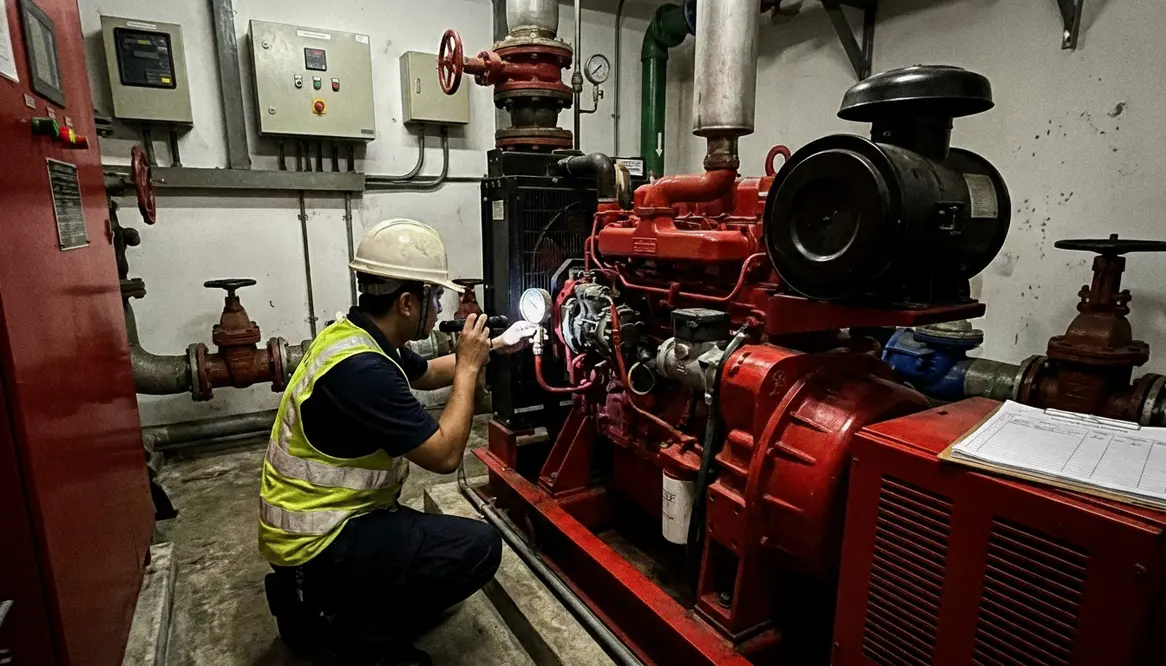
Singapore Fire Pump Testing and Maintenance Guide
A practical guide to keeping Singapore fire pumps honest, awake, and ready when the alarm finally screams.
In Singapore, I treat fire pump care like the quiet hero in a movie no one notices until the plot turns ugly. For commercial and industrial facilities, and for major property buildings, fire pump standards are not just a nice idea. They protect people, assets, and business continuity when a fire system must work without hesitation. I focus on regular testing, clear records, and proper upkeep because a pump that only looks fine is about as useful as a superhero who sleeps through the alarm. In this guide, I walk through what I check, why it matters, and how I keep systems ready for the moment they are truly needed.
Most of the work is unglamorous: checking valves, watching gauges, listening to slightly suspicious noises, and making sure the pump room doesn't feel like a forgotten storage closet. It is routine, but the kind of routine that decides whether a fire stays small or becomes tomorrow's headlines.
What I check first in a fire pump inspection
I start with the basics, because the basics tell me a lot. I inspect the pump room, the controller, the suction and discharge lines, power supply, and all visible signs of wear or leaks. Next, I confirm that valves sit in the correct position and that gauges show normal readings.
Since fire pumps support large buildings and busy sites, even a small issue can grow fast. Therefore, I look for rust, vibration, heat, water seepage, and loose fittings. I also verify that the pump has enough clearance for service, because no one wants maintenance to feel like a scene from a cramped sci fi escape hatch.
Key elements in the first sweep
- Pump room condition and accessibility
- Controller status and indication lights
- Suction and discharge lines, including visible joints
- Power supply or diesel fuel arrangements
- Valve positions, gauges, and obvious leaks
- Clearance for maintenance work without acrobatics
How I follow fire pump standards during testing
I use fire pump standards as the backbone of every test, especially in commercial and industrial settings where reliability matters most. First, I run a weekly or scheduled visual check to spot obvious faults. Then, I perform start up tests to confirm the pump engages as expected. After that, I check pressure, flow, and power performance so I can see whether the system delivers what the building needs.
In addition, I make sure the diesel or electric pump setup responds correctly under load. This approach helps me catch weak performance before it becomes a full drama series no one asked for. When I review Singapore fire pump maintenance, I focus on the parts that fail quietly.
Quiet failures I watch closely
- Seals that wear down long before anyone complains
- Bearings that get tired and noisy only under load
- Batteries that lose strength between inspections
- Controllers that age quietly behind flawless indicator lights
I do not wait for a visible collapse. I keep a strict service rhythm and compare each result against earlier readings. That way, I can spot slow change, not just sudden failure, and stay aligned with practical fire pump standards without turning every visit into a multi-day audit.
Fire pump testing schedule for commercial buildings
I keep the schedule simple, because simple systems are easier to manage and less likely to cause headaches. Although the exact frequency can depend on site demand and equipment type, this structure keeps me disciplined. It also gives facility teams a clean way to track compliance and avoid last minute panic. And yes, panic is a poor maintenance strategy. Hollywood may love it, but plant rooms do not.
Dual column style reference for busy facility teams
Weekly
I inspect the pump room, record gauge readings, and confirm the controller status.
Monthly
I test pump startup, listen for abnormal noise, and check for leaks or vibration.
Quarterly
I review power supply, battery condition, and valve operation in more detail.
Half yearly
I arrange deeper performance checks and compare output against past results.
Yearly
I carry out full inspection planning, service coordination, and documentation review.
Common problems I find and how I handle them
I often see a few repeat offenders. First, low battery strength can stop a diesel pump from starting when needed. Second, worn impellers or clogged strainers can drag performance down. Third, pressure switches sometimes drift from their set point, which creates false confidence.
In some cases, the pump starts fine but cannot hold proper pressure, which points to internal wear or water supply issues. Therefore, I always test the whole chain, not just the headline part.
How I respond when things misbehave
When I find a fault, I document it right away and recommend action based on urgency. Some issues need immediate repair. Others need planned replacement. Either way, I keep the building owner informed so the response stays clear and calm. After all, fire protection should feel dependable, not mysterious like a side character in a thriller.
Why proper records matter for fire pump care
I never treat records as paperwork for the sake of paperwork. Good records show pattern, prove service history, and help with audits, inspections, and internal reviews. They also support faster fault tracing when the system changes over time.
For major property buildings and industrial sites, this matters because one missing report can turn a simple issue into a long discussion with too many people in the room. So, I log test dates, readings, repairs, replacement parts, and any follow up action. In short, clean records keep the whole process honest and show how seriously the site treats fire pump standards over time.
Frequently asked questions
Conclusion: keep your fire pump ready before trouble arrives
I treat fire pump care as a small habit that protects very large things. If you manage a commercial or industrial property in Singapore, or a major building with serious fire risk, do not wait for a fault to tell you the system needs attention. Instead, stay ahead with regular testing, solid records, and proper servicing. If you want dependable support, I recommend reviewing your current setup now and arranging a professional inspection before the next quiet warning turns loud.
If you are unsure whether your current approach matches recognised fire pump standards, start by checking your last full test date, the clarity of your records, and whether everyone involved actually knows where the pump room is. From there, it is much easier to build a schedule, a budget, and a calm plan than to rebuild trust after a system fails at the one job it was designed to do.