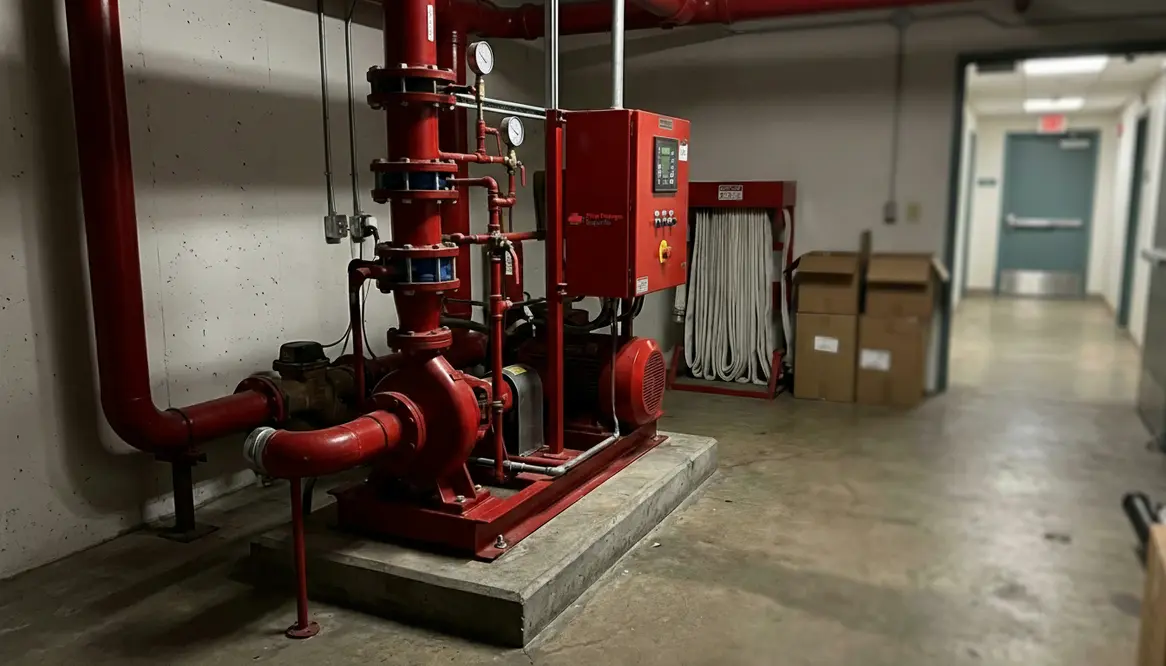
Fire Pump Requirements for Homeless Services Centers
How thoughtful fire pump design, maintenance, and integration turn busy social support buildings into safer spaces for the people who depend on them most.
I have spent years walking through large social support buildings, from transitional housing complexes to multi story assistance centers, and one thing always stands out. Safety is not optional. It is foundational. That is why I take Fire Pump Requirements for Homeless Services Centers seriously from the very first blueprint sketch. In these environments, where occupancy is high and vulnerability is real, fire protection systems must work without hesitation. And yes, while fire pumps are not exactly the Avengers of building systems, when things go wrong, they are the heroes you actually want showing up.
These buildings are not just structures. They are temporary homes, crisis shelters, counseling hubs, and medical access points. Any fire event here is more complex than in a typical office because the people inside may be sleeping, overwhelmed, disabled, or unfamiliar with the layout. That reality shapes every fire protection choice I make, from pump sizing to alarm locations.
Why fire protection in social support buildings demands more than the basics
These facilities serve people who often need extra time, guidance, or assistance during emergencies. Because of that, I approach fire protection with layered thinking. First, I consider response time. Then, I look at system reliability. Finally, I evaluate how systems interact.
Unlike standard office buildings, social support environments operate around the clock. Therefore, systems must handle continuous demand. Sprinklers, alarms, and pumps need to work together like a well rehearsed band, not a garage group still arguing over chords.
Moreover, I prioritize redundancy. If one component fails, another must step in. That is where proper fire pump design becomes essential, especially when municipal water pressure falls short.
How do Fire Pump Requirements for Homeless Services Centers actually work?
I get this question a lot, and the answer is more practical than mysterious. Fire pump systems exist to boost water pressure when city supply cannot meet demand. In larger facilities, especially multi level structures, gravity alone will not cut it.
So, I ensure that fire pumps meet specific flow and pressure targets based on building size, layout, and hazard classification. Additionally, I account for peak usage scenarios. Because when a system is needed, it is never a quiet Tuesday afternoon. It is chaos. And the system must outperform that chaos.
Matching pumps to building demands
Fire Pump Requirements for Homeless Services Centers are shaped by several variables: building height, floor area, occupancy type, and sprinkler design density. In taller or more spread out facilities, friction loss in piping and elevation changes can quietly steal the pressure you thought you had. The pump’s job is to restore that pressure with enough flow to keep sprinklers effective in the most remote locations.
Power and reliability under stress
Furthermore, I align pump selection with backup power sources. If electricity fails, the pump still runs. Diesel driven systems often step in here, and while they are not glamorous, they are dependable. Think of them as the quiet character actor who steals every scene.
When Fire Pump Requirements for Homeless Services Centers are executed properly, the result is a system that quietly waits in the background, ready to deliver the exact pressure and flow your sprinklers need when the worst moments hit.
Design strategies I rely on for high occupancy safety
When I design or evaluate fire protection systems, I focus on clarity and speed. Systems must communicate clearly and activate instantly.
System design priorities
- Clear alarm signaling throughout all zones
- Strategic sprinkler coverage with no blind spots
- Accessible fire department connections
- Properly sized and tested fire pumps
Operational considerations
- Routine inspection and maintenance schedules
- Staff training for emergency response
- Integration with building management systems
- Backup power reliability checks
In addition, I emphasize simplicity. Overly complex systems tend to fail when people need them most. A clean, well integrated design wins every time.
Meeting code while thinking beyond it
Code compliance is the baseline. I treat it as the starting line, not the finish. While regulations define minimum requirements, real world conditions often demand more.
For example, I often evaluate water supply variability across seasons. Pressure can drop during peak usage or infrastructure strain. Therefore, I design systems that handle those fluctuations without compromise.
Also, I consider future expansion. Social support facilities evolve. Populations grow. Services expand. Fire protection systems should scale accordingly, rather than becoming outdated the moment a new wing opens.
When you treat Fire Pump Requirements for Homeless Services Centers as a long term strategy rather than a one time checkbox, upgrades become smoother, budgets are easier to plan, and safety stays aligned with real conditions on the ground.
Maintenance is where systems prove their worth
A perfectly installed system means nothing if it is ignored. I always stress ongoing maintenance because fire pumps and related systems need regular attention.
Weekly churn tests, annual flow testing, and routine inspections keep everything in working order. Moreover, documentation matters. If it is not recorded, it might as well not have happened.
And let me be honest for a moment. Maintenance is not exciting. No one throws a party for a well maintained fire pump. But when an emergency hits, that quiet reliability becomes priceless.
Integrating fire pumps into broader safety planning
I never treat fire pumps as isolated equipment. Instead, I integrate them into a full life safety strategy. This includes coordination with alarms, suppression systems, and emergency response plans.
Additionally, I work closely with facility managers. Their understanding of the system can make or break its effectiveness. Training sessions, clear procedures, and regular drills all play a role.
When everything works together, the result is a system that responds quickly and effectively. And in these environments, that response can save lives.
Connecting design, people, and practice
Technical requirements are only half the picture. The other half lives in how staff use the building daily: how doors are propped, how storage creeps into stairwells, how often drills happen, and how clearly people understand the alarm tones. I have seen beautifully engineered systems undermined by blocked valves and dusty control panels no one wants to touch.
That is why I encourage pairing Fire Pump Requirements for Homeless Services Centers with simple checklists, quick refresher trainings, and an internal culture that treats life safety as part of everyday operations, not a once a year exercise.
FAQ
Building safer spaces starts with smarter systems
I believe every social support building deserves fire protection that is dependable, scalable, and thoughtfully designed. When I apply Fire Pump Requirements for Homeless Services Centers with precision and care, I create systems that stand ready at all times. If you manage or develop large facilities, now is the moment to evaluate your fire protection strategy and invest in systems that truly protect lives and property. Because when safety works, everything else can too.