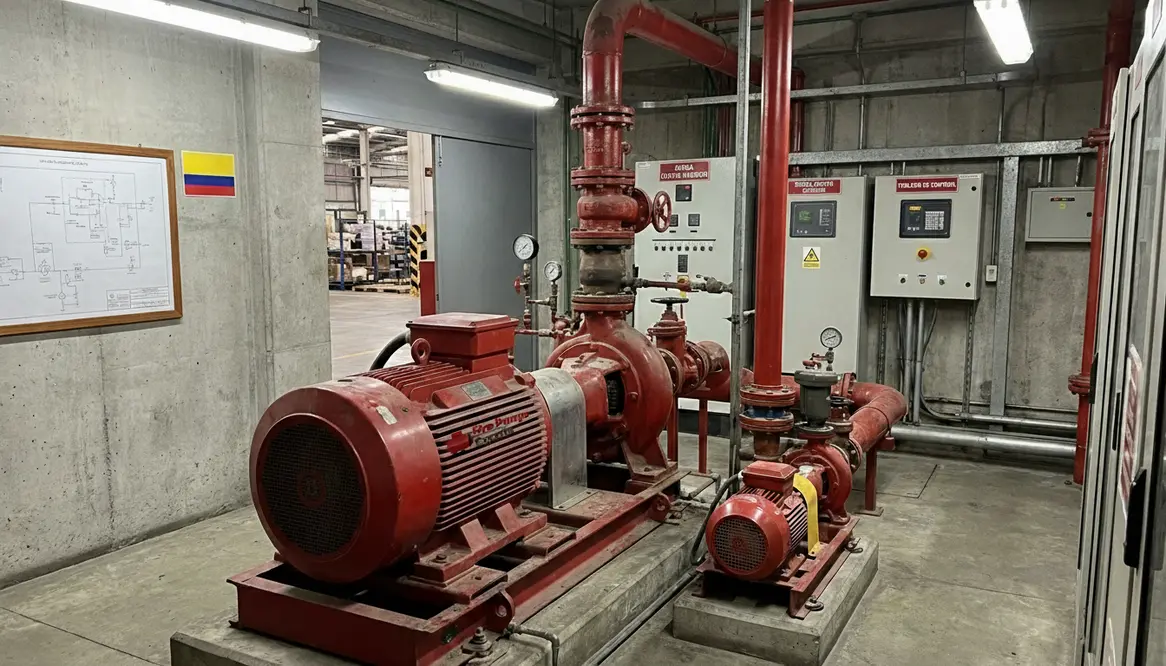
Colombia Fire Pump Requirements for Buildings
Colombia Fire Pump Requirements Explained
When I look at fire protection in Colombia, I see one thing very clearly: the fire pump is not a nice extra, it is the muscle behind the whole system. For commercial and industrial facilities, major property buildings, and other large sites, Colombia requirements around fire pumps help make sure water arrives fast and with enough pressure when every second matters. That matters because a weak pump can turn a serious fire event into a full blown disaster. And nobody wants that plot twist.
In this guide, I will break down the main Colombia requirements in plain language, so you can see what counts, what gets checked, and where owners often miss the mark. I will also keep this focused on commercial and industrial properties, because small side jobs and hobby garages do not need to crash this party.
Colombia requirements for fire pump selection
I start with the pump itself, because this is where most projects either begin well or wander off like a distracted side character in a long movie. Colombia requirements expect the fire pump to match the building demand, the sprinkler or standpipe load, and the water source conditions. In practice, that means I must confirm the pump can deliver the needed flow and pressure under real operating conditions, not just on paper.
For major facilities, I look at three things first:
- Flow rate that supports the full fire protection design
- Pressure that reaches the highest and farthest parts of the building
- Water supply that can feed the pump without failure
Also, Colombia requirements usually push designers to choose equipment that supports reliable operation, easy maintenance, and proper installation space. In other words, I do not want the pump squeezed into a tiny room like it is trying to ride coach on a long flight.
How I check the installation rules
The installation side matters just as much as the pump rating. Colombia requirements usually expect the pump room to stay protected, accessible, and ready for service. So I look for good ventilation, safe drainage, strong power supply, clear access for maintenance, and room for testing. If the system needs fuel driven backup, I also check that the fuel setup supports long enough operation for emergency use.
Dual view: what I review and why it matters
- Pump room access so staff and technicians can reach equipment fast
- Electrical or engine backup so the system keeps working during outages
- Suction and discharge layout so the pump draws water smoothly
- Testing space so performance checks can happen without chaos
Furthermore, I make sure the piping and valves support stable operation. A great pump with bad piping is like putting a superhero in flip flops. The costume may look fine, but the mission gets messy.
What Colombia fire pump inspections usually focus on
Inspections are where theory meets reality. Colombia requirements usually expect regular checks so the system stays ready, not just impressive on installation day. During inspections, I pay close attention to the pump start up, pressure readings, vibration, leaks, controller status, and backup power behavior. I also look at whether the pump starts on command and responds within the expected time.
Because these systems protect large buildings, I never treat small warning signs as harmless. A loose fitting today can become a flooded room tomorrow. Likewise, a weak battery or poor controller setting can leave the whole system sleeping on the job.
I also recommend keeping clean records of tests and repairs. That way, owners can show compliance, spot patterns, and avoid the classic “we meant to fix that last quarter” conversation. No one enjoys that meeting. Not even the coffee.
Why Colombia fire pump compliance matters for large facilities
For commercial and industrial sites, Colombia requirements do more than satisfy a checklist. They support life safety, property protection, insurance confidence, and business continuity. If a warehouse, factory, high rise, or major complex loses fire pump performance, the damage can spread fast. And once a fire system fails, everything else starts playing catch up.
That is why I treat compliance as a business issue, not just a technical one. A proper fire pump setup can protect stock, reduce downtime, and help preserve the building’s value. It can also support smoother reviews from inspectors, insurers, and facility teams.
In addition, standards and local codes often work together, so owners should not rely on guesswork. I always advise facility teams to document design choices, test results, and maintenance work from day one. That simple habit saves time later, and it keeps everyone speaking the same language when the pressure rises. Literally.
FAQs about Colombia requirements for fire pumps
Conclusion
In the end, Colombia requirements for fire pumps come down to one simple truth: the system must work when the heat turns real. I always urge owners of commercial and industrial properties to review pump sizing, installation, testing, and maintenance with care. If you manage a large facility, now is the time to check your system, tighten your compliance plan, and speak with a qualified fire protection specialist before trouble makes the first move.