Shopping Center Redevelopment Fire Pump Requirements
I have walked through more redevelopment sites than I can count, and I can tell you this much with quiet certainty: fire protection is never the place to improvise. When I look at shopping center redevelopment fire pump requirements, I do not see paperwork. I see timing, pressure, flow, and the thin line between control and chaos. In the early stages of any retail overhaul, those requirements quietly shape everything that follows. Ignore them, and you invite trouble. Respect them, and the entire project moves with a kind of calm confidence. And trust me, calm is a rare luxury on a construction site.
Every redevelopment project hides a second blueprint beneath the glossy renderings: the one defined by water supply, fire pumps, and code triggers. The visible plan shows storefronts, lighting, and polished floors. The hidden plan shows fire department connections, risers, and the unforgiving math of flow and pressure. When both blueprints align, the result looks effortless. When they do not, everybody feels it.
Why Fire Protection Changes During Retail Redevelopment
Retail spaces evolve fast. One day it is a quiet anchor store, the next it is a high traffic food hall with open flame cooking and lines out the door. Because of that, the original fire protection design rarely keeps up. I have seen systems built for yesterday’s occupancy struggle to meet today’s demand.
As layouts shift, so does fire risk. Ceiling heights change, walls move, and new tenants bring different hazards. Therefore, the existing pump capacity and pressure often fall short. In many cases, redevelopment triggers updated codes, which means the system must meet current standards, not the ones from twenty years ago.
It is a bit like upgrading from a flip phone to a smartphone. Sure, the old one made calls, but try running modern apps on it and you will hit a wall fast.
A small tenant improvement might only nudge the fire protection system. A full shopping center redevelopment is different. New anchors, multi level buildouts, rooftop dining, and interior streets all stack new expectations on an old backbone. The gap between original design intent and current risk profile widens with every new lease.
That is why thoughtful planning around shopping center redevelopment fire pump requirements has so much leverage. It prevents you from trying to hang a modern risk profile on infrastructure that was never meant to carry it.
What Are the Fire Pump Requirements for a Shopping Center Redevelopment?
I get this question often, and the answer is both simple and layered. At its core, the system must deliver enough water at the right pressure to support sprinklers and standpipes under peak demand.
However, in practice, I look at several factors right away:
- Updated hazard classifications that reflect new tenants and uses
- Increased water demand due to expanded square footage
- Reliable power sources including backup options
- Accessibility for maintenance and testing
Additionally, local codes often tighten requirements during redevelopment. That means the fire pump system may need a full replacement rather than a simple adjustment. It is not glamorous work, but it is essential. Like a good bass line in a song, you may not notice it right away, but everything falls apart without it.
When I review shopping center redevelopment fire pump requirements, I am checking alignment between three things:
- The actual water supply characteristics
- The calculated demand from sprinklers and standpipes
- The reliability expectations of owners, insurers, and fire officials
If any one of those is out of step, the pump selection, configuration, and backup strategy change. That is where early coordination saves both money and headaches.
Balancing Design Constraints with Safety Demands
Now here is where things get interesting. Retail redevelopment projects rarely offer wide open space for new equipment. Instead, I often deal with tight mechanical rooms, limited electrical capacity, and ongoing tenant operations.
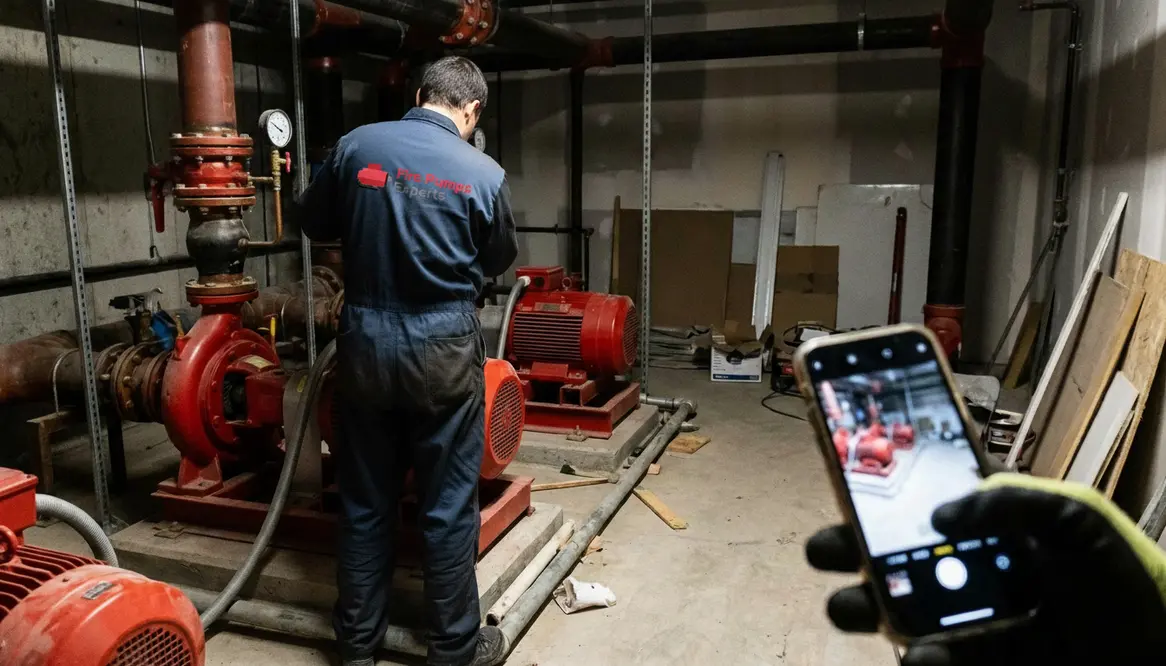
Because of that, I approach fire pump design like a puzzle. Every piece must fit without disrupting the rest of the building. For example, vertical turbine pumps might solve space issues, while split case pumps may offer easier maintenance access. Each choice carries tradeoffs.
Meanwhile, coordination with architects and engineers becomes critical. If we wait too long, the best locations disappear, and we are left squeezing vital equipment into less than ideal spaces. And let me tell you, forcing a fire pump into a bad location is like trying to park a truck in a compact car spot. Technically possible, but nobody walks away happy.
In older centers, the original pump room might be buried behind new demising walls, loaded with storage, or partially repurposed. Modernizing within that footprint can feel like trying to renovate a ship while it is still at sea. Yet with clear priorities and a realistic look at shopping center redevelopment fire pump requirements, it is possible to create a solution that respects both safety and rentable area.
Sometimes that means relocating the pump room. Sometimes it means structural changes to support suction piping, tanks, or discharge manifolds. The earlier those conversations start, the fewer “creative” field fixes are needed later.
Key Upgrades That Strengthen System Reliability
Modern Controllers
I rely on advanced controllers that provide clear diagnostics and faster response times. They reduce guesswork and improve system confidence.
Backup Power Integration
Redeveloped retail centers demand continuity. Therefore, diesel pumps or generator backed electric pumps ensure operation during outages.
Remote Monitoring
With real time alerts, facility teams can respond before small issues grow into major failures.
Hydraulic Recalculation
Every redevelopment deserves a fresh calculation. It confirms that the system still meets demand under new conditions.
Each of these upgrades supports the broader shopping center redevelopment fire pump requirements without overcomplicating the system. Simple, reliable, and tested. That is always the goal.
How I Coordinate Fire Protection with Active Construction
Construction rarely pauses for fire protection upgrades. Instead, I work within active sites where tenants still operate and customers still shop. That means phasing becomes essential.
First, I ensure temporary protection measures stay in place. Then, I schedule system tie ins during low traffic periods. Communication remains constant, because even a short disruption can create risk.
At times, it feels like conducting an orchestra where half the musicians are still tuning their instruments. Yet when it works, it works beautifully. The system upgrades quietly slide into place, and the building never skips a beat.
Avoiding Common Pitfalls in Redevelopment Projects
I have seen projects stumble in predictable ways. Fortunately, most of them are avoidable.
- Delayed planning leads to rushed installations
- Underestimating demand results in undersized pumps
- Ignoring code updates creates compliance issues
- Poor coordination causes costly rework
However, when teams address these early, the process becomes smoother. It is not about perfection. It is about preparation. And yes, preparation may not be exciting, but neither is explaining to stakeholders why a system failed inspection.
One of the more subtle pitfalls is treating shopping center redevelopment fire pump requirements as a checkbox instead of a design driver. When the pump, power, and water supply strategy are integrated from the start, they support leasing, phasing, and expansion plans instead of constantly getting in their way.
FAQ: Fire Protection During Retail Redevelopment
There are a few questions that come up on almost every redevelopment job, whether it is a neighborhood center or a regional destination with structured parking and multi level retail.
Moving Forward with Confidence
When I approach a redevelopment project, I treat fire protection as the foundation, not an afterthought. The right system supports everything above it, quietly and reliably. If you are navigating shopping center redevelopment fire pump requirements, now is the time to act with clarity and purpose. Connect with experts who understand large scale commercial systems, and build a solution that works today and adapts for tomorrow. Because in this business, confidence is built on preparation.
Every successful project shares a theme: someone took ownership of the fire protection story early. They understood that pumps, power, and water supply would shape how the rest of the design could move. They treated shopping center redevelopment fire pump requirements not as a constraint, but as the scaffolding that lets the rest of the vision stand without wobbling.
If you get that part right, tenants notice something they will never be able to name: a building that feels prepared. Systems start when they should, alarms mean what they are supposed to mean, and emergency response crews find exactly what they expect. That is the kind of quiet success worth building toward.