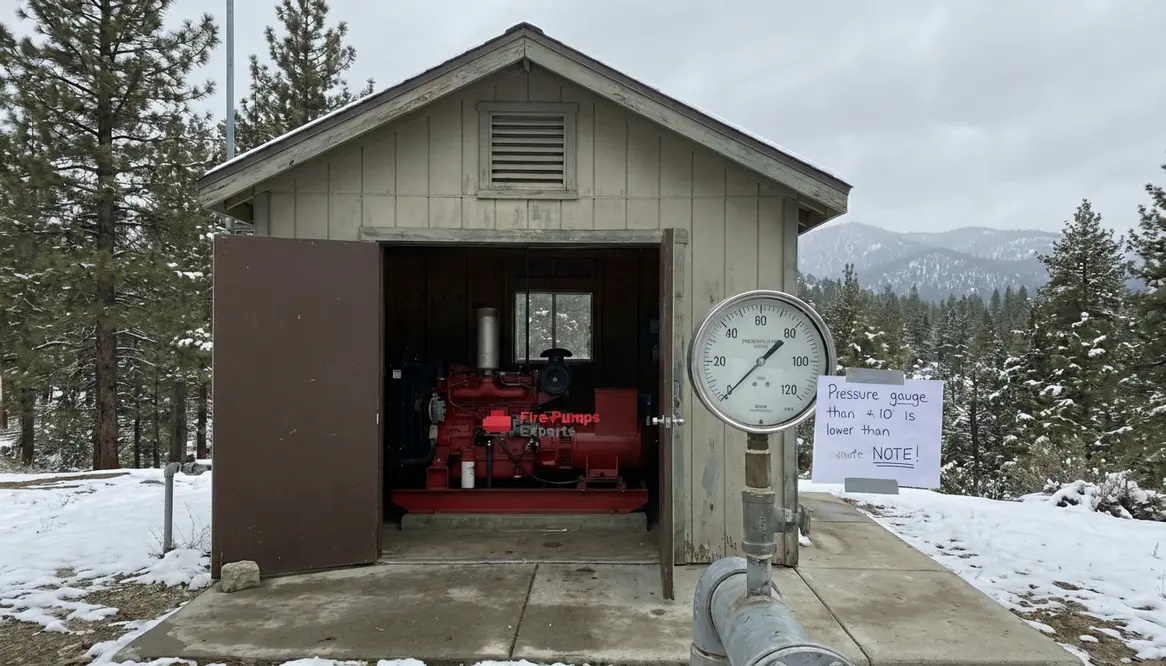
Fire Pump High Elevation Performance Big Bear Lake
I have spent enough time around fire systems to know one thing for certain. Elevation changes everything. When I talk about fire pump high elevation performance Big Bear Lake, I am not speaking in theory. I am speaking from experience, from the hum of motors that sound just a little more strained, and from pressure gauges that do not quite climb the way you expect. Up here, where the air thins and the stakes remain high, your fire pump does not get the luxury of sea level comfort. It has to work harder. And if you do not plan for that, it will let you know in the worst possible moment.
Why Elevation Quietly Steals Your Pump Performance
At higher elevations like Big Bear Lake, the air contains less oxygen. That sounds like a problem for hikers, but your fire pump feels it too. Combustion engines lose power because they cannot burn fuel as efficiently. Electric motors stay more stable, yet even they feel indirect effects through system demand and cooling limitations.
As a result, I often see a noticeable drop in output. Flow rates dip. Pressure curves flatten. And suddenly, that pump you trusted at sea level behaves like it had a long night and skipped its morning coffee.
Moreover, water itself behaves differently under these conditions. Atmospheric pressure is lower, which affects suction conditions and increases the risk of cavitation. That is a fancy way of saying your pump may start to struggle pulling water in, even before it pushes it out.
How I Evaluate Fire Pump High Elevation Performance Big Bear Lake
When I walk into a commercial or industrial facility in Big Bear Lake, I do not just glance at the nameplate and nod. I dig deeper. I look at how the pump performs under real demand.
First, I compare rated performance against actual test results. Then, I review altitude derating factors, especially for diesel driven units. Many systems lose between 3 percent to 4 percent of power for every 1,000 feet above sea level. Big Bear Lake sits high enough that this is not a rounding error. It is a real performance hit.
Next, I check suction conditions. Poor suction at elevation can quietly sabotage an otherwise well sized system. Finally, I evaluate whether the system still meets the building’s fire protection requirements under worst case scenarios.
Because let’s be honest. A fire does not politely occur under ideal test conditions.
What Happens If You Ignore Elevation Effects?
I have seen it play out more than once. A system passes inspection at installation, yet years later, it cannot meet demand. Why? Because no one accounted properly for elevation in the first place.
In large commercial buildings and industrial facilities, this gap can lead to:
- Reduced sprinkler coverage effectiveness
- Delayed fire suppression response
- Increased risk of system failure during peak demand
And here is the uncomfortable truth. Fire protection systems do not get second chances. When they are needed, they must perform. Not almost. Not close enough. Exactly as required.
Practical Adjustments I Recommend for High Elevation Systems
Now for the good news. You are not powerless here. With the right adjustments, you can bring your system back into line.
Mechanical Adjustments
- Use altitude corrected pump curves
- Increase engine horsepower where needed
- Optimize impeller sizing for actual conditions
System Level Improvements
- Reevaluate suction piping design
- Install pressure monitoring upgrades
- Conduct regular flow testing under load
Additionally, I always recommend routine performance verification. Not just a checkbox inspection, but a true operational test. Because systems drift over time. And at elevation, that drift shows up faster.
How Often Should I Test Fire Pumps at High Elevation?
I get this question a lot, and I answer it the same way every time. More often than you think.
Standard weekly churn tests are not enough on their own. They confirm the pump starts, but they do not tell you how it performs under demand. Therefore, I push for regular flow testing that reflects real system conditions.
In environments like Big Bear Lake, where fire pump high elevation performance Big Bear Lake becomes a real operational factor, consistent testing is not just best practice. It is risk management.
And if you are picturing your pump saying, “I feel fine,” remember this. Machines are terrible at self reporting.
Why Fire Pump High Elevation Performance Big Bear Lake Deserves Extra Attention
When you look at the combination of thin air, demanding commercial operations, and long winters, you start to see why fire pump high elevation performance Big Bear Lake is not just a technical footnote. It is one of the quiet variables that determines whether your fire protection strategy actually works when everything goes sideways.
Some facilities try to treat Big Bear Lake like a lower elevation town and hope the margins will cover the gap. That is optimistic, and optimism is not a design strategy. Accounting for elevation from the beginning means your pump, piping, and power source are selected and tuned for the tougher reality they are living in every day.
If you are unsure where you stand, a structured performance review, including data logging during full flow tests, will tell you very quickly whether your fire pump high elevation performance Big Bear Lake setup is doing what the drawings promised or quietly missing the mark.
FAQs About High Elevation Fire Pump Performance
Closing Thoughts and Next Steps
If your facility operates in or around Big Bear Lake, it is time to take a closer look at your system. I encourage you to evaluate your fire pump performance under real conditions, not assumptions. Work with specialists who understand elevation impacts on commercial and industrial systems. When you act early, you protect your people, your property, and your operations. And in this line of work, that peace of mind is worth every ounce of effort.