Fire Pump Backup Failure San Diego Risks Guide
A practical field perspective on quiet failures, real risks, and how to keep your backup fire pump ready when San Diego buildings need it most.
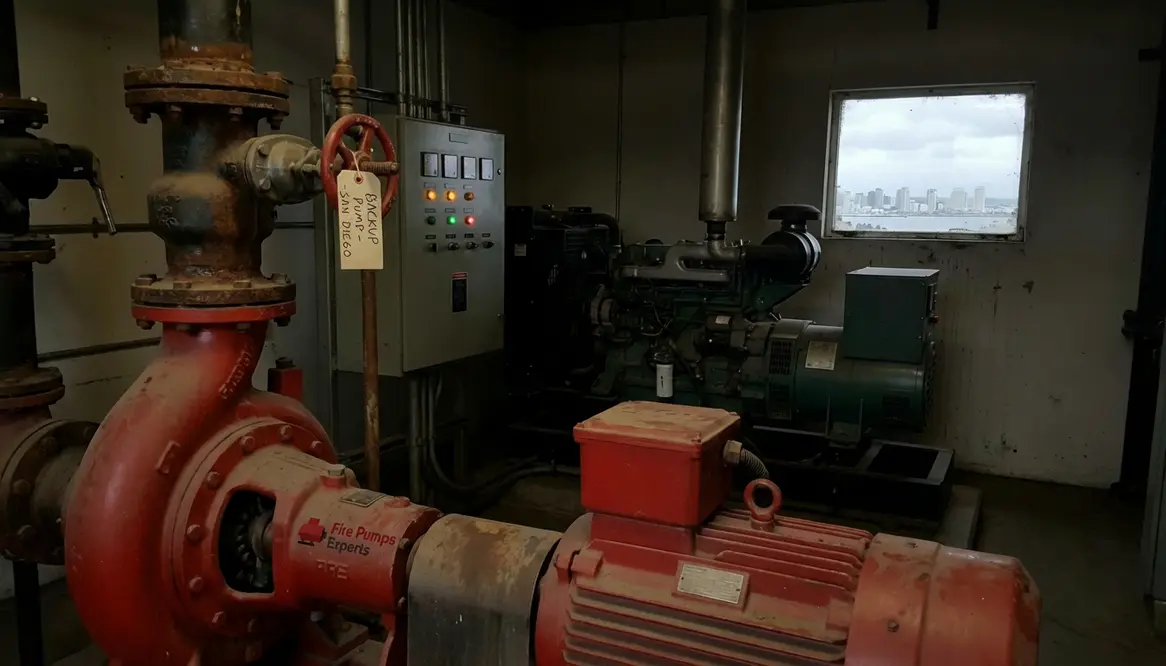
I have spent years walking through mechanical rooms where the hum of a fire pump feels like a quiet promise. It says, if things go wrong, I am ready. But here is the truth most people do not like to hear. That promise can break. In fact, fire pump backup failure San Diego incidents are not rare in critical facilities. Hospitals, data centers, and high rise commercial towers all depend on backup systems that must work perfectly in the worst moment. And yet, when they fail, they fail fast and without apology. A bit like a villain reveal in a superhero movie, except there is no dramatic music to warn you.
Behind every reliable system in San Diego, there is usually someone who refused to assume the backup would “just work.” The buildings that avoid catastrophic fire pump backup failure San Diego problems almost always share one thing: they treat backup systems like mission critical assets, not props waiting offstage.
Why Backup Systems Fail When You Need Them Most
I often get asked why a backup system, designed to save the day, ends up being the weak link. The answer is simple, and a little uncomfortable. We trust redundancy more than we maintain it.
First, backup fire pumps sit idle for long stretches. Because of that, corrosion builds, seals dry out, and batteries quietly lose strength. Then, when a real emergency hits, the system hesitates. And in fire protection, hesitation is everything.
Moreover, I have seen control panels misconfigured after upgrades. A small wiring error can stop automatic transfer. Meanwhile, fuel supply issues in diesel driven backups often go unnoticed until the tank runs low or contaminated. It is not dramatic failure. It is quiet neglect stacking up over time.
And yes, sometimes it comes down to human nature. If it is not broken, we do not fix it. Until it is.
Fire Pump Backup Failure San Diego Risks in High Stakes Buildings
San Diego presents a unique mix of challenges. Coastal air brings salt exposure. Earthquake considerations affect piping stability. At the same time, critical facilities operate around the clock, which leaves little room for downtime testing.
Because of this, fire pump backup failure San Diego risks tend to cluster around a few key areas:
Environmental wear
Salt air accelerates corrosion in both electrical and mechanical components.
Power transition issues
Backup systems rely on seamless switching. Even a short delay can prevent proper pump startup.
Deferred maintenance
Facilities often prioritize uptime over inspection, which quietly increases risk.
System complexity
Modern buildings layer automation on top of legacy systems. That combination can create blind spots.
It is a bit like upgrading your phone but keeping a charger from 2008. Eventually, something stops connecting.
How I Evaluate Fire Pump Backup Reliability in Critical Facilities
When I step into a facility, I do not start with the pump. I start with the story the system tells me. Every vibration, every control light, every maintenance log reveals something.
Mechanical integrity
I check bearings, seals, and alignment. Even slight imbalance can signal future failure.
Electrical readiness
Transfer switches, wiring, and control panels must respond instantly and consistently.
Fuel and power supply
Diesel quality and battery condition are tested under load, not just visually inspected.
Operational testing
I simulate real demand because theory does not put out fires.
Additionally, I look for patterns. If a system has repeated minor issues, it is telling you something. Ignore it, and one day it stops whispering and starts shouting.
What Are the Early Warning Signs of Backup System Failure?
Most failures announce themselves quietly before they become emergencies. You just have to listen.
Watch for delayed startup during routine tests. Notice unusual vibrations or sounds. Pay attention to inconsistent pressure output. These are not quirks. They are warnings.
Furthermore, alarms that reset themselves without explanation should never be ignored. That is your system saying, I had a problem, but I am not sure you noticed.
I once compared it to a check engine light. You can ignore it for a while. But eventually, you are not driving anymore. You are waiting for a tow truck.
Prevention Strategies That Actually Work
Preventing failure is not about doing more. It is about doing the right things consistently.
Test like an emergency is already happening
First, schedule full load testing, not just idle runs. Systems behave differently under stress. Treat every test as a rehearsal for the worst day your building might see.
Protect fuel and power quality
Maintain fuel quality with regular sampling and replacement cycles. Test batteries under realistic conditions, not just with a quick voltage reading. Many fire pump backup failure San Diego stories start with a tank that looked full and batteries that looked fine, right up until the moment they were needed.
Verify automatic transfer, do not assume it
Verify automatic transfer operations under real conditions, not assumptions. Trip breakers, simulate outages, and document how long transitions actually take.
Use monitoring that tells the truth
Also, integrate monitoring systems that provide real time data. Because when you can see performance trends, you can act before failure occurs. If your dashboards are quiet just because no one configured the alarms, that is not reliability, that is denial.
Put experienced eyes on the system
Finally, invest in trained inspections. Not all eyes are equal. Experience spots problems faster than checklists ever will. Partnering with specialists who focus on preventing fire pump backup failure San Diego events can turn an aging system into a predictable one.
If you want a deeper technical resource, you can explore guidance and reference material at https://firepumps.org and align that with what you see in your own equipment rooms.
FAQ: Fire Pump Backup Systems in Commercial Facilities
Conclusion: Take Control Before the System Takes a Day Off
I have seen what happens when backup systems fail, and it is never convenient, never graceful, and never cheap. The good news is this. You can stay ahead of it. With the right testing, the right oversight, and a willingness to take small warnings seriously, you keep your system ready for the moment it matters most.
If your facility cannot afford uncertainty, it is time to make sure your fire pump backup truly has your back. In a city where seismic risks, coastal exposure, and dense development all collide, treating fire pump backup failure San Diego as a hypothetical problem is a luxury most critical buildings simply do not have.