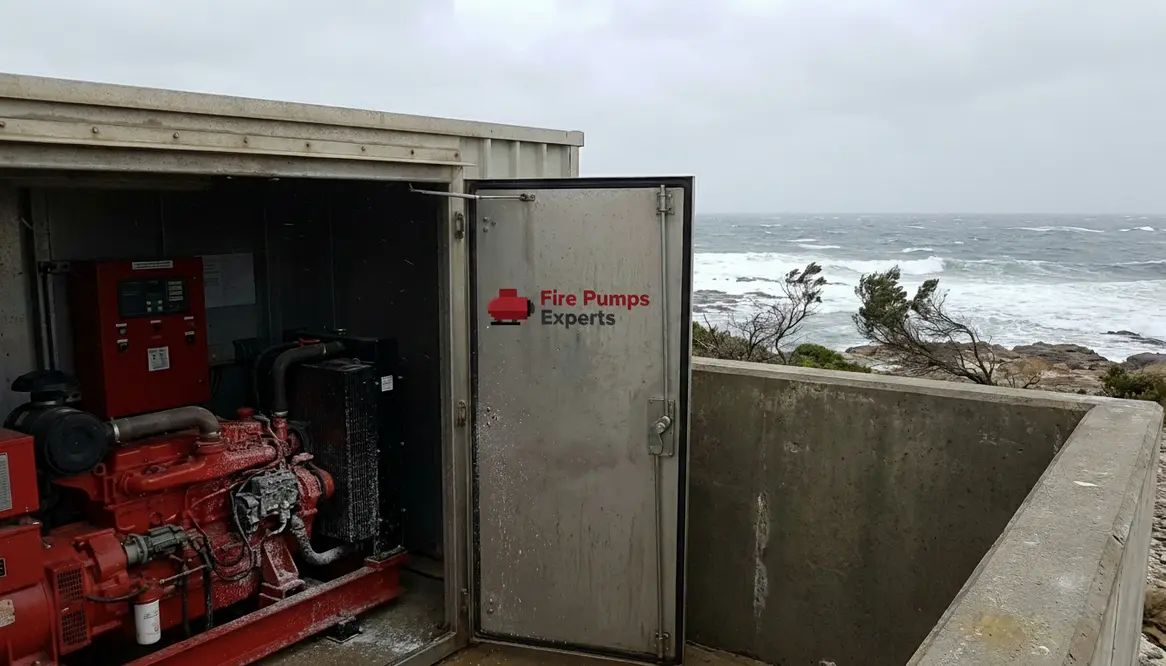
Fire Pump Coastal Wind Australia Design Guide
I have spent enough time around pump rooms and storm maps to know one truth. The coast does not negotiate. It tests every system you install. That is why fire pump coastal wind Australia design is not just a line item. It is the difference between resilience and regret. In facilities that face high wind exposure, I approach fire pump selection with a steady hand and a long view. Because when the wind howls like it is auditioning for a disaster movie, your system needs to perform like the lead, not the extra who runs off screen.
How do I choose a fire pump for coastal wind exposed facilities?
I start with the basics, then I sharpen them for coastal reality. First, I confirm the required flow and pressure based on hazard classification and building height. Then, I factor in wind driven damage scenarios. Strong winds can compromise power, water supply stability, and even structural enclosures. Therefore, I prioritize pumps that maintain performance under fluctuating conditions.
Next, I look at driver type. Electric pumps are clean and efficient, however diesel driven units often provide an edge when grid reliability drops during storms. In coastal zones, redundancy is not a luxury. It is a survival trait. So, I often specify a primary electric pump with a diesel backup. That way, when the lights flicker like a haunted house, the water still flows.
Materials that stand up to salt and storm
Salt air has a personality. It corrodes quietly and relentlessly. Because of that, I never treat material selection as an afterthought. Instead, I choose corrosion resistant components across the system. Stainless steel shafts, bronze impellers, and coated casings are not upgrades. They are essentials.
Moreover, I specify protective coatings for external surfaces and fasteners. Even small details like gasket materials matter. Over time, inferior choices fail, and failure during a fire event is not a story anyone wants to tell. In coastal wind fire pump systems in Australia, durability is the quiet hero that keeps everything running.
Key material decisions that pay off
- Use stainless or suitably coated steel for critical structural and mounting components exposed to spray
- Select bronze or high grade alloys for impellers and wear rings to resist both corrosion and erosion
- Apply high performance marine grade coatings on casings, baseplates, and external pipework
- Choose gasket and sealing materials rated for salt, heat, and long term compression
Placement and protection that outsmart the wind
Where you place the pump matters as much as what you choose. I prefer interior pump rooms with reinforced construction. If that is not possible, then I design enclosures rated for high wind loads and flying debris. Think of it as giving your pump a bunker, not a shed.
Additionally, I elevate critical components above flood levels. Coastal storms often bring water where it does not belong. So, I route air intakes, exhausts, and control panels with protection in mind. A well placed louver can make the difference between safe airflow and a saltwater shortcut to failure.
What I always include
- Reliable drainage in the pump room
- Wind rated doors and seals
- Anchoring systems for vibration and uplift
What I never ignore
- Access for maintenance crews
- Clear separation from other risks
- Protection of fuel lines and cables
Power resilience and control systems that do not panic
Storms love to interrupt power. Therefore, I design control systems that stay calm under pressure. Automatic transfer switches, protected cabling, and sealed control panels are part of the plan. I also ensure that diesel fuel systems are secure and sized for extended operation.
Furthermore, I verify that controllers meet relevant standards and are tested for environmental exposure. A control panel that fails in high humidity is about as useful as a screen door on a submarine. In fire pump coastal wind Australia projects, I insist on proven equipment with a track record, not hopeful marketing.
Practical power strategies for the coast
- Pair grid supplied electric drivers with diesel backups where risk justifies it
- Size fuel storage for realistic storm duration, not just textbook minimums
- Route control wiring in protected pathways clear of likely water ingress points
- Test automatic transfer and start sequences under load, not just on paper
Hydraulic stability under extreme conditions
High winds can influence water supply behavior, especially in elevated tanks or long suction lines. So, I design for stable suction conditions. That means minimizing friction loss, ensuring proper net positive suction head, and avoiding layouts that invite cavitation.
In addition, I include pressure relief strategies and test headers that allow real world verification. Because theory is nice, but flow tests tell the truth. When the system starts, it should sound confident, not like it is clearing its throat before a speech.
Suction and discharge details that matter
- Keep suction lines as short and straight as practical, with generous diameters
- Protect strainers and suction bells from debris thrown around in storm events
- Provide clearly accessible test headers so full flow testing is not skipped
- Use pressure relief where required to prevent overpressure during transient events
Compliance with Australian standards for coastal wind fire pump systems
I align every decision with applicable Australian standards and local authority requirements. This includes installation practices, performance testing, and documentation. However, compliance is the floor, not the ceiling. Coastal wind exposure demands a higher standard of thinking.
So, I work closely with engineers, contractors, and facility managers to ensure the system integrates with the broader fire strategy. From sprinklers to hydrants, everything must move in harmony. Like a good orchestra, no one notices when it works. They only notice when it does not.
Beyond minimum compliance on the coast
When I design a fire pump coastal wind Australia installation, I treat standards as a foundation, then add layers: higher corrosion resistance than baseline, more robust fixings, smarter layouts, and testing regimes that reflect real storm behavior instead of ideal lab conditions.
Maintenance that respects the coastline
Finally, I plan for maintenance from day one. Coastal environments accelerate wear, so inspection intervals need to reflect that reality. I recommend frequent visual checks, periodic performance testing, and proactive replacement of vulnerable parts.
Also, I keep documentation simple and accessible. When a team walks into that pump room, they should know exactly what to do. No guesswork. No treasure hunts. Just clear steps and reliable outcomes.
Maintenance patterns that work at the shore
- Schedule more frequent inspections of external hardware and coatings than inland installations
- Track test results over time so subtle performance drops are caught early
- Clean and exercise isolation valves regularly to prevent salt induced stiffness
- Document every change in a central, easy to reach location, ideally backed up offsite
Smart planning for fire pump coastal wind Australia projects
There is no single template for a perfect fire pump coastal wind Australia installation, but there is a pattern: respect the wind, respect the salt, and build with the assumption that the worst day will arrive without warning. Facilities that follow this mindset tend to have quieter incident logs and far less drama when the radar turns ugly.
Whether the site is a small coastal warehouse or a sprawling port facility, the fundamentals hold. Design clear access, redundant power where justified, corrosion resistant hydraulics, and protection that looks slightly overbuilt to anyone who has not watched a cyclone strip a roof in minutes.
Conclusion
If your facility faces the coast, you already know the wind does not ask for permission. I design every coastal wind fire pump system in Australia to answer that reality with strength and consistency. If you are planning or upgrading a system, now is the time to act. Build it right, protect it well, and test it often. When the storm arrives, your system will not hesitate. And neither should you.