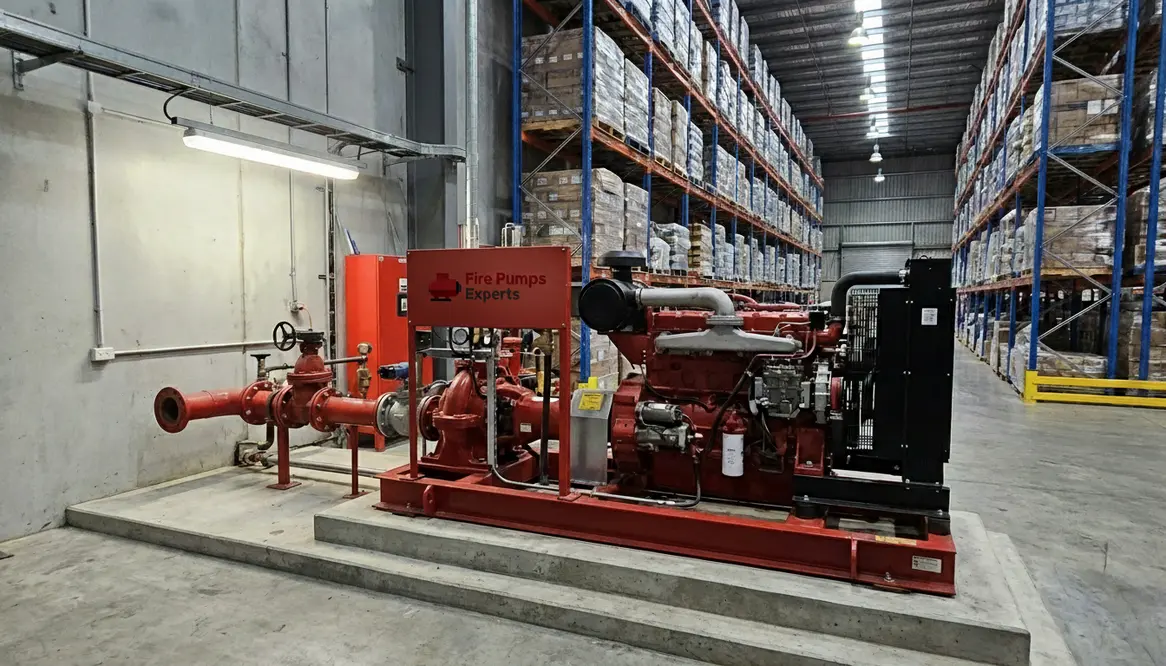
Fire Pump High Ceiling Warehouse Australia Design
I have spent years walking through cavernous warehouses where the ceiling feels closer to the clouds than the floor. And when we talk about fire pump high ceiling warehouse Australia design, we are not just ticking compliance boxes. We are building systems that respond fast, push water higher, and hold their nerve when everything else is failing. In these massive commercial and industrial spaces, fire protection is less about theory and more about pressure, flow, and smart engineering that does not blink under stress.
Understanding Fire Risk in Tall Warehouse Spaces
High ceiling warehouses change the rules. Heat rises, smoke spreads differently, and sprinkler activation takes longer than you might expect. As a result, I always approach these spaces knowing that delay is the real enemy.
Moreover, storage configurations in Australian facilities often stack goods higher and tighter. That means more fuel, more heat, and a stronger demand on suppression systems. So while a standard setup might work in a smaller building, here it simply will not cut it.
And let’s be honest, fire does not care about your inventory system or how neatly your pallets are stacked. It moves fast, and your system needs to move faster.
What makes a fire pump system effective in high ceiling warehouses?
An effective system delivers consistent pressure and flow at height. That sounds simple, but achieving it takes careful coordination between pumps, pipe sizing, and sprinkler design.
I focus on three things immediately. First, pressure capacity. The pump must overcome vertical lift and friction loss without hesitation. Second, flow rate. Large floor areas demand high water delivery, especially in early fire stages. Third, reliability. Because when the system is needed, there is no room for negotiation.
Additionally, I always align designs with Australian Standards such as AS 2419 and AS 2118. Compliance is not just paperwork. It is the baseline for performance in real world conditions.
Core Design Priorities
- High pressure output for vertical reach
- Stable flow during peak demand
- Redundant power supply options
- Durable components for industrial use
Common Pitfalls I See
- Undersized pumps struggling at height
- Poorly planned pipe layouts
- Ignoring friction loss calculations
- Lack of routine testing protocols
Designing for Pressure and Performance in Large Facilities
Now here is where things get interesting. Designing for a fire pump high ceiling warehouse Australia environment is a bit like casting a superhero. You need strength, endurance, and a backup plan when things go sideways.
I calculate total dynamic head with precision. Every metre of vertical rise matters. Every bend in the pipe adds resistance. Therefore, I treat the system like a living network, not just a collection of parts.
Furthermore, I often recommend diesel driven pumps for large scale facilities. Why? Because power outages and fires tend to arrive together like uninvited guests. Electric pumps are excellent, but redundancy is peace of mind.
And yes, I have seen systems that looked perfect on paper but failed in testing. That is why commissioning is non negotiable. If it does not perform under real conditions, it does not belong in the building.
Smart Integration with Sprinkler Systems
A fire pump does not work alone. It feeds the sprinkler system, and together they form the backbone of fire protection. So I design them as a single unit rather than separate pieces.
For high ceiling spaces, early suppression fast response sprinklers are often part of the solution. However, they demand strong and immediate water delivery. That is where the pump proves its worth.
In addition, zoning becomes critical. Large warehouses benefit from sectional control, allowing water to be directed where it is needed most. This improves efficiency and reduces unnecessary strain on the system.
Think of it like a well choreographed scene in a film. If every part hits its mark, the outcome is smooth. If not, it is chaos. And unlike movies, there are no second takes here.
Maintenance and Long Term Reliability
I always tell clients that installing the system is only half the story. Keeping it ready is where the real work begins.
Routine testing ensures the pump starts instantly and delivers expected performance. Weekly churn tests, monthly inspections, and annual flow testing are not optional. They are essential.
Moreover, Australian conditions can be harsh. Heat, dust, and wear take their toll. Therefore, I select components built for durability and ensure maintenance plans are realistic for industrial operations.
And let’s face it, a fire pump that fails during an emergency is about as useful as a screen door on a submarine. It might look fine until the moment it absolutely is not.
Real-World Australian Warehouse Considerations
Every fire pump high ceiling warehouse Australia project sits inside a very local context. High hazard storage, mixed occupancies, and aging infrastructure all shape what is possible and what is essential. Local fire brigade expectations, water authority pressures, and insurance demands add further layers that cannot be ignored.
Water supply is often the first constraint. Town mains might look fine on a plan but sag badly under real draw. That is where on-site storage tanks, ring mains, and properly sized fire pumps step in to stabilise performance. Without that stability, even the best sprinkler layout is running on optimism, not engineering.
I also keep an eye on future expansion. Most warehouses in Australia do not stay the same for long. Racking heights grow, storage classes shift, and mezzanines appear almost overnight. A smart fire pump high ceiling warehouse Australia design allows for growth in demand without tearing everything back to the concrete.
Local Climate And Conditions
From dry inland heat to salty coastal air, Australian warehouses treat fire protection hardware harshly. Corrosion resistance, UV-stable components, and protected pump rooms are not luxuries. They are how you stop the heart of the system from rusting, seizing, or cooking itself before it is ever called on for a real emergency.
People And Operations
Forklifts, shifting pallets, and hurried maintenance teams can all become accidental saboteurs. I design with clear access, simple controls, and unmistakable labelling so that daily operations do not slowly strangle the performance of a carefully engineered system.
Linking Design, Standards, And Responsibility
No fire pump high ceiling warehouse Australia layout exists in isolation. AS 2419, AS 2118, and related standards form the structural backbone, but they do not replace engineering judgement. They simply set the floor, not the ceiling, for what is acceptable in a serious fire.
I have walked through sites where the paperwork looked immaculate while the actual installation told a different story. Valves hidden behind pallets, test lines capped off, jockey pumps long dead, and controllers blinking with old faults. On those days, the nameplate rating of the pump is irrelevant. What matters is how the system will behave at 2am with smoke building under a hot roof and sprinklers finally beginning to open.
Responsibility for performance sits across owners, facility managers, designers, installers, and testers. Everyone touches a different part of the same system. When those responsibilities are clear, the fire pump high ceiling warehouse Australia installation has a fighting chance of doing its job when the building needs it most.
FAQ: Fire Pump Systems for High Ceiling Warehouses
Final Thoughts and Next Steps
Designing a fire pump system for a high ceiling warehouse is not about guesswork. It is about precision, experience, and respect for how quickly fire can escalate. If you are managing or developing a large commercial or industrial facility in Australia, now is the time to review your system, challenge its limits, and strengthen its performance. Reach out to experts who understand these environments and build systems that stand ready, no matter what comes their way.