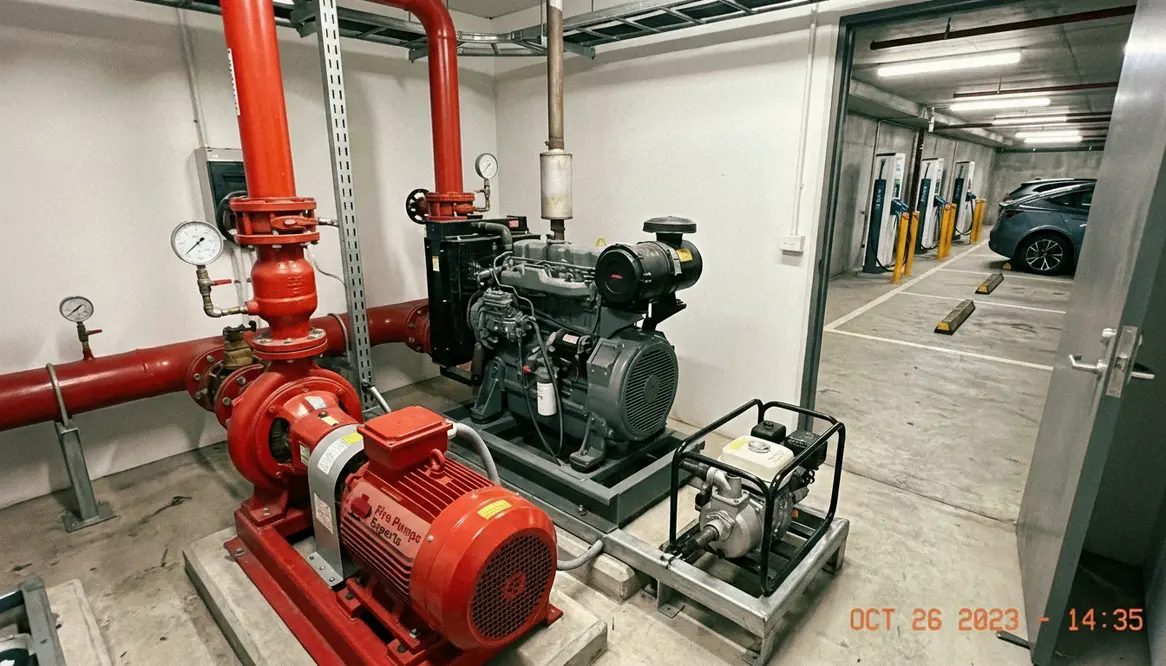
Fire Pump EV Facilities Australia Guide
I have spent enough time around infrastructure projects to know one thing for sure. When lithium batteries, high load electrical systems, and tight compliance rules share the same space, you do not get a second chance at fire protection. That is exactly why fire pump EV facilities Australia is no longer a niche concern. It is front and center in design rooms, board meetings, and late night engineering calls. And honestly, it should be. Because when things go wrong in an EV charging or storage site, they tend to go very wrong, very quickly. So let me walk you through the fire pump types that actually matter here, without putting you to sleep.
What fire pump types are used in EV charging and storage facilities in Australia
Let me answer this the way most people actually ask it in real life. What works, what complies, and what will not fail under pressure. In Australia, I typically see three primary fire pump types used across commercial EV infrastructure.
Electric motor driven pumps lead the pack. They are efficient, reliable, and integrate smoothly with modern building systems. However, they rely on stable power. In EV facilities, that is a bit ironic. You are protecting a system that might be the very reason power fails.
Diesel driven fire pumps act as the backup muscle. They do not care if the grid is down. They start, they run, and they deliver water when everything else is having a bad day. In high value sites, I rarely see projects without them.
Jockey pumps handle pressure maintenance. They are the quiet operators, keeping systems primed so the main pumps do not need to kick in for every minor fluctuation. Think of them as the night shift security guard who actually does their job.
Together, these systems create layered protection, which is exactly what high risk battery environments demand.
Why EV battery risks change fire pump design decisions
Now here is where things get interesting. EV battery fires behave differently. They burn hotter, last longer, and can reignite. It is like dealing with a villain who refuses to stay down, no matter how many times the hero wins the fight.
Because of this, I always see designers in fire pump EV facilities Australia focusing on sustained water delivery rather than short bursts. Flow rates need to be higher. Duration needs to be longer. And redundancy is not optional.
Moreover, lithium ion incidents produce intense heat loads. Therefore, pumps must support systems designed for cooling, not just suppression. That shifts the entire approach. It is less about putting out flames quickly and more about controlling escalation over time.
Choosing between electric and diesel fire pumps in commercial EV sites
Electric Pumps
- Lower operational cost
- Quieter performance
- Easy integration with smart systems
- Dependent on power availability
Diesel Pumps
- Independent of grid power
- Highly reliable during outages
- Requires fuel storage and maintenance
- Slightly higher lifecycle cost
In most large commercial or industrial EV developments, I recommend a combination. Electric for primary operation, diesel for redundancy. It is not overkill. It is realism. Because if your backup plan is hope, you do not have a plan.
How compliance shapes fire pump systems in Australia
Australia does not take fire protection lightly, and neither should you. Standards like AS 2941 guide pump installation, while building codes dictate system performance. However, EV facilities add another layer of scrutiny.
Authorities increasingly expect risk specific design. That means you cannot just copy a system from a warehouse project and call it a day. Instead, I see more performance based solutions emerging, especially in large scale charging hubs and battery storage buildings.
Additionally, insurers are getting stricter. They want proof that systems can handle worst case scenarios, not just tick compliance boxes. So when I design or review systems tied to fire pump EV facilities Australia, I always think beyond minimum requirements. Because minimum is rarely enough when energy density climbs this high.
Design considerations for large scale EV infrastructure
When working on major commercial properties, I focus on a few critical elements that directly impact fire pump performance.
- Water supply reliability must support extended operation times
- System redundancy ensures no single point of failure
- Pump room protection keeps the system operational during incidents
- Integration with detection systems allows faster response
Moreover, layout matters more than people expect. Long pipe runs, elevation changes, and simultaneous demand zones all affect pump sizing. It is not glamorous work, but it is the difference between a system that performs and one that looks good on paper.
Future trends shaping fire pumps in EV environments
I will not pretend we have seen it all. EV infrastructure is evolving fast. However, a few trends are already clear.
First, smart monitoring is becoming standard. Pumps now communicate performance data in real time, allowing teams to detect issues before they become failures. It is like giving your fire system a fitness tracker, minus the annoying step count reminders.
Second, modular systems are gaining traction. They allow facilities to scale protection as charging capacity grows. This is especially useful for large commercial developments that expand in phases.
Finally, sustainability is entering the conversation. While fire protection will always prioritize reliability, there is growing interest in efficient systems that align with broader environmental goals.
FAQ
Below are some common questions that come up when planning fire pump EV facilities Australia projects, especially for commercial and industrial charging or storage sites.
Final thoughts and next steps
If you are planning or upgrading a commercial EV site, do not treat fire protection as an afterthought. The right fire pump system protects assets, operations, and lives. More importantly, it keeps your project compliant and insurable. Work with specialists who understand the unique risks of EV infrastructure and can design systems that actually perform under pressure. Because when the moment comes, performance is everything.