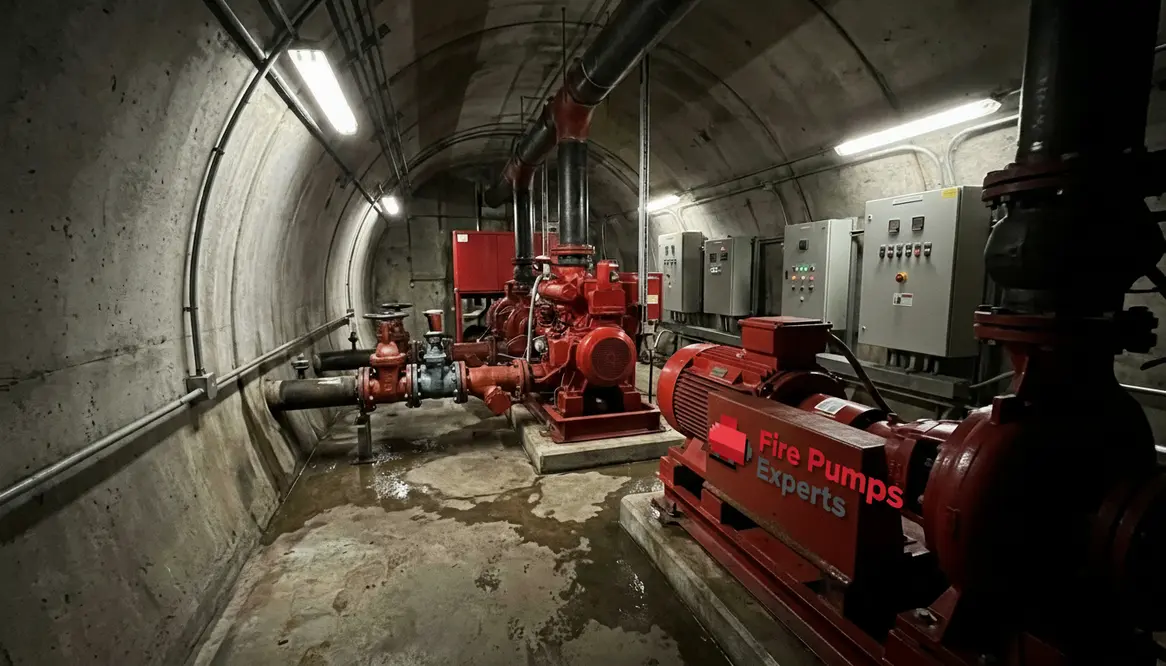
Fire Pump Tunnel Fire Protection System Integration
I have spent enough time around tunnels to know one thing for certain. When something goes wrong underground, it does not politely wait its turn. Fire moves fast, smoke moves faster, and panic… well, panic does not need an invitation. That is exactly why fire pump tunnel fire protection systems matter so much in commercial and industrial environments. They are not just equipment. They are the quiet guardians that step in when everything else starts to fail.
In this piece, I will walk you through how fire pump integration actually works inside tunnel fire protection strategies. And yes, I promise to keep it engaging. Because if we can make underground infrastructure feel like a story worth following, we are already winning.
How Do Fire Pumps Actually Fit Into Tunnel Fire Safety Systems
Let me answer this the way most engineers wish it was explained the first time. Fire pumps are the muscle behind the system. Without them, sprinklers and hydrants are just well intentioned plumbing.
In tunnel environments, water pressure from municipal sources is often unreliable or insufficient. Therefore, fire pumps step in to maintain consistent pressure and flow. This ensures that suppression systems activate with force, not hesitation.
Moreover, integration means synchronization. Fire detection systems trigger alarms, which then activate suppression systems. At that exact moment, the fire pump ramps up, delivering water at the required pressure. It is less of a solo act and more of a coordinated performance, like the Avengers assembling, but with fewer capes and more valves.
Because tunnels are confined spaces, timing becomes critical. A delay of even seconds can allow heat and smoke to build rapidly. So, properly integrated fire pump tunnel fire protection systems ensure immediate response without manual intervention.
Designing for Depth, Pressure, and Real World Chaos
Tunnel environments are not your average commercial building. They come with length, depth, and airflow challenges that can make standard designs fall short.
Managing elevation and pressure
First, elevation changes affect pressure requirements. Pumps must compensate for vertical drops and long horizontal runs. Otherwise, water loses force before reaching critical zones.
Redundancy as a design rule
Second, redundancy is essential. In major infrastructure, I never rely on a single pump. Instead, systems often include backup units and alternative power supplies. Because when the power goes out during a fire, you do not want your system shrugging like it forgot its lines.
Durability in harsh conditions
Third, material durability matters. Tunnels expose equipment to moisture, vibration, and temperature shifts. Therefore, components must withstand harsh conditions over long periods.
All of this means that designing integrated systems is less about theory and more about anticipating worst case scenarios and building for them anyway.
Key Components That Work Together Seamlessly
Integration is not just about connecting equipment. It is about ensuring each part communicates and responds in real time.
Core elements
- Fire pumps and drivers
- Water storage tanks
- Pressure control valves
- Standpipe systems
Support systems
- Fire detection sensors
- Control panels
- Backup power systems
- Ventilation coordination
When these elements align, the system operates as one unit. For example, once sensors detect heat or smoke, signals travel instantly to the control panel. Then, pumps activate while valves regulate flow to targeted areas. Meanwhile, ventilation systems help manage smoke movement.
It is a bit like a well rehearsed orchestra. If one instrument is off, the whole performance suffers. But when everything clicks, it is smooth, precise, and surprisingly elegant for something designed to fight fire.
Why Integration Matters More in Large Commercial Tunnels
Not all tunnels are created equal. Commercial and industrial tunnels often support transportation, utilities, or large scale operations. Therefore, the stakes are significantly higher.
Evacuation, assets, and regulation
For one, evacuation becomes more complex. People may be far from exits, and visibility can drop quickly. So, suppression systems must control the fire long enough to allow safe escape.
Additionally, asset protection is critical. Damage to infrastructure can halt operations and lead to massive financial loss. Integrated fire pump tunnel fire protection systems help contain fires before they escalate into full scale disasters.
Also, regulatory requirements are stricter. Authorities expect systems to meet rigorous standards for reliability and performance. Integration ensures compliance while also delivering real world effectiveness.
And let’s be honest. When inspectors walk in, you want a system that works, not one that gives excuses.
Common Mistakes I See in Fire Pump Integration
Even experienced teams can overlook key details. I have seen it happen more times than I care to admit.
Undersized pumps and weak communication
One common issue is undersizing pumps. Designers sometimes underestimate the distance and pressure required. As a result, systems fail to deliver adequate flow during emergencies.
Another mistake involves poor communication between systems. If detection, control, and pumping components are not properly linked, response times suffer.
Maintenance and redundancy gaps
Maintenance is also frequently ignored. A system may look perfect on paper, but without regular testing, it becomes unreliable. Think of it like owning a sports car and never starting the engine. It looks impressive, but it will not help you when you need speed.
Finally, failing to plan for redundancy can leave systems vulnerable. Backup power and secondary pumps are not optional in high risk environments. They are essential.
FAQ About Tunnel Fire Protection and Pump Integration
A few of the questions that come up repeatedly around integrated fire pump tunnel fire protection systems are worth addressing directly.
Where to learn more about tunnel fire pump design
If you want to explore more detailed guidance, code references, and example layouts for fire pump tunnel fire protection systems, resources like https://firepumps.org and local fire codes offer design benchmarks that can keep complex tunnel projects both compliant and practical.
Conclusion: Building Systems That Show Up When It Matters
At the end of the day, I see integrated fire protection as a promise. A promise that when conditions turn dangerous, the system will respond without hesitation. If you manage a commercial or industrial tunnel, now is the time to evaluate your setup, strengthen integration, and invest in reliability. Because when fire strikes underground, there is no room for second chances, only systems that work exactly as designed.