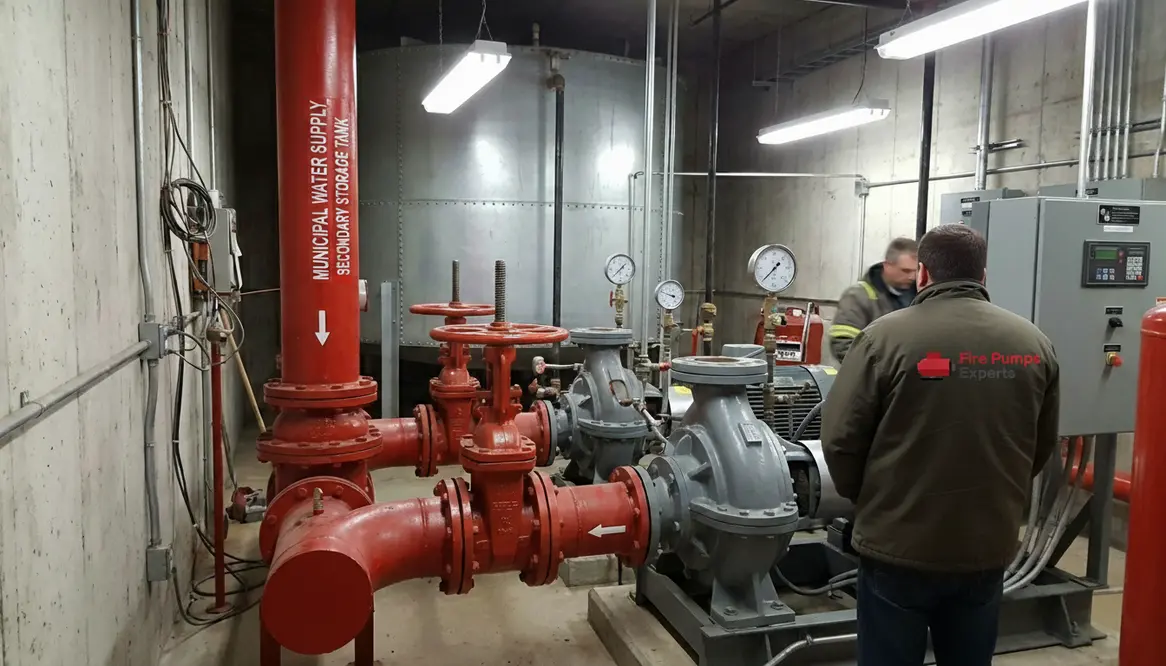
Fire Pump Multiple Water Source Systems Guide
I have spent years walking through mechanical rooms that hum like quiet orchestras, and if there is one truth I hold onto, it is this. Reliability is never an accident. It is designed. When I talk about fire pump multiple water source systems, I am talking about that quiet confidence. These systems stand ready when everything else feels uncertain. In large commercial and industrial properties, where a single failure can ripple across millions of dollars and countless lives, redundancy is not a luxury. It is a necessity. And yes, like any good blockbuster, the hero is only as strong as the backup plan.
Why Redundancy Defines Modern Fire Protection
I like to think of redundancy as the insurance policy you hope you never need, but sleep better knowing you have. In complex facilities, relying on one water source is a bit like trusting a single coffee machine on a Monday morning. Bold move. Risky outcome.
However, when multiple water supplies feed a fire pump system, I gain flexibility and resilience. Municipal lines, storage tanks, and even secondary reservoirs can work together. As a result, if one source drops in pressure or fails outright, another steps in without hesitation.
Moreover, these systems support compliance with strict fire codes while also addressing real world unpredictability. Because fires do not follow schedules, I design systems that do not depend on perfect conditions.
How Do Fire Pumps Manage Multiple Water Sources?
The magic, if I may call it that, lies in control and sequencing. I configure valves, sensors, and controllers to monitor each source continuously. Then, the system makes decisions faster than any human could.
For example, if municipal pressure dips below a set threshold, the system automatically transitions to a stored water supply. Meanwhile, the fire pump maintains consistent flow and pressure, ensuring sprinklers and standpipes perform as intended.
In addition, I often integrate intelligent controllers that prioritize sources based on reliability and availability. It is not unlike choosing the fastest checkout line, except the stakes are far higher and no one is arguing about coupons.
Designing Fire Pump Multiple Water Source Systems for Large Facilities
When I design for large scale properties, I focus on balance. Every component must complement the others. A powerful fire pump without adequate supply is like a sports car with no fuel. Looks impressive, goes nowhere.
Therefore, I consider several factors:
- Supply diversity: I ensure at least two independent water sources that do not rely on the same infrastructure.
- Hydraulic compatibility: Each source must deliver sufficient flow and pressure to meet system demands.
- Automatic switching: Transition between sources must be seamless to avoid performance drops.
- Maintenance access: Systems must allow testing without disrupting operations.
As a result, these systems do not just meet code. They exceed expectations, providing layers of protection that hold steady under pressure.
Comparing Water Sources in High Demand Environments
Municipal Supply
Pros: Readily available, cost effective, minimal onsite storage
Cons: Vulnerable to pressure drops, dependent on public infrastructure
Stored Water Tanks
Pros: Reliable reserve, controlled supply, independent of city systems
Cons: Requires space, ongoing maintenance, refill logistics
On one hand, municipal supply offers convenience. On the other, stored water provides certainty. When I combine them within fire pump multiple supply configurations, I create a system that benefits from both strengths while minimizing weaknesses.
Common Pitfalls I See and How I Avoid Them
Over the years, I have seen systems that looked impressive on paper but struggled in practice. Often, the issue is not the equipment itself but how it is integrated.
First, I avoid overcomplicating control logic. While advanced features sound appealing, unnecessary complexity can introduce failure points. Simplicity, when done right, is powerful.
Next, I ensure proper testing protocols. A system that has never been tested under real conditions is like rehearsing a play without ever stepping on stage. Eventually, the curtain rises.
Finally, I prioritize coordination between engineers, contractors, and facility managers. Because even the best design can falter without proper execution, communication becomes just as critical as the hardware.
Why These Systems Matter More Than Ever
Today’s commercial and industrial buildings are larger, more complex, and more interconnected than ever before. Consequently, the margin for error continues to shrink.
With fire pump multiple water source systems, I build resilience directly into the infrastructure. These systems adapt to changing conditions, maintain performance during disruptions, and ultimately protect both assets and lives.
And let us be honest, when something goes wrong, no one gathers around to applaud how efficient the failure was. They expect the system to work. Every time.
Key Resources for Deeper Design Insight
National and international standards shape how I approach fire pump multiple water source systems in mission critical facilities.
- NFPA standards for fire pumps and water supplies
- Local building and fire codes that govern redundancy levels
- Manufacturer guidelines for controllers, valves, and monitoring equipment
- Specialized design references available through https://firepumps.org
Blending these resources with real world testing and operational feedback is how I keep fire pump multiple water source systems both practical and dependable.
FAQ
Closing Thoughts and Next Steps
When I design fire protection, I do not leave outcomes to chance. I build systems that anticipate failure and respond without hesitation. If your facility depends on uptime and safety, then it is time to look closely at how your water supply supports your fire pumps. Reach out to a trusted expert who understands complex systems and can tailor a solution that stands firm when it matters most. Because in this line of work, confidence is everything.