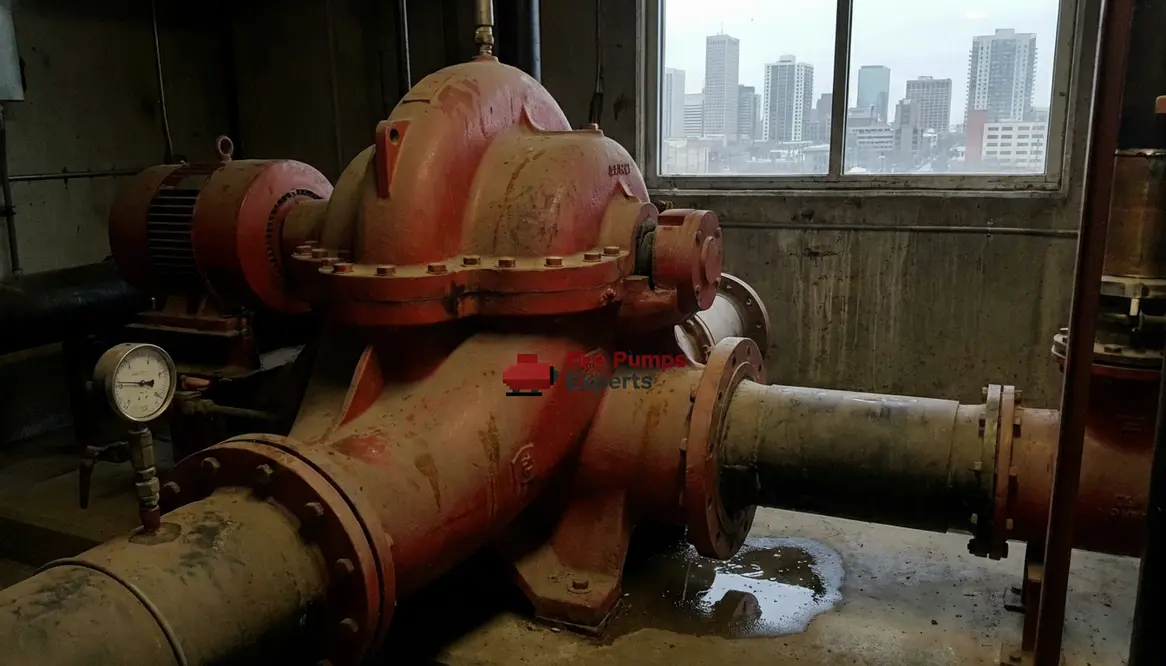
Split Case Fire Pump Failure Sydney Causes Signs
I have spent years around fire protection systems, and if there is one thing I have learned, it is this: when a pump fails, it does not send a polite warning first. It simply refuses to do its job. And when we talk about split case fire pump failure Sydney, we are not talking about a minor inconvenience. We are talking about the kind of failure that can leave a commercial tower or industrial facility exposed at the worst possible moment. In a city like Sydney, where high rise buildings and complex infrastructure dominate the skyline, understanding how these pumps fail is not just technical knowledge. It is essential.
How Do Horizontal Split Case Fire Pumps Actually Fail in Real Systems
I have seen these systems behave perfectly in controlled tests. Then, in the real world, they stumble. Why? Because reality adds variables that textbooks politely ignore.
First, alignment issues creep in. Over time, even a slight shift between the motor and pump shaft creates vibration. That vibration, in turn, eats away at bearings and seals. Eventually, the pump starts sounding less like precision equipment and more like a washing machine full of bricks.
Then there is poor suction supply. In theory, water flows smoothly into the pump. In practice, blocked strainers, undersized pipework, or air leaks reduce flow. The pump begins to cavitate. That means tiny vapor bubbles form and collapse violently inside the casing. It is subtle at first, but over time, it damages internal surfaces like a slow, relentless sandblaster.
And of course, maintenance gets skipped. Not maliciously. Just… postponed. Until one day, the pump decides it has also postponed working.
split case fire pump failure Sydney: Why Local Conditions Make It Worse
Sydney adds its own personality to the equation. Coastal air introduces corrosion faster than many expect. Salt does not politely sit on surfaces. It actively breaks them down.
Additionally, many commercial and industrial buildings operate under fluctuating demand conditions. Systems sit idle for long periods, then suddenly need to perform at full capacity. That stop start nature stresses components. Seals dry out. Lubrication settles. When the system finally runs, it is like asking someone to sprint straight out of bed. Possible, yes. Reliable, not always.
Moreover, water supply inconsistencies across different parts of Sydney can affect pump performance. Pressure variations and sediment buildup create hidden challenges. These are not dramatic failures. They are quiet contributors that build toward a bigger problem.
What Are the Early Warning Signs I Watch For
I never wait for a complete breakdown. The system usually whispers before it screams.
For instance, unusual vibration is often the first clue. If I feel it through the baseplate or hear a low hum that was not there before, I pay attention. Then there are pressure fluctuations. A steady system should not behave like a rollercoaster.
Another sign is leakage around seals. It may seem minor, but it often signals deeper wear. Also, if the pump takes longer to reach operating pressure, something is already off balance.
And yes, sometimes the warning sign is simply a technician saying, “That does not sound right.” In my experience, that instinct is rarely wrong.
split case fire pump failure Sydney in Commercial Buildings: Real Consequences
In large properties, failure is never isolated. It creates a chain reaction.
Fire systems depend on reliability. If a pump underperforms, sprinkler systems may not achieve required pressure. That directly impacts compliance and safety. Building operators then face not only risk to occupants but also regulatory consequences.
Additionally, downtime affects operations. In industrial facilities, even a short disruption can halt production. And let us be honest, no one wants to explain to stakeholders that a critical system failed because of something preventable.
It is a bit like ignoring the check engine light. Eventually, the car stops. Only here, the stakes are much higher.
Key Failure Points and What I Focus On During Inspections
When I inspect a system, I connect these dots. A pump rarely fails for a single reason. It is usually a combination of small issues working together like a very unhelpful team.
Mechanical Issues
- Misalignment between motor and pump
- Bearing wear from vibration
- Seal degradation causing leaks
- Impeller damage from cavitation
System Related Problems
- Insufficient suction pressure
- Blocked or undersized pipework
- Air entrainment in the system
- Irregular testing schedules
How I Prevent Problems Before They Start
I take a proactive approach. First, I ensure alignment is checked regularly. It is not glamorous work, but it saves major headaches later. Then I monitor vibration trends. Even a slight increase tells a story.
Routine testing also matters. Not just turning the pump on, but observing how it performs under realistic conditions. I look at pressure curves, response times, and consistency.
Additionally, I pay attention to the environment. In Sydney, that means addressing corrosion risks early. Protective coatings, proper ventilation, and material selection all play a role.
And perhaps most importantly, I never treat maintenance as optional. Because the pump certainly will not treat failure that way.
Why split case fire pump failure Sydney Needs Your Attention
Across commercial towers, data centers, and industrial facilities, split case fire pump failure Sydney scenarios often trace back to patterns that could have been caught early: ignored vibration, untested standby modes, corrosion left to “sort itself out,” and documentation that exists only in theory. None of these sound dramatic, yet together they shape the difference between a system that responds instantly and one that hesitates when pressure is needed most.
The reality is that split case fire pump failure Sydney risk increases whenever teams rely on assumptions instead of evidence. Flow tests, trend analysis on pressures, and honest reviews of past defects create a much clearer picture than a ticked box on an annual form. When building owners bring operations, maintenance, and compliance together around the same data, decisions become less reactive and far more strategic.
Specialist support also matters. Independent audits, detailed reporting, and reference standards from resources such as https://www.firepumps.org can frame what “good” actually looks like. From there, it becomes much easier to justify upgrades, argue for budget, and show stakeholders that split case fire pump failure Sydney is not being left to chance.
FAQ: Quick Answers for Busy Facility Managers
What causes most horizontal split case pump failures?
Misalignment, poor suction conditions, and lack of maintenance are the most common causes.
How often should fire pumps be tested?
Weekly visual checks and monthly performance testing are standard for commercial systems.
Why is cavitation dangerous?
It damages internal components and reduces pump efficiency over time.
Can corrosion really impact performance?
Yes, especially in coastal areas like Sydney where salt accelerates wear.
Is vibration always a bad sign?
Excessive or changing vibration usually indicates mechanical issues that need attention.
Conclusion
I have seen what happens when these systems are ignored, and I have seen how well they perform when properly maintained. The difference is not luck. It is attention, expertise, and consistency. If you manage a commercial or industrial facility, now is the time to take a closer look at your fire pump system. Do not wait for failure to introduce itself. Reach out, assess your setup, and make sure your system stands ready when it matters most.