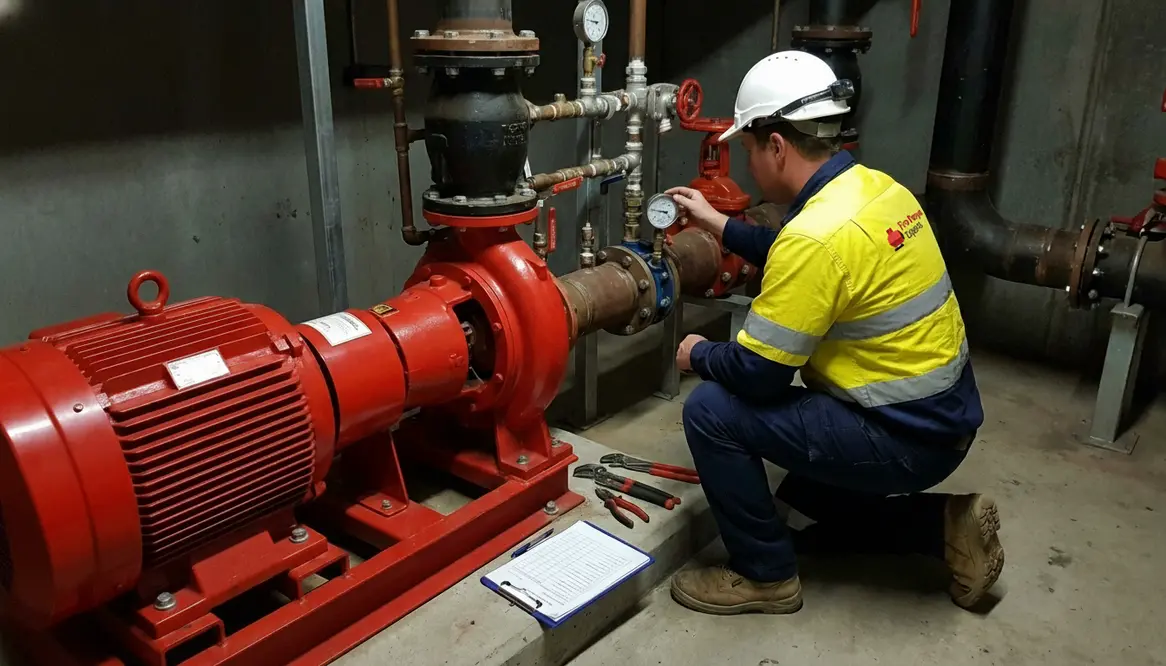
Fire Pump Pressure Loss Diagnosis Australia Guide
I have spent enough time around plant rooms to know that silence can be just as alarming as noise. When a fire pump system loses pressure in a commercial building, it is not just a technical hiccup. It is a quiet warning bell. And in the world of fire pump pressure loss diagnosis Australia, those warnings deserve attention before they become headlines. Today, I will walk you through how I approach these issues across large scale facilities, where reliability is not optional and downtime is never convenient. Think of it as detective work, just with fewer trench coats and more pressure gauges.
Understanding Pressure Loss in Fire Pump Systems
First, let us ground ourselves. A fire pump system exists to deliver water at the right pressure, at the exact moment it is needed. However, when pressure drops, the system cannot perform as designed. And yes, that is about as comforting as a flat tyre on a getaway car.
In my experience, pressure loss rarely comes from a single dramatic failure. Instead, it builds slowly. A valve not fully open. A pipe with internal corrosion. A suction issue that whispers before it shouts. Therefore, identifying the root cause requires patience and a methodical approach.
Moreover, Australian commercial and industrial buildings often operate under demanding conditions. High rise structures, large warehouses, and complex layouts all introduce variables. As a result, even minor inefficiencies can compound quickly. That is why fire pump pressure loss diagnosis Australia needs to factor in building design, occupancy, and water supply characteristics, not just the pump in isolation.
Where Do I Start When Diagnosing Fire Pump Pressure Loss Australia
I always begin with the basics. It sounds simple, and yet, you would be surprised how often the basics solve the mystery.
Step one: visual inspection
Step one is visual inspection. I check for obvious leaks, partially closed valves, and damaged fittings. While it may feel old school, this step often reveals what sensors miss.
Step two: review system data
Next, I review system data. Pressure readings, flow rates, and pump curves tell a story. If the pump is running but not achieving expected output, something is restricting performance.
Step three: test suction conditions
Then, I test suction conditions. Poor suction is a common culprit. Air leaks, blocked strainers, or low water supply can all reduce pressure. In fact, a pump without proper suction is like trying to drink a thick milkshake through a tiny straw. You will get there eventually, but not fast enough to matter.
Step four: assess the pump itself
Finally, I assess the pump itself. Wear and tear on impellers, seals, or bearings can reduce efficiency over time. And yes, even the toughest equipment eventually asks for a little attention.
Common Causes That Hide in Plain Sight
Now, here is where things get interesting. Many pressure loss issues are not dramatic failures. They are subtle, almost polite problems that quietly degrade performance.
Hidden mechanical issues
For example, internal pipe scaling can restrict flow without any visible signs. Similarly, aging valves may not seal properly, allowing pressure to bleed off gradually. Additionally, incorrect system design modifications can introduce bottlenecks that were never part of the original plan.
Maintenance and human factors
On top of that, I often see issues tied to maintenance gaps. Systems that are not tested regularly tend to develop surprises. And in this line of work, surprises are rarely the good kind.
Of course, human factors play a role too. A valve left partially closed after servicing can create hours of confusion. It is a bit like searching for your keys while they are in your hand. Frustrating, avoidable, and oddly common.
How I Approach Fire Pump Pressure Loss Diagnosis Australia in Large Facilities
When dealing with major commercial properties, I shift from basic troubleshooting to a more layered approach. Scale changes everything.
System mapping
System Mapping
I map the entire system layout. This helps me identify pressure drop points across long pipe runs and multiple zones.
Flow testing
Flow Testing
I conduct controlled flow tests to see how the system behaves under real demand conditions.
Component isolation
Component Isolation
I isolate sections of the system to pinpoint where pressure loss begins.
Data comparison
Data Comparison
I compare current performance against original design specifications to detect deviations.
By doing this, I move from guessing to knowing. And in high risk environments, that distinction matters. Because when a fire event occurs, the system does not get a second chance to perform. That is why fire pump pressure loss diagnosis Australia should be systematic, measured, and thoroughly documented from start to finish.
Can Regular Maintenance Prevent Pressure Loss Issues
Why maintenance matters
Short answer, yes. Longer answer, absolutely yes, and it saves money too.
Routine maintenance keeps systems honest. It exposes early signs of wear, blockage, and inefficiency. Furthermore, scheduled testing ensures that pumps operate within expected parameters.
Tailoring maintenance to your facility
I always recommend a proactive maintenance plan tailored to the building type. Industrial facilities, for instance, often deal with harsher conditions. Dust, vibration, and heavy usage can accelerate system degradation.
Documentation and records
Additionally, documentation plays a critical role. When maintenance records are detailed and consistent, diagnosing issues becomes faster and more accurate. It is like having a map instead of wandering through the dark with a flashlight that may or may not have batteries.
In many Australian facilities, this disciplined record keeping is exactly what separates a smooth fire pump pressure loss diagnosis Australia from a drawn out, costly investigation that disrupts operations.
FAQ Quick Answers
Conclusion
Pressure loss does not announce itself with fireworks. It creeps in quietly, waiting for the worst possible moment. That is why I take every sign seriously. If you manage a commercial or industrial facility, now is the time to act. Let experienced specialists handle your system with precision and care. Reach out to ensure your fire protection performs exactly as it should, because when it matters most, there is no room for guesswork.
If you are looking for deeper technical resources and case-based guidance, you can explore specialist material at https://firepumps.org, then align those insights with on-site testing, structured reporting, and a clear plan tailored to your building. That combination turns fire pump pressure loss diagnosis Australia from a headache into a controlled, predictable process.