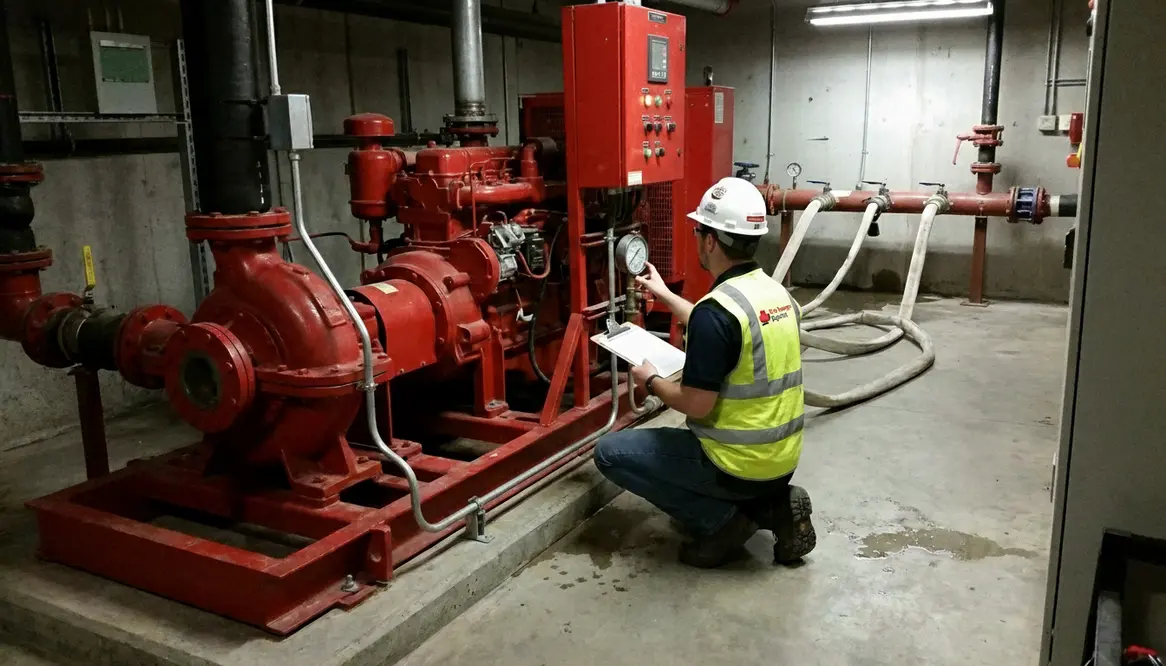
NFPA 25 Fire Pump Testing Frequency Weekly vs Annual
I have always thought of a fire pump as the quiet bodyguard of a building. It waits patiently, says nothing, and then when the moment comes, it performs without hesitation. But here is the truth. That level of reliability does not happen by chance. It comes from discipline, specifically from following the NFPA 25 fire pump testing frequency. In commercial and industrial facilities, where downtime costs real money and safety stakes run high, understanding the difference between weekly and annual testing is not just helpful. It is essential.
Understanding NFPA 25 fire pump testing frequency without the jargon
Let me keep this simple. NFPA 25 lays out how often and how thoroughly fire pumps must be tested. Weekly testing checks that the pump starts and runs. Annual testing proves the pump can actually perform under pressure, literally.
Think of it like this. Weekly tests are your morning coffee. They wake the system up and confirm it is alive. Annual tests are your full physical exam. They tell you if everything is truly working as it should.
And yes, skipping either one is about as wise as ignoring a check engine light on a long road trip.
Weekly fire pump testing under NFPA 25 explained simply
When I perform a weekly fire pump test, I am focused on consistency. I want to see that the pump starts automatically, runs smoothly, and maintains stable pressure.
Typically, the pump runs for at least ten minutes for electric systems and longer for diesel units. During this time, I watch for unusual vibration, pressure fluctuations, or anything that feels off. Because in my experience, small problems rarely stay small.
Additionally, weekly tests help confirm that controllers, sensors, and alarms are communicating correctly. In a large facility, that communication chain is everything.
Now here is the part people underestimate. Weekly testing builds a performance history. Over time, I can spot trends before they turn into failures. It is a bit like noticing your favorite actor aging across movie sequels. Subtle changes, until one day you realize something is different.
Annual fire pump testing under NFPA 25 goes deeper
Now we step into the main event. Annual testing is where I push the system to prove itself under real demand.
This process involves flow testing at multiple points, including peak demand. I measure how the pump performs at churn, at rated capacity, and at 150 percent of its rated flow. Yes, it is as intense as it sounds, and no, this is not the time for guesswork.
Moreover, I evaluate the full system, including valves, piping, and discharge performance. If the weekly test asks “are you awake,” the annual test asks “can you carry the load when it matters most.”
For commercial and industrial buildings, this matters deeply. A high rise, a data center, or a manufacturing plant cannot afford a system that only works halfway. That is not a safety plan. That is a liability waiting for a headline.
Side by side comparison of weekly and annual fire pump testing
Weekly Testing Focus
- Verifies automatic startup
- Confirms stable operation
- Observes pressure consistency
- Identifies early warning signs
- Builds performance trends over time
Annual Testing Focus
- Measures full flow performance
- Tests under real demand conditions
- Validates system capacity
- Evaluates total system integrity
- Ensures compliance with performance curves
Together, these two testing approaches create a complete picture. One gives you frequency. The other gives you depth. And in this business, you need both.
Why commercial and industrial properties cannot cut corners
I have seen what happens when facilities treat testing like a checkbox instead of a strategy. It never ends well.
Large properties operate with complex fire protection systems. There are more variables, more dependencies, and frankly, more at risk. Because of that, following the correct NFPA 25 fire pump testing frequency is not just about compliance. It is about operational continuity.
Furthermore, insurance providers, inspectors, and stakeholders expect documented proof that systems are tested correctly. Skipping steps or delaying schedules can lead to fines, failed inspections, or worse, system failure during an emergency.
And let us be honest. Nobody wants to explain to leadership why a preventable issue turned into a very expensive lesson.
What questions do people ask about fire pump testing frequency?
I hear a few common questions, so let me answer them directly.
Do weekly tests replace annual tests?
No. Weekly tests monitor consistency, while annual tests confirm full performance.
Can I shorten the weekly test?
No. The required run time ensures the system stabilizes and reveals issues.
Why is flow testing only done annually?
Because it places higher demand on the system and requires more coordination and equipment.
What happens if I miss a test?
You risk non compliance and potential system failure. Neither is worth it.
FAQ
Conclusion
If there is one thing I have learned, it is this. A fire pump does not negotiate with neglect. It either works or it does not. By following the NFPA 25 fire pump testing frequency, you give your system every chance to perform when it matters most. If you manage a commercial or industrial facility, now is the time to tighten your testing strategy, partner with experienced professionals, and ensure your system is ready. Because when the moment comes, ready is the only acceptable outcome.