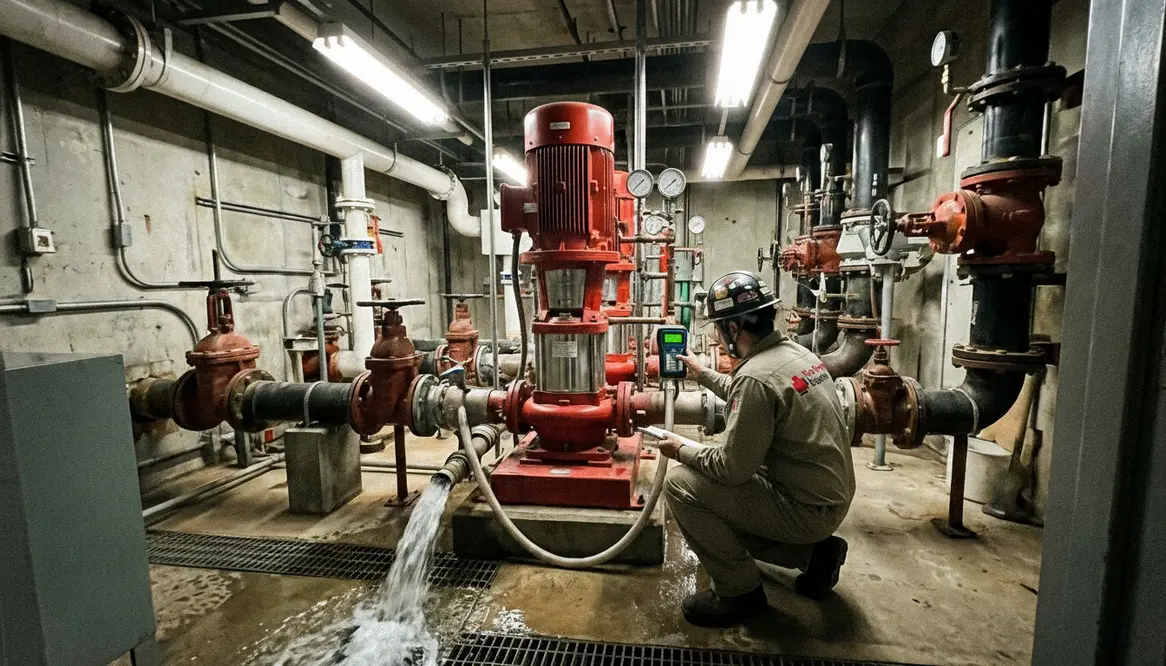
Vertical Inline Fire Pump Testing Guide for Buildings
I have spent enough time around pump rooms to know one truth. When a fire system fails, it never does so politely. It does it loudly, expensively, and usually at the worst possible moment. That is exactly why vertical inline fire pump testing matters. In large commercial and industrial buildings, these pumps are not just equipment. They are the quiet guardians that wait for the worst day and then decide how that day ends. So today, I will walk you through what really goes into testing them properly, without fluff, without confusion, and maybe with a chuckle or two along the way.
What makes vertical inline fire pump testing different from other systems
Let me say this plainly. Not all fire pumps behave the same, and treating them like they do is a shortcut to failure. Vertical inline systems sit directly in the piping, which means they save space and reduce footprint. However, because of that design, they demand precision during testing.
Unlike horizontal split case pumps, these systems rely heavily on alignment, proper flow conditions, and stable pressure readings. Therefore, when I approach testing, I focus on consistency first. I look at suction and discharge pressures, flow rates, and motor performance under load.
Additionally, space constraints often make access tighter. So yes, you might feel like you are starring in a low budget action movie crawling around valves. Still, accuracy cannot suffer just because the room is cramped.
How do I perform a compliant fire pump test step by step
When someone asks me this, I resist the urge to say “carefully” and walk away. Instead, I follow a structured approach that aligns with NFPA standards and real world expectations.
Step 1: Verify instrumentation and readiness
First, I verify that all gauges are calibrated. If your gauges lie, everything else becomes fiction. Next, I ensure the system is fully operational, including controllers and power supply.
Step 2: Conduct the flow test
Then comes the flow test. I simulate demand by opening test headers or flowing water through approved discharge points. At this stage, I measure performance at churn, 100 percent load, and peak demand.
Step 3: Capture the data
After that, I document everything. And I mean everything. Flow rates, pressures, voltage, amperage. If it moves or measures, it goes on the report.
Step 4: Compare against the curve
Finally, I review results against manufacturer curves. Because numbers alone mean nothing unless they tell the right story.
Key performance indicators I never ignore during testing
Pressure stability
I watch for smooth pressure curves. Sudden drops or spikes suggest issues like air entrainment or blockage.
Flow accuracy
Flow must match expected output. If it does not, something is restricting performance.
Motor behavior
I monitor heat, vibration, and electrical draw. Motors tell you when they are unhappy. You just have to listen.
System response time
A delay in ramp up can signal controller or mechanical issues.
Meanwhile, I keep an eye on noise. Yes, noise. A healthy pump has a rhythm. When that rhythm changes, it is like hearing a drummer fall out of sync. Something is off.
Common mistakes I see in vertical inline fire pump testing
I have seen enough testing sessions to write a comedy special. Unfortunately, the consequences are not funny.
One common mistake is skipping annual full flow testing. Some teams rely too heavily on visual inspections. That is like judging a car by how shiny it looks instead of starting the engine.
Another issue is poor documentation. If records are incomplete, compliance becomes questionable, especially in large commercial properties where audits are strict.
Also, ignoring minor deviations is a big one. A small pressure drop today can become a system failure tomorrow. Therefore, I treat every anomaly seriously.
Lastly, improper test setup can skew results. If valves are not positioned correctly or flow is restricted, the data becomes unreliable. And unreliable data is worse than no data at all.
How often should testing happen in commercial and industrial facilities
Consistency is everything. In most major buildings, I follow a layered schedule.
Weekly, monthly, and annual routines
Weekly churn tests keep the system active. Monthly inspections verify components. However, the real test comes annually with full flow performance testing.
Adjusting for higher risk facilities
Additionally, I recommend more frequent checks in high risk environments like manufacturing plants or high rise structures. Because when stakes rise, so should diligence.
And let us be honest. Fire does not schedule appointments. So neither should your testing discipline.
Why proper testing protects more than just equipment
When I conduct vertical inline fire pump testing, I am not just checking machinery. I am protecting operations, assets, and most importantly, people.
In large scale facilities, downtime can cost millions. Therefore, a properly tested fire pump is not just a safety measure. It is a business continuity strategy.
Moreover, compliance matters. Insurance providers, inspectors, and regulatory bodies all expect proof that systems perform as designed. If they do not, the consequences extend far beyond a failed inspection.
If you want a solid reference for standards, resources like https://www.firepumps.org help keep vertical inline fire pump testing aligned with industry expectations and best practices.
FAQ: Vertical Inline Fire Pump Testing
Conclusion
If you manage a commercial or industrial facility, do not treat fire pump testing like a box to check. Treat it like the silent contract it is. One that promises protection when everything else fails. I encourage you to take a closer look at your system, schedule proper evaluations, and work with experts who understand the stakes. Because when the moment comes, your fire pump should not hesitate. And neither should you.