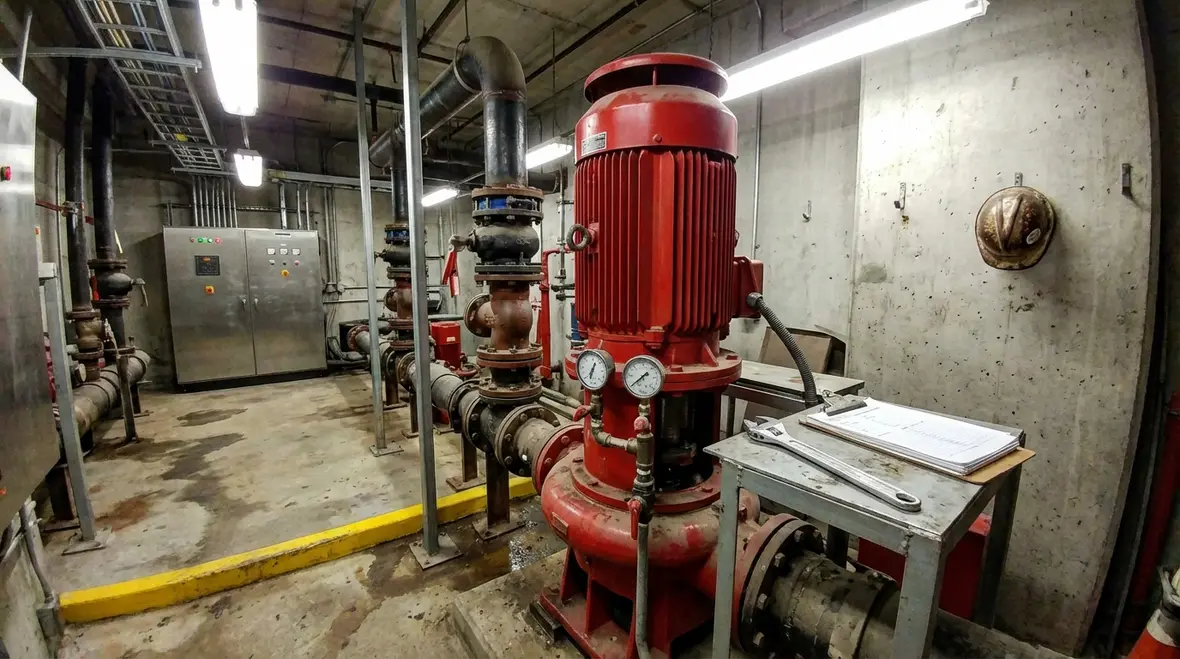
Tall Building Fire Pump Failures and How to Prevent Them
Tall Building Fire Pump Performance Issues: When Gravity Gets an Attitude
Let me paint you a picture.
You’re on the 47th floor of a sleek, glass-covered commercial tower, enjoying your coffee as the boardroom starts to fill. Suddenly, alarms blare. You feel a chill—not from the AC this time. It’s a fire emergency. Sprinklers should activate; water should surge upward like a superhero on a mission. But… nothing. The fire pump failed to deliver. This isn’t the plot of a disaster movie—it’s a surprisingly common tale involving tall building fire pump performance issues.
We’re not talking about something as harmless as your office Keurig sputtering out on a Monday. No. When fire pumps underperform in tall buildings, the consequences are life-altering and liability-heavy. Let’s break this down—real talk, with a splash of wit, and yes, a few cross-references to remind you that critical infrastructure has never been so cinematic.
Why Tall Buildings Love to Challenge Fire Pumps
Now, I may not be a skyscraper whisperer, but trust me—tall buildings have a way of turning every engineering solution into a mid-season cliffhanger. The higher the building, the more pressure it takes to get water to the upper floors. We’re talking about battling gravity here. Water’s not going to politely stroll up 60 stories just because you asked nicely. You need horsepower, high pressure, redundancy, and well-calibrated systems.
Most issues start with one unfortunate truth: vertical height exaggerates weaknesses. Pipe friction loss? Exaggerated. Pressure balancing? Yup, gets exaggerated. A slight mechanical defect in the fire pump system—suddenly? It’s a catastrophe, not a glitch. And here’s some fun trivia for your next elevator ride: For every 2.31 feet in elevation, you lose 1 psi of water pressure. So that 60th floor? It’s demanding close to 100 psi, just to show up hydrated. That’s where tall building fire pump performance issues quietly wait to turn a small oversight into a headline.
What Happens When Pumps Can’t Keep Up?
Picture this. A fire breaks out in a server room on the 40th floor of a commercial data hub. The sprinklers engage but the flow is laughable. Well, not funny ha-ha—more like the horror movie kind of laugh. That’s pump failure in action. It usually happens for predictable reasons, yet too many operations ignore the signs.
The usual suspects behind failure
- Inadequate pump capacity – The original pump was undersized like your nephew’s Halloween costume.
- Poor maintenance routines – Fire pumps don’t like being ignored. Trust me, they hold grudges.
- Control panel malfunctions – Like flipping a light switch and watching your bulb shrug in response.
- High static pressure without balance valves – Leading to a pressure drop that’s as useless as a cordless phone in a power outage.
If your building’s pump can’t sustain water delivery at the uppermost zone pressure requirements, sprinklers and standpipes will underwhelm, leaving firefighters with hoses as effective as fancy garden sprinklers. Not ideal, and absolutely textbook tall building fire pump performance issues in action.
How to Check the Health of Your Fire Pump System
I’m not going to suggest stethoscopes and lab coats, but there’s a fine science to gauging pump performance. It includes flow testing, churn pressure evaluations, and ensuring that controllers and diesel/gas/elec sources are ready to work harder than a caffeine-fueled intern at tax season.
So, what should we actually check?
- Confirming pump capacity aligns with NFPA 20 requirements
- Checking jockey pump function for pressure fluctuation compensation
- Reviewing the test header and fire department connections for corrosion or blockage
- Testing the relief valves, because overpressure is a party you definitely don’t want
- Validating all signal connections between alarm systems, flow switches, and building automation
Testing these systems annually isn’t just about ticking boxes—it’s about making sure that when fire breaks out (and statistically, it will), you’re not winging it. Proactive checks are how you catch tall building fire pump performance issues long before they show up during a real emergency.
What Causes the Most Trouble in Fire Pumps for Skyscrapers?
For tall commercial and industrial buildings, pump challenges come in more plot twists than a binge-worthy Netflix drama. Here are the usual antagonists attacking from behind the scenes:
Design Flaws: Think early mistakes in pressure staging, pipe routing, or valve placements. Getting cute with layouts to “save space” often ends up costing you efficiency.
Aging Infrastructure: You’d be amazed how buildings still rely on 1980s-era hardware to power modern-day protection. Nostalgia’s great—for fashion, not for fire control.
Poor Coordination During Retrofits: Adding or updating HVAC, elevator, lighting, or comm systems without considering fire infrastructure disrupts pressure and flow dynamics.
Air Entrainment: Air pockets can sabotage your system like a plot twist in “Game of Thrones.” Invisible, lurking, and deadly when triggered.
Lack of Training: Often, staff treat fire pump systems like a “break glass in emergency” sort of mystery box. Spoiler alert—training matters.
Power Failures and Backup Inconsistencies: If your diesel engine backup isn’t tested regularly, welcome to Murphy’s Law in Hi-Def.
You Asked: How Can I Prevent Performance Failures in Fire Pumps?
Ah, the golden question—and one that deserves a serious answer without technical jargon that could fill a textbook no one reads. Here’s what you do when you’re managing properties that scrape the clouds and you’d rather not star in the sequel to “tall building fire pump performance issues gone wrong.”
Practical steps to keep failures off your script
- Schedule full system flow testing annually. Stick to NFPA protocols and go beyond “quick checks.”
- Demand load testing under variable conditions. Real-world conditions don’t operate at textbook standards.
- Upgrade outdated pump controllers or switchgear. That 80s component isn’t vintage chic. It’s dangerous.
- Work with certified NICET Level III+ technicians. No weekend warriors or cut-rate inspectors, please.
- Implement digital alert systems. Smart sensors catch pressure drops or impeller slip faster than human inspections.
Basically, treat your pump system like the lifeline it is—not like that dusty treadmill in your basement pretending to be a coat rack. The buildings that take this seriously are the ones that avoid the worst tall building fire pump performance issues and the legal, financial, and reputational fallout that tags along with them.
Fire Pump Zoning: Yes, It’s a Thing and Totally Worth It
One of the most overlooked solutions when addressing fire pump woes in high-rises is zoning. And no, we’re not talking about real estate legal codes. Fire pump zoning involves breaking up your system into multiple vertical pressure zones so no one floor ends up with Niagara Falls-level bursting while another gets a tragic dripping faucet.
Instead of one lonely fire pump laboring like Frodo with the ring, zones use booster pumps to spread the load. This also keeps pressure more manageable, prolonging system life and performance accuracy. If you own, manage, or build commercial high-rises, this needs to be on your whiteboard. Yesterday.
Pro tip: base every zone’s configuration on the worst-case floor. Sounds pessimistic, sure—but it works. The 50th floor sets the tone. The 10th can just cruise. It’s a quiet, design-level way of reducing tall building fire pump performance issues before they ever become an incident report or a very awkward meeting with your insurance carrier.
FAQ: Fast Answers for Slow-Simmering Risk
- How often should I test fire pumps in tall buildings?
Annually, with weekly churn tests for electric and diesel pumps. - Can one pump serve a 60-story building effectively?
Usually no. Zoning and booster support are key for high rises. - What’s the biggest fire pump performance mistake?
Undersizing and skipping proper maintenance protocols. - Is diesel or electric better for tall buildings?
Depends on power reliability. Diesel offers independence; electric offers automation. - What’s required during a retrofit?
System recalibration, new flow modeling, and controller review.
Let’s Keep Things from Going Up in Smoke
When you manage or operate major commercial or industrial buildings, fire protection isn’t optional—it’s your holy grail of risk management. Tall building fire pump performance issues may sound technical, but neglecting them can make your insurance premiums look like a ransom note.
So here’s your move: don’t wait. Talk to a certified pro, get your system evaluated, and upgrade weak links. For deeper guidance on inspections, testing, and keeping pumps reliable, resources like specialized fire pump service providers can help you align your building with best practices and real-world performance expectations.
Because when fire strikes, confidence should never require a miracle. Let firepumps.org help you rise above it all—without getting burned.