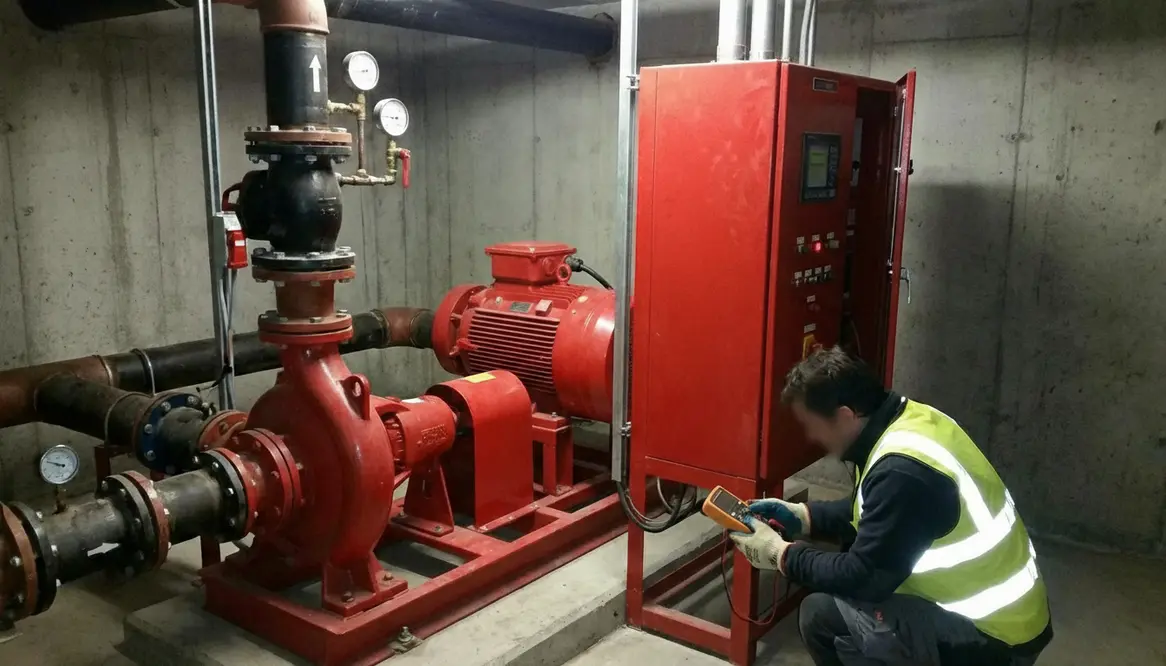
Fire Pump Troubleshooting Tips for Facility Technicians
Picture this: You’re standing in the basement of a 20-story commercial building. Pipes humming low like a jazz quartet in a New Orleans bar. Then, something stirs — the fire pump doesn’t start. The manager’s sweating, the alarms are beeping, and all eyes are on you. Time to shine.
In the world of commercial and industrial facilities, fire pumps are the quiet sentinels of safety. When they malfunction, minutes matter. Right here, we’re going through essential fire pump troubleshooting steps: check the power supply, inspect the starter panel, verify pressure sensing lines, test the jockey pump, and examine the controller. Now, let’s break all of that down, with a little swagger and no-nonsense guidance.
How I Approach a Fire Pump That Won’t Start
When the pump does nothing, doesn’t even hum — that’s your cue to check its soul: the power supply. Start with the basics. Tripped circuit breakers, loose connections, or, as I call it, “someone forgot to switch it on again” syndrome.
If there’s power but the pump still won’t respond, head straight to the controller. Missing control signals? Check the pressure switches and control wires. Those little guys like to keep secrets. Wiggle a few wires (gently), close and open your control panel doors like a ritual, and watch for LEDs or fault displays.
And please, don’t forget to inspect the starter panel. It often has the temperament of an aging rock star — works beautifully when it wants to. You’ll run into burned contacts, damaged relays, or blown fuses throwing things off balance.
Pro tip: Always carry a voltage tester, a multimeter… and patience. Pair those tools with systematic fire pump troubleshooting steps and you instantly look a lot less panicked than everyone else in the room.
Pressure Sensing Lines: Tiny Tubes, Big Trouble
You ever get fooled by something small causing a giant mess? Welcome to the world of pressure sensing lines. If the fire pump controller thinks pressure is fine because the line’s clogged, it won’t start the pump. These narrow copper or plastic lines can get blocked with scale, corrosion, or the elusive “mystery gunk.”
I usually blow these out gently with compressed air — just like dusting off your old Nintendo 64 cartridges (except with higher stakes). If you’ve got bent lines or broken fittings, replace them. Don’t get romantic about it. Pipes don’t have feelings.
When you think through your fire pump troubleshooting steps, add “verify sensing line health” to the top half of that list. It’s one of those boring checks that saves you from embarrassing callbacks later.
Why the Jockey Pump Is Your Early Warning System
Your jockey pump’s like that overachieving kid who always tries to fix things before the grown-ups notice. When it kicks on too often or not at all, it’s not a malfunction — it’s a vengeful SOS. It either means there’s a leak somewhere, bad pressure settings, or it’s just tired of being ignored.
Practical Checks for a Misbehaving Jockey Pump
Verify the pressure settings. A 10 PSI difference between cut-in and cut-out is standard. If it’s set to infinity, we’ve got issues.
Look for leaks in the system. A slow drip from a valve could be triggering mini pressure losses.
Confirm the jockey pump controller is actually alive and not just pretending — controllers love drama.
Remember: If you treat the jockey pump right, it warns you before the fire pump stage dives into chaos. Ignore it, and you’ll be adding emergency calls to your weekly calendar while you repeat the same fire pump troubleshooting steps over and over.
Common Fire Pump Controller Problems and Fixes
Controller issues can throw techs into a loop. It’s that mix of electrical signals and mysterious logic that sometimes feels like cracking a CIA code. When it fails, ask yourself these:
Is it showing a specific alarm? Low suction pressure, locked rotor, or loss of phase? Start there, Sherlock.
Are all internal fuses intact? One cheap fuse can save you six hours of chasing ghosts.
Are the auto/manual/off selector switches in the right position? Someone may have flipped it during testing and left it “off” like a mic-drop.
Also, check whether the weekly test timers are functioning. Some aging panels develop what I call “selective memory” and just forget to run auto-tests. Like your uncle forgetting to return your tools — again.
Treat the controller as the brain of your fire pump troubleshooting steps. If the brain is confused, nothing else in the system is going to behave.
How to Run a Fire Pump During a System Test Without Drama
Running a full flow test is like filming an action sequence. You want control, coordination, and zero surprise explosions.
Checklist Pre-Test
Notify building staff and fire department
Check pressure gauges and valves
Confirm electrical connections are solid
What to Watch During Test
What pressure you’re hitting at churn, rated, and peak flow
Absence of vibration or weird noises — pumps shouldn’t sing
Success in starting automatically from a pressure drop
Post-test, always log your findings and reset everything. Controllers have memories — and those logs can save your bacon during an audit.
Make these test routines part of your standard fire pump troubleshooting steps so you’re not improvising in the middle of an emergency or an inspection.
Got a Diesel Fire Pump? Here’s How I Handle Those
If you’re working with a diesel-driven pump, it’s a whole different beast. It drinks fuel, breathes air, and needs batteries to start — kind of like me on a Monday morning.
Diesel Fire Pump Quick-Scan
Fuel level: Obvious, but often overlooked. No fuel, no fire pump. Also, check for water contamination which diesel absolutely hates.
Batteries: You need two, fully charged and tested monthly. Batteries are notorious backstabbers — they die when you depend on them most.
Cooling loops: Make sure the water-to-water or air-cooled setup isn’t obstructed.
Exhaust system: Cracks or leaks? Those fumes need to go somewhere that’s not your lungs or the electrical room.
And don’t even get me started on block heaters. If it’s dead of winter and the heater fails, starting that diesel is like trying to convince Batman to work the day shift.
Whenever you’re mapping out fire pump troubleshooting steps for diesel units, think fuel, air, heat, and cranking power. Miss one of those and your “automatic” system turns into “maybe later.”
Building a Reliable Fire Pump Troubleshooting Routine
If you’ve ever walked into a pump room and felt your brain trying to sprint in three directions at once, a simple routine is your best friend. A consistent set of fire pump troubleshooting steps turns chaos into a checklist.
Start with power: line-side and load-side checks, breaker status, and voltage readings.
Move to controls: mode selector, alarms, test timers, and start signals.
Verify sensing: pressure lines, gauges, and setpoints for the main and jockey pump.
Finish with mechanics: unusual noise, vibration, temperature, and visible leaks.
Run that loop the same way every time and you’ll catch more issues before they grow into overnight shutdowns or frantic calls during a real alarm.
FAQs: Fire Pump Troubleshooting at a Glance
These quick answers keep you grounded when you’re standing in a noisy pump room wondering what to check next.
Final Thoughts: Master the Art Before the Alarm
Now you’ve got a playbook worthy of a Super Bowl halftime show — at least for fire pump pros. You’ve learned to troubleshoot everything from controllers to sensing lines, and even how to charm a moody jockey pump. Remember: Preventive observation is half the battle. Don’t wait for a fire to test your skills — stay one step ahead.
If you want more on testing, inspections, and keeping systems reliable, you can dig into resources like routine fire pump inspection guides from specialists such as Kord Fire Protection. The more fluent you are with your own fire pump troubleshooting steps, the calmer you’ll be when the alarms start screaming.
Need help with fire pumps at your commercial or industrial site? Call on firepumps.org for fast, expert service. Because not all heroes wear capes — some carry multimeters.