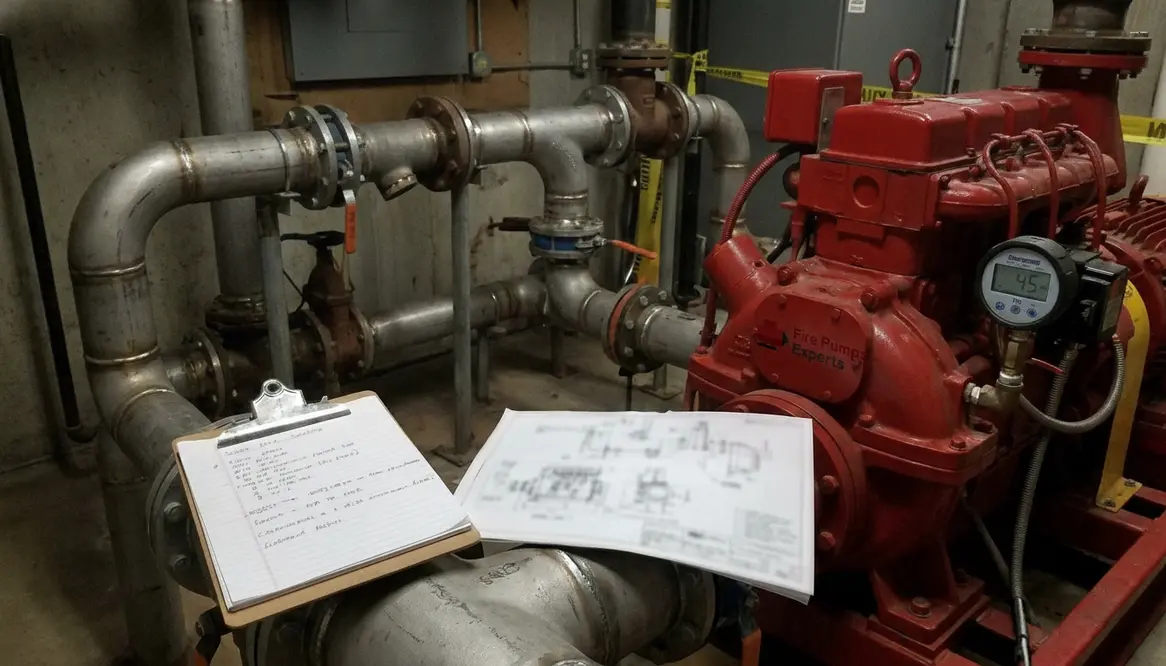
FM DS 3 7 Fire Pump Suction Piping Guide
FM Data Sheet 3 7 Fire Pump Suction Piping Guide: what I focus on first
When I look at fire pump design for commercial and industrial sites, I start with the FM DS 3 7 suction piping rules because this is where trouble likes to hide. A pump can be a beast, but if the suction side behaves like a shaky old shopping cart, the whole system suffers. So I keep my eyes on layout, flow, and pressure loss from the very beginning. That way, I protect performance, reduce vibration, and help the pump do its job when the stakes are very real.
In big buildings and plant spaces, suction piping is not just a pipe run. It is the path that feeds the pump, and therefore it has to stay smooth, stable, and properly sized. Otherwise, the pump may cavitate, lose efficiency, or act like it had one bad cup of coffee too many.
Why FM DS 3 7 suction piping matters in real projects
I treat the suction side as the foundation of the whole fire pump setup. First, FM guidance helps me reduce turbulence before water enters the pump casing. Next, it pushes me to keep the pipe arrangement simple, direct, and easy to support. That matters a lot in commercial towers, warehouses, data centers, hospitals, and other major properties where failure is not an option.
Also, a poor suction line can make a strong pump look weak. That is the kind of plot twist nobody wants. So I pay attention to pipe diameter, fitting count, valve placement, and the distance from the pump inlet. Each detail changes how water moves, and that movement affects the pump’s life span and reliability.
How I size and arrange the suction side
I always start by matching the suction pipe to the pump demand and the water supply. Then I look at the full path from the source to the pump. If I can keep the route short and straight, I do it. If I can reduce elbows and abrupt changes, I do that too.
The rule is simple. I want water to arrive calm, not rushed and spinning like it just came from a Marvel fight scene. Therefore, I avoid sharp turns right at the pump inlet. I also keep reducers in the correct position so the flow does not break apart before it enters the pump.
Good suction layout
Short pipe runs, smooth flow, proper support, and fewer fittings.
Bad suction layout
Extra bends, air pockets, noise, vibration, and pressure loss.
What I check for on site
When I walk a project, I check more than just the drawings. I look at the real install, because the real world has a habit of ignoring the nice clean plan. First, I confirm that the suction line has enough diameter for the demand. Then I check that the pipe stays full and free of trapped air. After that, I inspect support points, alignment, and how the line connects to the pump.
I also watch for things that create hidden problems. For example, a bad reducer choice can create swirl. Likewise, a weak support can let the pipe sag over time. And if the piping pulls on the pump nozzle, the system can wear out faster than it should. That is why I keep the install neat, firm, and easy to maintain.
FM DS 3 7 suction piping and common mistakes I avoid
I see the same mistakes again and again, and they usually come from rushing. One common issue is placing too many fittings near the pump inlet. Another is ignoring air control in the line. A third is poor alignment between the pump and pipe, which can create stress and vibration.
I also watch for undersized suction pipe. When the pipe is too small, velocity climbs, friction loss rises, and the pump has to work harder than it should. Over time, that can reduce reliability. Since commercial and industrial fire protection systems must stay ready, I do not leave that kind of risk on the table.
How I connect FM rules with real world performance
FM rules give me a solid base, but I still think in terms of performance. In other words, I ask simple questions. Will this piping keep flow steady? Will it protect the pump from stress? Will it support long term service in a busy facility?
That mindset helps me make better choices on complex projects. It also makes communication easier with engineers, contractors, and building owners. When everyone understands why the suction line matters, decisions improve. And yes, that is much better than doing a costly redesign after the walls are closed and everyone is pretending to be calm.
If you want to see how this plays out alongside other hydraulic checks, a good reference is the content at https://firepumps.org, which lines up well with the way FM DS 3-7 suction piping decisions affect real pump behavior.
FM DS 3-7 suction piping in practice
Keeping flow calm before the pump
On real projects, FM DS 3-7 suction piping principles translate into habits. I keep straight runs ahead of the pump where I can, allow the water to settle after any strainers or fittings, and avoid sudden jumps in size or direction right before the suction flange. It is less about chasing perfection and more about removing obvious opportunities for turbulence.
Balancing layout with tight rooms
Of course, pump rooms in existing buildings rarely give you a clean canvas. Beams, walls, and other services all compete for space. FM DS 3-7 suction piping expectations do not disappear just because the room is awkward. Instead, I work around obstacles without turning the suction side into a roller coaster made of elbows, offsets, and creative regret.
Watching the long-term behavior
FM DS 3-7 suction piping is really about how the system behaves after years of service. Will supports hold when the building settles a little? Will that long overhead run stay primed and free of air pockets? Will maintenance crews be able to reach valves and strainers without turning every inspection into an acrobatic stunt? All of that lives inside the layout choices you make on day one.
FAQ for FM DS 3 7 suction piping
Conclusion
If I want a fire pump system to perform well, I start with the suction side and I give it the respect it deserves. FM DS 3 7 suction piping helps me build a cleaner, safer, and more reliable setup for serious facilities. So if you are planning a new project or checking an existing one, take the time to review the suction layout now. I can help you turn the pipework into a system that works when it counts.