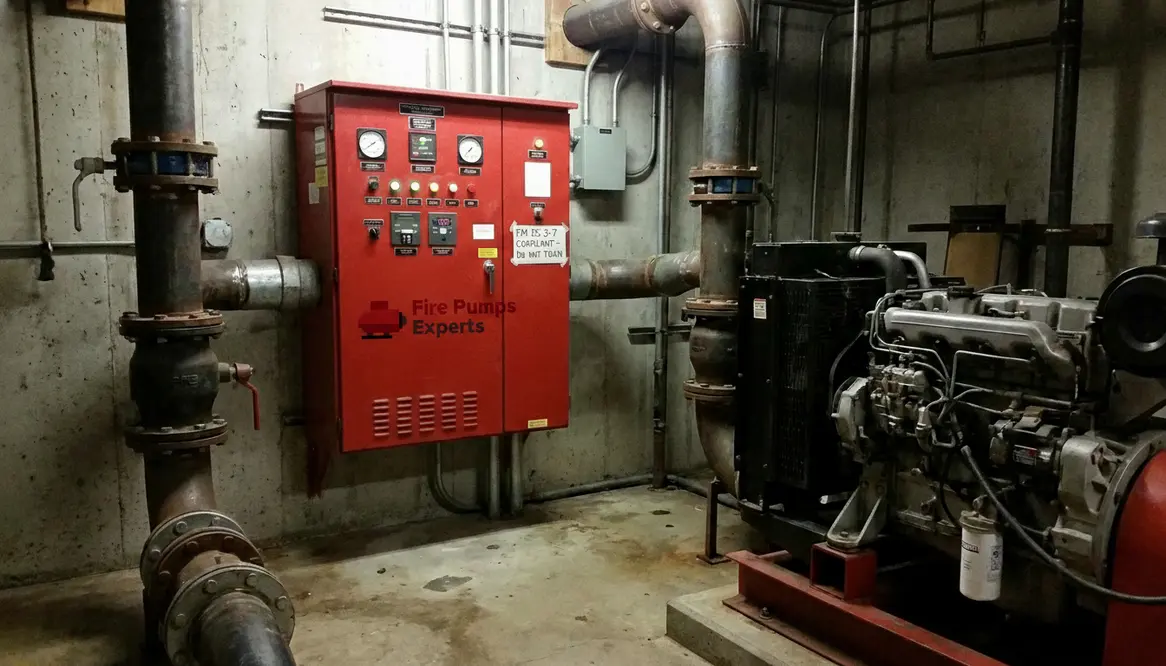
FM Data Sheet 3 7 Fire Pump Controller Requirements for Commercial and Industrial Facilities
When I talk about fire protection in a commercial tower, a plant floor, or a large warehouse, I never treat the fire pump controller like background noise. The FM DS 3 7 controller sits at the heart of the system, quietly making sure the pump starts when pressure drops and keeps the building ready for trouble. That matters, because in a major property, every second can feel like a scene from a disaster movie. And unlike Hollywood, this part does not get a dramatic soundtrack. It just has to work.
What FM Data Sheet 3 7 requires in a fire pump controller
I start here because this is the part owners and facility teams need most. FM Data Sheet 3 7 calls for a controller that supports reliable automatic operation, clear status indication, and proper supervision. In plain terms, I want the controller to watch the pump, respond fast, and tell me what it is doing without making me play detective at 2 a.m.
The standard focuses on dependable starting, power supply control, alarms, and monitoring. It also expects the controller to handle the pump in a way that fits a protected commercial or industrial site. That means I look for strong construction, listed equipment, and controls that match the pump’s job. A small office toy would not belong here, and neither would a “good enough” setup. Fire protection does not reward optimism.
FM guidance also pushes for clear separation of control functions, proper wiring, and dependable alarm signals. In other words, the controller must do more than flip a switch. It must support the whole chain of action that keeps the fire pump ready when the pressure falls.
How I check controller features for compliance
When I review a controller, I focus on the features that keep a system honest under stress. First, I check the type of starting method. Then I look at the power source, the alarm outputs, the pressure sensing setup, and the manual controls. Each piece matters because a weak link can turn a strong fire pump into an expensive metal sculpture.
Here is the simple version:
Dual column quick view
Compliance point
Automatic start
Manual start
Supervision
Enclosure strength
Alarm output
What I look for
The controller must start the pump when system pressure drops
I want easy local control for testing and emergency use
Power loss, phase loss, and trouble signals must show clearly
The cabinet must suit the site and protect the control parts
Signals must connect cleanly to the fire alarm or monitoring system
After that, I verify that the controller supports the pump type and service conditions. For example, large industrial sites often face dust, heat, vibration, or long runs of heavy use. So I never treat the controller as a one size fits all box. FM rules lean hard toward fit for purpose, and I agree. The wrong controller in the wrong place is like showing up to a steel mill with a garden hose.
Why installation details matter for fire pump control panels
Even the best controller can fail if the install gets sloppy. That is why I pay close attention to location, access, wiring, and protection from damage. The controller should sit where trained staff can reach it, but it should also stay out of harm’s way. A loading dock with constant impact risk is not the place to get creative.
I also look at how the panel connects to power and the fire pump. Clean wiring, correct labeling, and secure conduit all help keep the system stable. Furthermore, the installation must support quick inspection and routine testing. If a technician needs three ladders and a treasure map just to check a setting, the design already missed the point.
For commercial and industrial buildings, the install has to support the whole life of the system, not just day one. That includes service space, ventilation, environmental conditions, and protection from water or dirt. A controller that survives the first month but struggles every winter has not earned trust.
What facility owners should ask before approval
Before I sign off on a fire pump controller, I ask a few direct questions. Is the unit listed for the job? Does it match the fire pump rating and power supply? Can staff and inspectors read the indicators quickly? Does the alarm path reach the right monitoring points? These are not flashy questions, but they save people from costly mistakes later.
I also ask whether the controller supports regular testing without making the process painful. A good system should help teams verify function, document results, and spot trouble early. If the controller feels like it came from a secret villain lab, I keep digging.
For owners of large properties, I recommend working with a fire protection partner who understands FM Data Sheet 3 7 and commercial site demands. A useful resource is fire pump controller guidance for commercial and industrial facilities, especially when you need a solution that aligns with major property needs.
Spotlighting the FM DS 3 7 controller in major properties
In many commercial campuses, the FM DS 3 7 controller ends up tucked away in a mechanical room, quietly waiting for its moment. I push teams to treat it like a mission panel instead of just another gray box. When the FM DS 3 7 controller is selected, installed, and maintained with intent, it turns a fire pump from “installed equipment” into a reliable, ready-to-run asset.
FM DS 3 7 controller FAQ
Final thoughts on protecting major properties
I treat the fire pump controller as a core part of the safety plan, not a side note. When I follow FM Data Sheet 3 7, I help protect people, equipment, and operations in commercial and industrial buildings. So, if you manage a major property, take the time to review your controller, inspect the install, and confirm compliance now. That small effort can spare you a very bad day later, and nobody wants that sequel.