FM Data Sheet 3 7 Fire Pump Acceptance Testing Guide
FM Data Sheet 3 7 Fire Pump Acceptance Testing sounds like one of those topics that only wakes people up when the inspector shows up with a clipboard. Still, if I work in a commercial or industrial facility, or I manage a major property, I know this test matters. It helps me prove that a fire pump will do its job when the pressure drops and the stakes go sky high. In other words, this is not paperwork for the sake of paperwork. It is part of keeping a building ready, reliable, and protected.
And yes, FM DS 3-7 testing can feel a little dry at first. But once I break it down, it starts to make sense. I look at it as the fire protection version of a dress rehearsal. Everyone wants opening night to go smooth. Nobody wants surprises when the curtain rises.
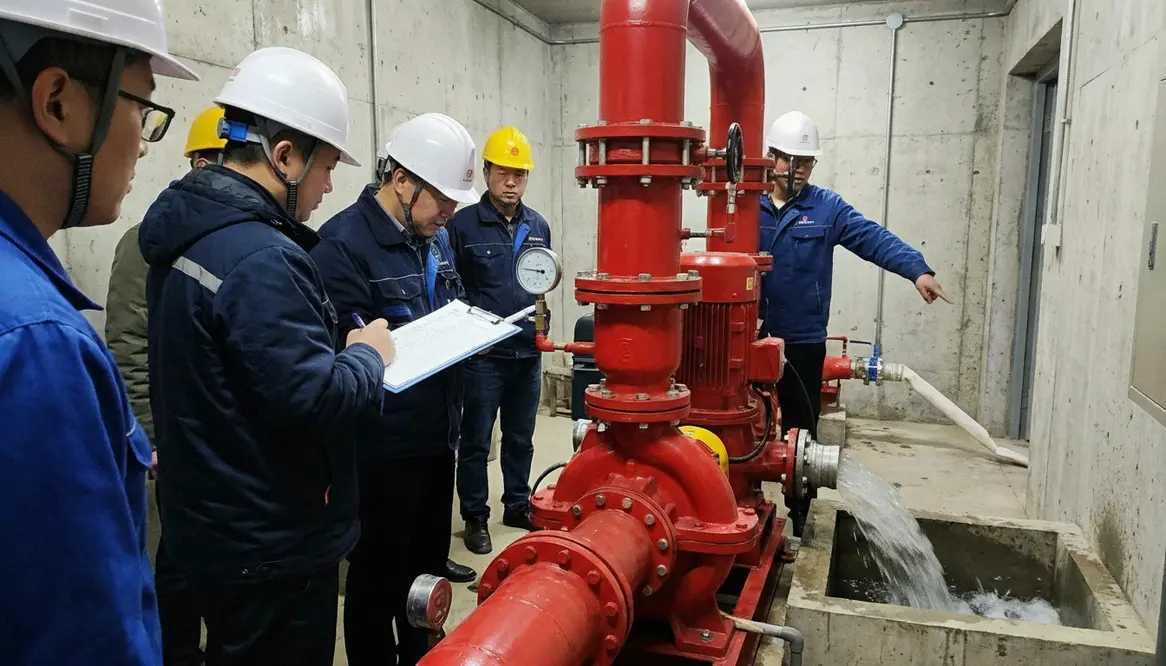
Think of FM DS 3-7 testing as the moment of truth for a new fire pump. All the design talk, drawings, and submittals lead to this point, where the pump has to perform under real conditions with real numbers staring back from the gauges.
Instead of hoping the system works when it is needed most, this testing lets me watch it run, push it across the operating curve, and see whether it behaves like a dependable front-line performer or an understudy that missed rehearsal.
What FM Data Sheet 3 7 Fire Pump Acceptance Testing Means
FM Data Sheet 3 7 fire pump acceptance testing is the process I use to confirm that a newly installed fire pump performs as designed before I put it into service. FM Global created this guidance to help property owners, engineers, and contractors verify that the pump, driver, suction supply, discharge system, and controls all work together. If one part stumbles, the whole system can suffer. That is the part nobody wants to learn the hard way.
I use this test to check flow, pressure, starting behavior, and overall system response. Also, I make sure the pump matches the design intent and meets the building’s protection needs. For commercial and industrial sites, this step helps reduce risk and supports smoother insurance reviews. It also gives me a clear record that the system passed under real conditions, not just on a drawing board where everything always looks perfect.
How I Prepare For The Test
Preparation makes the difference between a clean test and a long day of troubleshooting. First, I confirm that the pump installation is complete and all related equipment is ready. Then I verify that suction piping, discharge piping, valves, gauges, controllers, and power sources are in place and accessible. If I skip that part, the test can turn into a scavenger hunt, and nobody asked for that.
I also make sure I have the right people involved. That usually includes the fire protection contractor, facility staff, the testing team, and sometimes the AHJ or insurance representative. Next, I review the test plan so everyone knows the order of events, the target readings, and the safety steps. Because when water, pressure, and electrical equipment all come together, guesswork is not a strategy. It is a headache.
Laying this groundwork before FM DS 3-7 testing keeps the focus where it should be: capturing clean data, validating system performance, and avoiding on-the-spot repairs while everyone waits around the test header.
What Happens During The Test
During the test, I watch the pump start, stabilize, and deliver water at different flow points. I check that the pump reaches expected performance and that the driver keeps up. I also watch the pressure curve closely, because pressure tells a story. If the numbers drift in the wrong direction, the system may need adjustment before final approval.
Here is a simple view of what I usually track:
| Test Point | What I Check |
|---|---|
| Churn condition | Does the pump start and hold pressure properly |
| Flow test points | Does the pump deliver the required flow at each stage |
| Pressure readings | Does discharge pressure meet the design target |
| Driver performance | Does the motor or engine run smoothly under load |
| Controls and alarms | Do start signals, indicators, and supervisory functions work |
This part matters because FM DS 3-7 testing is not only about watching water move. It is about proving the system can respond under pressure, quite literally. I do not want a fire pump that behaves like a sleepy side character when the main plot gets intense. I want the hero to show up.
FM DS 3 7 Testing And The Data I Review
Turning pump performance into usable information
After the pump runs, I review the data with care. I compare the readings against the accepted range and the design documents. Then I look for trends that suggest weak suction, poor alignment, air issues, wrong driver setup, or control problems. If I see a mismatch, I act fast. Small issues during acceptance testing are a gift. They cost far less to fix now than after the building is occupied and the pressure is on, both literally and financially.
Finally, I document everything. I keep the results, observations, corrections, and final status in a clear file. This record helps with compliance, future maintenance, and long term system care. It also gives me a clean story to share with owners and stakeholders who want proof, not promises.
Consistent FM DS 3-7 testing builds a data trail that future teams can rely on. When someone pulls the records years later, they should see exactly how the pump performed, what was fixed, and why decisions were made.
Why FM DS 3 7 Matters For Commercial And Industrial Properties
Protecting more than just a pump
For major properties, fire pump acceptance testing protects more than equipment. It protects continuity, life safety, and business operations. A failed pump can slow recovery, raise repair costs, and create serious risk. On the other hand, a well tested pump gives me confidence that the building can stand ready when an emergency comes knocking.
It also helps me support a stronger relationship with insurers and project teams. FM Global guidance exists because these systems must perform under real conditions, not wishful thinking. And let us be honest, wishful thinking does not move water.
Facilities that treat FM DS 3-7 testing as a core part of commissioning signal that they take fire protection seriously. That attitude tends to show up later in better maintenance habits, fewer surprises, and less drama when someone asks, “Will the fire pump actually work?”
If I ever need deeper technical interpretation, I can refer directly to FM Global resources or industry sites like https://firepumps.org for additional context on testing expectations and best practices.
FAQ
Conclusion
If I want confidence in a fire protection system, I do not skip acceptance testing. I follow FM Data Sheet 3 7, review the data, and make sure the pump performs as expected before I call the job done. For commercial and industrial facilities, that step can save time, money, and trouble later. If I need support with fire pump testing, I should take action now and make sure the system is ready before anyone needs it for real.