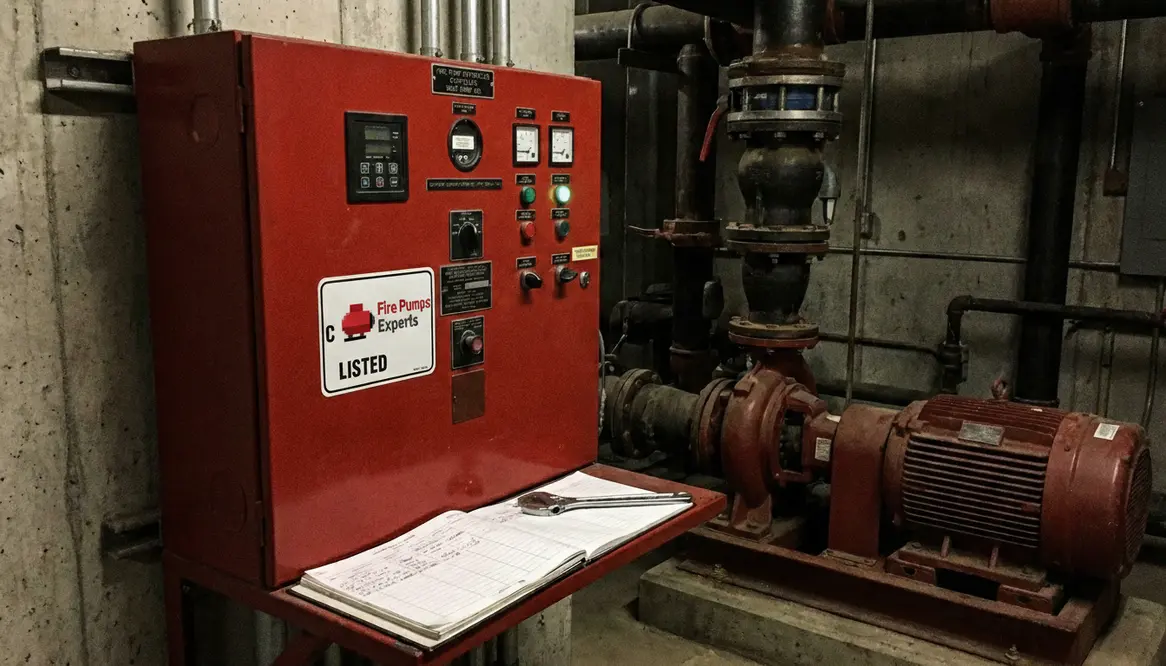
UL Listed Fire Pump Controllers Guide for Facilities
UL Listed Fire Pump Controllers Explained
When I talk about fire protection in large commercial and industrial buildings, I always start with the control gear that keeps the system ready for action. A UL listed fire pump controller sits at the heart of that setup. It watches the pump, starts it when pressure drops, and helps the system respond fast when every second counts. In a warehouse, plant, hospital, or high rise, that matters. A lot. Because when fire safety gets serious, nobody wants a “maybe it works” kind of device standing in the middle of the room like a confused extra in a disaster movie.
In this guide, I explain what UL listing means, how these controllers work, why major facilities need them, and what I look for during selection. I keep the focus on commercial and industrial properties, because that is where fire pump control really earns its keep.
What a UL listed fire pump controller does
A fire pump controller manages the electric or diesel fire pump that feeds water into a sprinkler or standpipe system. I use the term fire pump control panel sometimes, but the job stays the same. It senses system pressure, starts the pump when needed, and monitors power or engine issues. As a result, the building gets reliable water flow during a fire event.
UL listing means a third party tested the controller to meet strict safety and performance rules. That is not just a sticker for bragging rights. It tells me the unit passed real checks for durability, wiring, operation, and fault handling. In other words, the controller did not just show up with good intentions and a nice haircut.
For large buildings, that testing matters because the controller must work under stress, not just on a calm Tuesday afternoon.
Core functions that support system reliability
- Monitoring system pressure and starting the pump when needed
- Supervising power supplies or diesel engine status
- Providing clear status indicators and alarms
- Supporting manual operation for testing and emergency control
How I choose a UL fire pump controller for major facilities
When I review a UL fire pump controller, I start with the facility type. A manufacturing plant has different demands than a multi tower office complex. Then I look at pump size, power source, and the building’s fire protection design. After that, I check if the controller matches the system code needs and the site’s service conditions.
Here is a simple view of the main points I look at:
Controller focus
- Starting method
- Power supply
- Alarm features
- Manual controls
- Enclosure rating
Why it matters
- Starting method | Affects how smoothly the pump comes online
- Power supply | Must match the building’s electrical setup
- Alarm features | Helps staff spot trouble fast
- Manual controls | Gives operators direct control during testing or emergencies
- Enclosure rating | Protects the unit in harsh spaces
Also, I pay attention to the layout of the room. If the controller sits in a damp, hot, or dusty area, then the enclosure and installation plan must handle that reality. Fire protection does not care about our wishful thinking. It cares about physics.
Where a UL controller fits in the bigger picture
In a typical commercial complex, the UL controller is the quiet brain of the pump room. Whether the system uses an electric motor or a diesel driver, this unit interprets signals, makes sure power is available, and sends the start command without drama. A good UL controller is boring on normal days and brilliant on bad days, which is exactly what a safety device should be.
Why UL listed fire pump controllers matter for compliance
In commercial and industrial buildings, compliance is not a side note. It is the foundation. A UL listed fire pump controller supports code compliance because inspectors, engineers, and facility teams trust the listing as proof of tested performance. That helps during plan review, installation, and final acceptance.
More importantly, the UL mark supports consistency. I know the controller was built to meet a recognized standard, so the risk of hidden defects drops. That does not remove the need for proper installation, routine testing, or trained staff. However, it does give the whole system a stronger base.
And yes, that base matters. A fire pump controller is not the flashy part of the building. Nobody posts it on social media with dramatic lighting. Still, it may be one of the most important devices on site when water pressure needs a quick boost.
How UL listing supports the UL controller and the rest of the system
- It confirms the UL controller design has been tested for real-world failure scenarios.
- It gives code officials a common language when reviewing submittals.
- It reassures owners that the fire pump controller is not an experiment bolted to the wall.
- It helps align the controller with other listed components in the fire pump assembly.
How a fire pump controller works during an emergency
When pressure in the fire protection system falls, the controller senses the change and starts the pump. Then the pump pushes more water into the system so sprinklers or standpipes can do their job. If the unit uses a diesel driver, the controller also handles start signals, battery checks, and engine alarms. If it uses an electric driver, it watches the power supply and motor status.
That process sounds simple, yet the controller must react without hesitation. So, I look for fast response, clear indicators, and reliable fault signals. If a fault appears, the controller should show it right away so staff can take action. After all, silent failure is the villain in every maintenance story.
Good controllers also help during weekly or monthly testing. Therefore, the facility team can verify performance without making the process messy or confusing. That keeps the building ready and the records clean, which makes inspectors and managers equally happy. Rare event, I know.
Typical sequence of operations
- System pressure drops because sprinklers open or a hose line is used.
- The pressure switch or sensing device signals the UL controller.
- The UL controller issues a start command to the electric motor or diesel engine.
- The pump builds pressure and stabilizes flow to the fire protection system.
- Status lights and alarms on the controller confirm the operating state to staff.
What I recommend for fire protection teams
If I am helping a facility team, I focus on three habits. First, choose the right listed controller for the pump and building. Second, install it with enough space, proper power, and clear access. Third, test and maintain it on a regular schedule.
Also, I suggest working with trusted fire protection resources and product pages that speak directly to commercial and industrial use. For more detail on equipment, I would point readers to commercial fire pump controller resources at FirePumps.org. That kind of source helps teams compare options and stay focused on major properties, where fire safety must run like clockwork.
Bringing the UL controller into everyday facility practice
- Train the maintenance team on the basic indicators and manual controls.
- Make the UL controller part of regular inspection rounds, not just an annual photo opportunity.
- Document every test and adjustment so future staff know the history.
- Involve the fire protection contractor when planning power changes that might affect the UL controller.
When a UL controller is treated as critical equipment instead of a mysterious red box, the odds of smooth performance during a fire event rise sharply.
Where a UL controller fits among other fire pump equipment
In a full fire pump assembly, the controller shares the room with the pump, driver, sensing lines, relief valves, and, in many modern installations, a UL controller dedicated to supervisory or transfer functions. When everything is coordinated, you get a system that starts cleanly, reports clearly, and keeps water moving to the risers without hesitation.
Some facilities now standardize on a main fire pump controller plus a separate UL controller for jockey pump or pressure maintenance duties. That blend keeps small leaks and minor pressure shifts from waking the main fire pump unnecessarily, while reserving the main UL listed fire pump controller for true fire events.
Whether you run a distribution warehouse, data center, or research facility, taking time to understand how the UL controller, jockey controller, and pump controls interact will pay off during both inspections and real emergencies.
FAQ
Conclusion
If you manage a commercial or industrial property, I recommend taking a closer look at your fire pump control setup today. A listed controller gives you a stronger path to reliability, code support, and safer operation when it matters most.
Review your current system, confirm the ratings, and choose equipment built for serious work. Whether you rely on a primary UL listed fire pump controller, a dedicated jockey UL controller, or both, make sure each one is sized correctly, maintained regularly, and easy for your team to understand. In fire protection, I like simple truths: the right controller helps the pump do its job, and that can make all the difference.