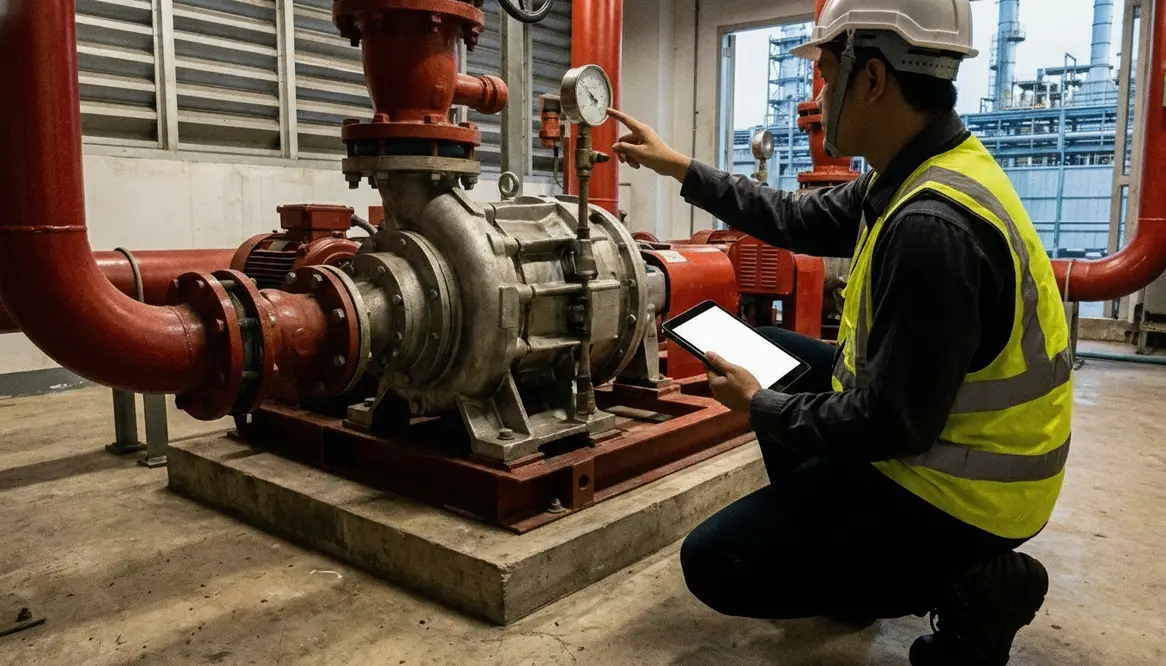
AS 2941 Fire Pump Performance Curve Requirements Guide
How to read, test, and trust your fire pump curve so it behaves when the building needs it most.
AS 2941 Fire Pump Performance Curve Requirements matter because a fire pump is only as useful as the curve behind it. In my world, if the curve is weak, the whole system can act like it trained for the wrong movie. AS 2941 requirements guide how fire pump performance must be checked, sized, and verified for commercial and industrial facilities, as well as major property buildings. So, if you manage a plant, tower, warehouse, or large site, this standard is not a nice extra. It is the backbone of reliable fire protection.
In this article, I will walk through the main curve rules, why they matter, and how I approach them in real projects. I will keep it plain, practical, and useful, because nobody needs a fire pump explanation that sounds like a tax code recital.
Why this guide exists
If the fire pump curve is off, everything downstream pays the price: sprinklers, hydrants, and your stress levels. This guide keeps AS 2941 requirements grounded in what actually happens on commercial and industrial sites, not in a vacuum of theoretical numbers.
What AS 2941 expects from a fire pump curve
AS 2941 focuses on making sure the pump delivers the right pressure and flow at the right points. I look at the curve as the pump’s honest story. It shows what the pump can do at shutoff, at duty point, and at higher flow. If the curve does not match the system demand, the pump may look fine on paper and still fail when the building needs it most.
For commercial and industrial sites, the curve must suit the actual water supply, sprinkler demand, hydrant demand, and any site specific pressure loss. That means I do not guess. I review the full system, then check whether the pump curve sits above the required demand with room for safe operation. In short, the curve should support the building, not audition for a role it cannot play.
Key ideas behind AS 2941 curve expectations
- The pump must deliver the required duty pressure and flow, with margin.
- The curve must remain stable across the working range, not just at one magic point.
- The system demand line should sit under the available pump curve, with room to spare.
- Real friction losses, elevation, and future changes must be considered, not ignored.
How I check a pump curve against system demand
I start with the required fire flow. Then I compare that demand to the pump’s curve at key points. First, I check the duty point. This is the point where the pump should perform during normal fire conditions. Next, I look at the pressure at zero flow and at higher flow levels. That tells me how the pump behaves when the system changes.
Here is the part people often miss. A pump curve is not just about hitting one number. It must stay stable across the working range. So, I check whether the curve gives enough pressure without going too steep or too flat. A curve that is too flat can cause poor pressure control. A curve that is too steep can create trouble when demand shifts. Either way, the fire system gets grumpy, and nobody wants that.
Quick checklist when lining up curve and demand
- Is the duty point on the most efficient, stable part of the curve?
- Does shutoff pressure stay within safe limits for downstream equipment?
- Does the pump still behave at high flow, or does the curve collapse?
- Do AS 2941 requirements line up with the site’s future expansion plans?
AS 2941 requirements for performance testing and verification
AS 2941 requires more than a neat curve drawing. It also expects the pump to be tested and verified. I treat this as the moment of truth. A manufacturer curve may look great, but field results must confirm the pump meets the standard once installed.
During testing, I check flow, pressure, and overall pump behavior. I also make sure the test setup does not hide a problem. For example, a bad suction line, a poor driver setup, or a valve issue can distort the result. That is why I never trust a quick look and a shrug. Fire systems deserve better than “it seems okay.”
Field testing focus points
- Measure flow and pressure at multiple test points across the curve.
- Confirm the installed pump still matches the original design intent.
- Check that AS 2941 requirements are met with the real suction supply.
- Watch for vibration, cavitation noise, or unstable readings.
Fire pump curve details that matter in real projects
When I review a curve, I focus on a few points that matter most for major buildings and industrial sites.
Dual view: what I compare on the curve
| Curve Point | What I Check |
| Shutoff pressure | Whether pressure stays within safe limits |
| Duty point | Whether the pump meets the required fire demand |
| High flow point | Whether the pump still performs without collapse |
| Overall shape | Whether the pump runs in a stable range |
These points help me spot problems early. If the shutoff pressure runs too high, I worry about system strain. If the duty point misses the target, I know the pump needs a rethink. And if the curve falls off a cliff at high flow, that is not confidence. That is a red flag wearing a fake mustache.
Why AS 2941 matters for commercial and industrial facilities
Large buildings and industrial sites face bigger risk because they hold more people, more equipment, and more value. So, I take AS 2941 seriously because it gives a clear path to reliable performance. It helps me make sure the pump matches the site, not just the catalog.
For warehouses, processing plants, multi level buildings, and major property complexes, the fire pump curve affects the whole system. If the curve is off, sprinklers may not deliver the right coverage, hydrants may lose pressure, and emergency response can suffer. In a world where delays cost money and safety, that is a bad trade. As a rule, I prefer boring reliability over dramatic surprises. Batman can keep the drama.
Where AS 2941 requirements hit hardest
- Sites with mixed sprinkler and hydrant demands on shared pumps.
- Campuses with long runs and messy elevation changes.
- Older buildings where new curves are dropped onto tired infrastructure.
- Facilities that grew “organically” without anyone checking the curve still fits.
In each of these, the AS 2941 requirements are less about ticking boxes and more about making sure the system does not fall apart right when alarms start shouting.
AS 2941 requirements and the final compliance check
When I finish a review, I ask one simple question. Does the installed pump curve truly support the fire protection design? If the answer is yes, then the system has a real chance of doing its job when it counts. If the answer is no, I go back through the sizing, test data, and site setup until I find the gap.
That final check matters because compliance is not just about paperwork. It is about performance under pressure, both the technical kind and the human kind. A good curve gives me confidence. A weak one gives me a headache, and I have enough of those already.
Tying it back to the curve
If the design is solid, installation is clean, and testing proves the curve delivers, AS 2941 requirements shift from feeling like a chore to feeling like a safety net. That is the point where the paperwork and the water finally agree with each other.
FAQ
Conclusion
If you manage a commercial or industrial facility, do not treat the fire pump curve like background noise. I recommend reviewing your AS 2941 requirements early, checking the duty point with care, and confirming test results before you trust the system. If you want a clearer path to compliance, I can help you assess the curve, spot weak points, and tighten the design before problems show up. That is how you protect the building, the people, and the business.
For more technical resources on fire pumps and curves, you can visit https://firepumps.org and align that knowledge with what your own site and AS 2941 requirements are actually demanding from your system.