AS NZS Commercial Fire Pump Compliance Guide
AS/NZS Fire Pump Compliance for Commercial Buildings
When I talk about AS/NZS commercial fire pump compliance, I am talking about the quiet backbone of fire safety in major buildings. It is not the flashy part of a fire system, and that is the point. A compliant fire pump helps keep water moving when pressure drops, power fails, or the building decides to have a very bad day. In commercial and industrial properties, that kind of reliability is not a luxury. It is the difference between control and chaos.
So, if you manage a high rise, warehouse, shopping centre, or other major property, I want to break this down in plain language. I will cover what compliance means, what gets checked, why testing matters, and how I stay ahead of problems before they turn into expensive drama. Fire safety should not feel like a sequel to a disaster movie.
What AS/NZS fire pump compliance means in a commercial building
AS/NZS fire pump compliance means the fire pump system meets the relevant Australian and New Zealand standards for design, installation, testing, and maintenance. In simple terms, the system must work when the sprinkler or hydrant network needs pressure and flow. For a commercial site, that expectation is not optional. It supports life safety, property protection, and business continuity all at once.
I look at compliance as a chain. If one link weakens, the whole system suffers. That chain includes pump performance, controller function, water supply, alarms, electrical support, and routine maintenance. If any one of those fails, the system may still look fine on paper, but paper does not stop fire.
Why commercial sites need fire pump systems that actually perform
Commercial buildings often face higher fire risk because they hold more people, more equipment, and more value in one place. Industrial sites add another layer with fuel loads, machinery, stock, and processes that can escalate fast. Because of that, I never treat fire pump compliance as a tick box exercise.
Instead, I treat it as operational protection. A properly maintained pump helps the system deliver the water pressure needed to control fire spread. It also reduces downtime after an incident. In many cases, that means fewer losses, fewer insurance headaches, and fewer awkward conversations with regulators. Nobody enjoys those. Not even the coffee machine, and it gets judged every morning.
What I check
- Pump start and stop response
- Controller alarms and indicators
- Water supply and suction conditions
- Pressure and flow performance
- Battery or backup power support
Why it matters
- It confirms the pump can operate under real demand
- It helps spot weak points before failure
- It supports compliance and audit readiness
- It protects occupants, assets, and business operations
- It reduces the chance of costly surprise repairs
How I test and maintain a compliant fire pump
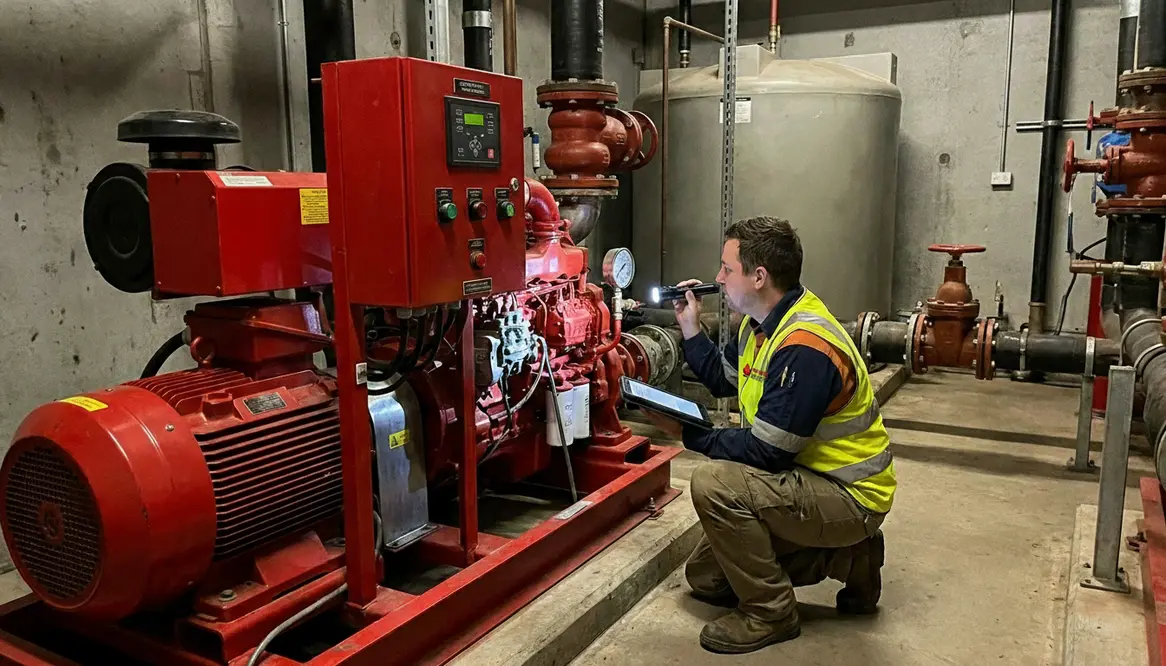
I do not rely on guesswork. Instead, I use planned inspection and testing to see how the system behaves under normal and emergency conditions. Regular checks often include weekly visual inspections, monthly operational testing, and scheduled performance testing. Depending on the site, I may also review valves, gauges, tanks, sensors, and the pump room environment.
More importantly, I look for change. A small leak, a slow start, a drop in pressure, or an unusual vibration can point to a larger issue. If I catch it early, I can correct it before the system loses reliability. That is where good maintenance earns its keep. It is not glamorous, but neither is finding out the pump failed when everyone has already evacuated.
Common issues I watch for include worn seals, blocked strainers, electrical faults, corrosion, fuel problems in diesel units, and poor room ventilation. Each one can hurt performance. However, consistent servicing keeps these problems from stacking up like unpaid parking fines.
What a compliance audit usually looks for
When I review a commercial fire pump setup, I look beyond the pump itself. Audits usually examine the full system against the relevant standard, site records, and maintenance history. That means I want clear evidence of inspections, test results, repairs, and any corrective action taken.
I also check whether the site has matching documentation for the building’s fire safety design and operational needs. A pump may be installed, but if records are missing or tests are overdue, compliance can still fall short. In other words, the equipment and the paperwork both need to behave. Rare, I know, but possible.
Good audit readiness usually comes down to four things: proper installation, regular testing, prompt repairs, and clean records. If those four stay in line, the building stands on much firmer ground.
AS/NZS commercial fire pump support for major properties
Major properties need a practical compliance plan, not a once a year panic session. I recommend a simple routine: inspect often, test on schedule, fix faults quickly, and keep all records easy to find. That approach supports long term reliability and helps avoid interruptions to daily operations.
If you manage a site with critical fire systems, I also suggest using expert support from a team that works with commercial and industrial facilities only. For a helpful reference, I would look at AS/NZS commercial fire pump compliance guidance for major buildings. It gives you a solid starting point when you want to align your site with the right standards and avoid costly missteps.
The right AS/NZS commercial strategy also reduces last minute scrambling before inspections. With a clear plan, defined responsibilities, and reliable testing routines, you can keep your fire protection running in the background where it belongs.
Keeping AS/NZS commercial compliance practical
In real life, AS/NZS commercial requirements land on top of budgets, tenants, insurance expectations, and the daily rush of running a property. That is why I prefer simple, repeatable routines over complicated paperwork that nobody reads until something breaks.
When the fire pump, the documentation, and the testing schedule all line up, you get a system that just works and a site that feels prepared rather than constantly catching up. That is the real win behind compliance: quiet confidence instead of noisy panic.
FAQs
Final thoughts
If you manage a commercial or industrial property, I urge you to treat fire pump compliance as a priority, not an afterthought. A well maintained system protects people, assets, and operations when it matters most. So, review your pump, check your records, and fix the weak points before they become costly problems. If you want peace of mind, now is the time to act and keep your fire protection ready for the real test.