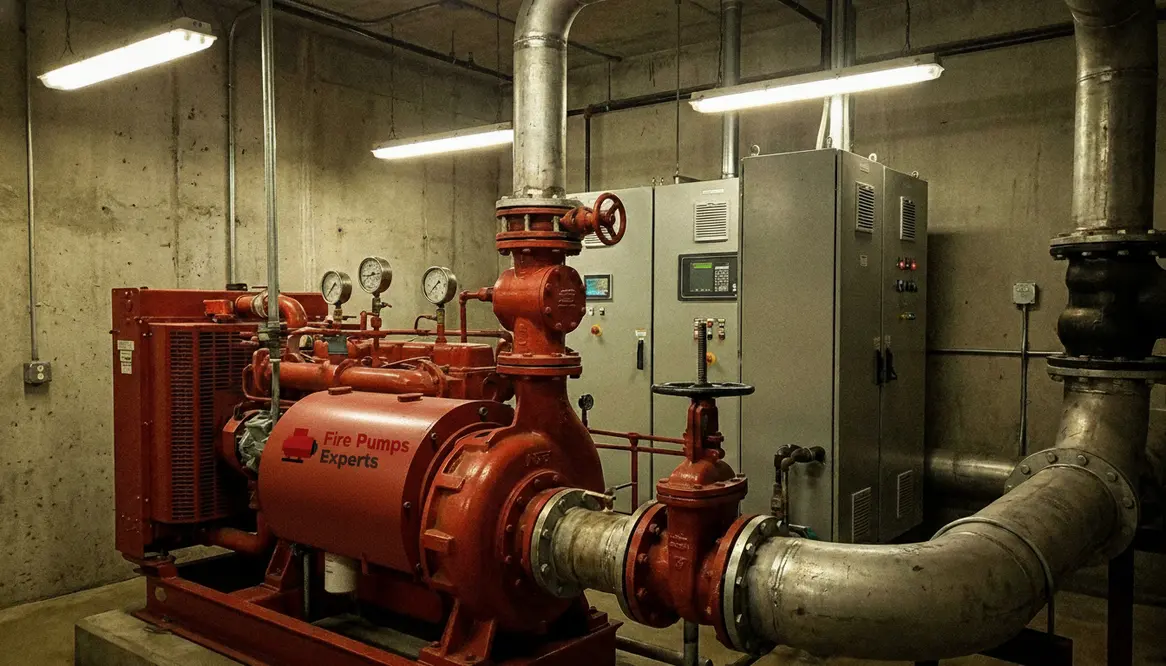
AS/NZS Fire Pump Requirements for Hydrant Systems
When I look at AS/NZS hydrant systems in commercial and industrial buildings, I see more than pipes, pumps, and valves. I see the quiet backbone of fire safety. These systems stand ready when smoke turns a normal day into a very bad episode of live action drama. And because large properties carry bigger risks, the fire pump is not a nice extra. It is a core part of the setup that helps the hydrant system deliver water with the pressure and flow it must have.
In this article, I will walk through the main AS/NZS fire pump requirements for hydrant systems in major buildings. I will keep it clear, practical, and focused on the needs of commercial and industrial facilities. Because, frankly, no one wants a fire pump behaving like a diva when the building needs a hero.
What the standards expect from a fire pump
I always start with the basics. An AS/NZS hydrant system must supply water fast enough and at enough pressure to support firefighting across the building. The fire pump does the heavy lifting when mains pressure falls short. That matters in big sites with long pipe runs, tall structures, or high demand zones.
The standards expect the pump to support the hydrant system under real fire conditions, not just during a casual test in a calm room with good lighting. In practice, that means the pump must:
- deliver the required flow rate
- maintain the required discharge pressure
- start reliably when needed
- keep working for the required duration
- match the system design and site risk
Just as important, I must make sure the pump suits the building type. A warehouse, a manufacturing plant, and a multi level commercial tower do not ask the same thing from a fire system. So, the design must fit the site, not some generic template pulled from the internet and blessed with confidence.
How I check pump selection for commercial sites
Here is the simple truth. Pump selection can make or break the whole hydrant setup. If I choose the wrong pump, the system may look fine on paper but fail when pressure drops. And pressure, in fire safety, is not the place for improvisation.
Dual view of the pump checks
Design side
I check the site demand, pipe losses, static lift, and the required hydrant output. I also review whether the system needs one pump or a duty and standby setup.
Performance side
I confirm the pump can hold the required point of operation without unstable behavior. I also check the controller, power source, and start logic so the system responds fast and clean.
Because these sites often carry high value stock, machinery, or critical operations, I treat pump selection as a risk control step, not just a compliance task. If the pump cannot keep up, then the whole hydrant network becomes about as useful as a phone with 2% battery during a storm.
AS/NZS hydrant pressure and flow rules in plain English
For hydrant systems, pressure and flow sit at the center of the standard. The system must provide enough water at the most remote or demanding outlet, because fire does not always choose the easy spot near the pump room. It likes the far corner. Of course it does.
I work through these checks in a clear order:
- Calculate the demand at the hydrant outlet
- Measure losses through pipes, fittings, and valves
- Confirm the pump can overcome those losses
- Check the water supply source can support the full demand
- Test the system to prove real performance
Furthermore, the pump must not only meet pressure at one point in time. It must hold performance long enough for fire crews to rely on it. That is why water storage, tank size, suction conditions, and pump room setup all matter. I cannot treat them as side notes. They are part of the same story.
Many facilities also need fire pumps to align with the broader Australian and New Zealand compliance framework. For a deeper look at practical system support, I recommend reviewing commercial fire pump compliance guidance, such as resources available at https://firepumps.org, as part of a wider hydrant risk review.
Testing, power, and maintenance for large properties
A pump that only works in theory is not a fire pump. It is a decorative object with a control panel. So, I always focus on testing, power reliability, and maintenance.
Power and starting reliability
First, the pump must start reliably. That means the controller, sensing lines, batteries, or power supply must work every time. If the building uses electric pumps, then the power arrangement must support fire conditions. If it uses diesel backup, then fuel, cooling, and starting systems must stay ready.
Ongoing testing and inspections
Second, I look at ongoing testing. Regular flow tests, start checks, and inspection help catch problems early. This matters because large commercial and industrial properties often run hard every day. Dust, heat, vibration, and long operating hours can slowly wear out equipment. The building does not care about your schedule, and the pump certainly does not.
Maintenance and documentation
Third, maintenance must stay planned and documented. I want records that show test results, repairs, faults, and any changes to the system. That paper trail helps prove the system still meets the standard and gives managers a clear view of risk.
Why compliance matters for industrial and major buildings
I think of compliance as protection with receipts. For industrial and major properties, a fire pump supports life safety, asset protection, business continuity, and legal duty. If a hydrant system fails, the damage can spread fast. Production can stop. Stock can burn. Tenants can suffer. And then everyone asks the same question: what went wrong?
That is why I treat AS/NZS hydrant requirements as part of daily building care, not a once in a blue moon audit panic. When the pump, supply, and hydrant network all work together, the site stands in far better shape to face an emergency.
In many cases, I also see fire pump planning improve when teams bring in specialist support early. That saves time, reduces rework, and helps avoid awkward moments later when a test reveals the system has been living on wishful thinking.
Across these projects, keeping an AS/NZS hydrant system in shape depends on more than installing equipment and walking away. It means ongoing review, honest performance checks, and a clear view of how the fire pump underpins the whole hydrant strategy.
FAQ
Here are straight answers to common questions about fire pumps, hydrant performance, and the way an AS/NZS hydrant system holds up when it is needed most.
Keep your hydrant system ready
If you manage a commercial or industrial building, I urge you to treat fire pump compliance as a serious priority. Review your system, check the pump performance, and confirm the hydrant network meets AS/NZS expectations. If you want a practical next step, speak with a fire pump specialist who understands major properties and hydrant systems. A strong system today can prevent a very expensive headline tomorrow.